
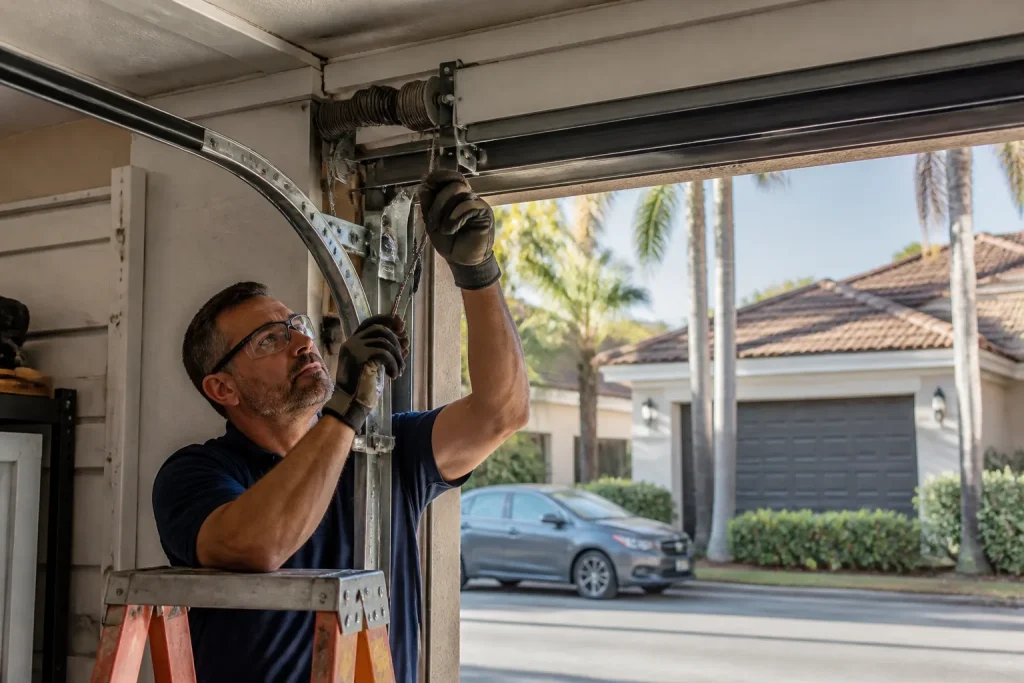
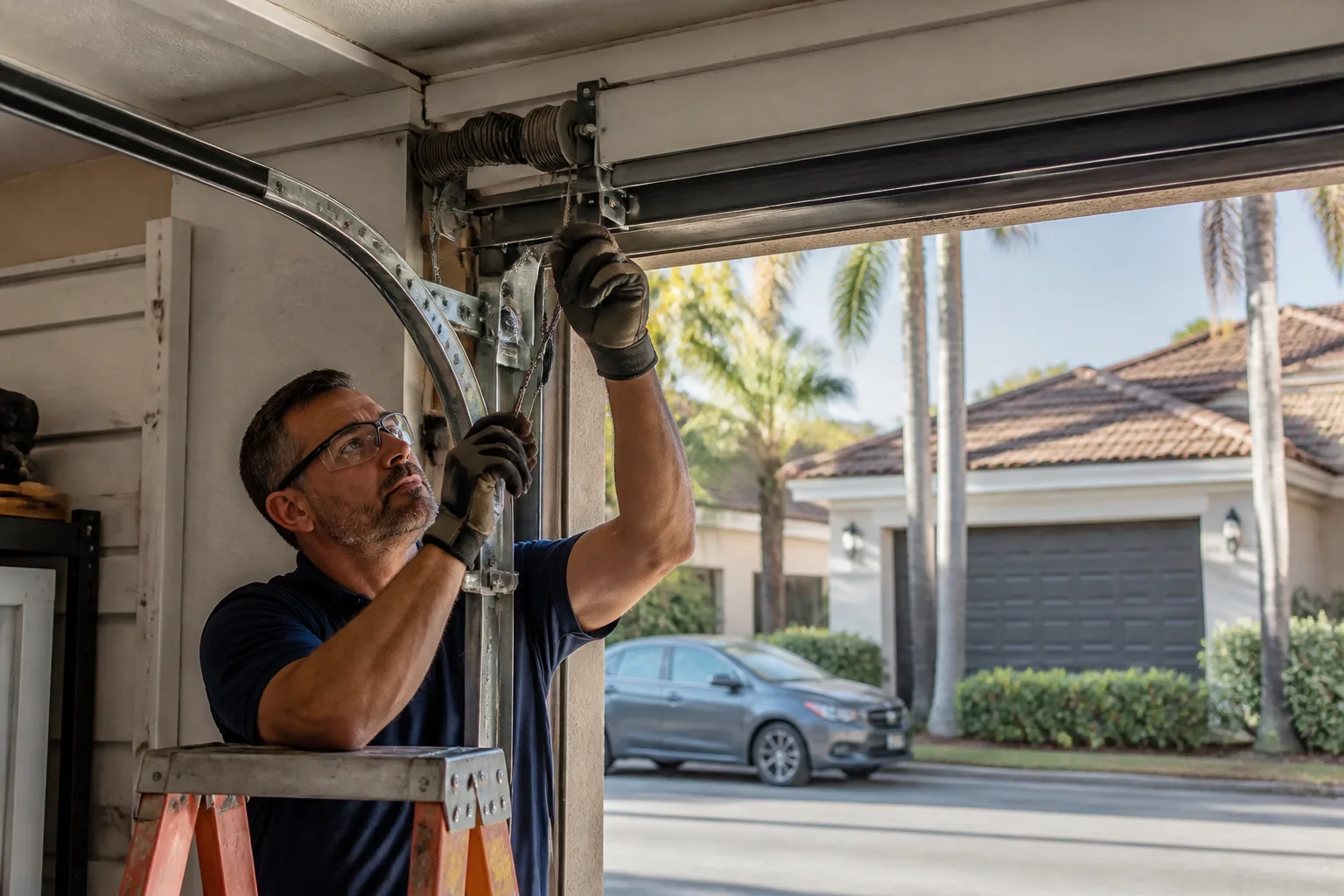
5 Mistakes to Avoid With Garage Door Cable Repair
A garage door cable sits under hundreds of pounds of spring tension. Handling one without first neutralizing that tension is one of the highest-risk DIY mistakes a homeowner can make. Most cable repair failures we see in Los Angeles come down to five specific errors, and nearly all of them trace back to treating cables as an isolated part instead of one load-bearing piece of a tensioned system. If you’d rather skip the risk entirely, call Brock Garage Door Repair at (254) 602-5116 and we’ll handle the whole job.
Mistake #1: Touching Any Cable Component Before the Spring Tension Is Fully Released
We’ll start with the one that sends people to the emergency room. A garage door cable doesn’t just hold the door up. It works in direct partnership with the torsion spring, which is wound tight enough to lift a 150 to 250 pound steel door. When you remove a cable from a drum while that spring is still wound, the spring releases its stored energy all at once. The cable whips. The drum spins. The winding cone can break bones.
In our experience, the homeowners who get hurt are usually the ones who watched a video and thought winding bars and locking pliers would be enough. They didn’t know how to verify that the spring was actually unwound before they touched the cable. “Fully released” means the spring has zero tension on the drum, the cable is slack, and the door is resting on a ladder or clamped in place so it cannot drop. It doesn’t mean the door is open and you’re keeping your fingers clear. A torsion spring under partial tension can still snap a cable with enough force to cut through a glove.
Los Angeles garages see a lot of spring fatigue because our doors get cycled multiple times a day. Mild as our climate is, that’s mechanical wear, and it means springs near the end of their life hold more unpredictable tension. If you’re not certain the spring is fully unwound, the right move is to leave the cables alone and call a trained technician. The safe play is not a step-by-step DIY project here. It’s knowing when to back away.
Mistake #2: Replacing One Cable and Not the Other
This one doesn’t cause immediate injury. It causes a repeat failure, usually within three to six months, and it’s one of the most common mistakes we get called to correct on Garage Door Cable Repair in Los Angeles jobs. A garage door has two cables, one on each side. They wear at nearly the same rate because they cycle together every time the door moves. When one cable frays and snaps, the other one is usually a few hundred cycles behind it.
Replacing only the broken cable creates a mismatch. The new cable is tight and round. The old cable is slightly stretched. That fractional difference means one side of the door lifts a little higher, a little faster, or with a little more slack than the other. The door tilts. The drums wind unevenly. The bottom brackets take side load they weren’t designed for. Within months, the old cable snaps, and the new one gets chewed up because the drum was already pulling unevenly.
Every residential cable repair we do in Los Angeles includes both cables. It’s not an upsell. It’s the only way to restore the door to a balanced lift. If a technician quotes you a single-cable replacement without explaining why, ask them why they think the other cable is in materially better condition. If they can’t tell you, get a second opinion.
Mistake #3: Using the Wrong Cable Diameter or Construction
Garage door cables are not universal. A cable that looks right and fits in the drum can still be the wrong cable for your door. The two things that matter are diameter and construction, and getting either one wrong creates a failure that happens fast.
Residential extension and torsion cables are typically 3/32 inch, 1/8 inch, or 5/32 inch 7×7 or 7×19 galvanized aircraft cable. The number before the “x” is the strand count. The number after is the wires per strand. A 7×7 cable is stiffer and less flexible. A 7×19 cable is more flexible and works better around smaller drums. The diameter has to match the drum groove width and the load rating of the door. Undersized cable stretches and frays at the drum. Oversized cable binds in the groove and causes the door to jerk. Neither survives a year of daily use.
We see this mistake most often when homeowners buy cable from a hardware store based on look-alike packaging or a generic online search. They get 1/8 inch when the door calls for 3/32 inch, or they get uncoated steel when the original was galvanized. The uncoated cable rusts in a Los Angeles garage, which is more humid than people expect, especially in older beach-adjacent homes. Our technicians stock the correct cable for every brand we service, including Wayne Dalton, LiftMaster, and Craftsman systems that use non-standard diameters.
Mistake #4: Failing to Inspect and Clean the Cable Drum Grooves During a Cable Swap
The cable drum is the wheel the cable wraps around. It has a spiral groove cut into it, and that groove is what keeps the cable winding evenly instead of stacking on one side. When a cable snaps under tension, it often takes a chunk of the groove with it. Sometimes it leaves behind metal burrs or embedded cable fibers. Sometimes the groove is just worn smooth from years of use.
If you put a new cable on a damaged or dirty drum, the new cable gets destroyed in weeks. It rides up out of the groove, rubs against its own wraps, and starts fraying in the exact spot where the groove is compromised. We’ve pulled cables out of Los Angeles garages where the replacement looked ten years old after three months because the drum was never touched during the swap.
A proper cable repair includes a visual inspection of both drums, cleaning the grooves with a wire brush, and filing down any burrs. If the groove is significantly worn or cracked, the drum needs replacement at the same time. Skipping that step saves twenty minutes of labor and guarantees a second cable failure.
Mistake #5: Accepting a Cable Repair Without a Post-Repair Balance Test and Written Documentation
Here’s the one that separates a one-time fix from a recurring nightmare. After a cable repair, the door needs to be tested for balance. A properly balanced door, when disconnected from the opener and lifted manually, should stay in place at the halfway point. It shouldn’t drift up. It shouldn’t sink down. It shouldn’t feel heavier on one side. If it fails that test, the cables or the spring tension are still wrong, and the door will fail again.
A balance test takes about five minutes. It’s the only reliable way to confirm the cables are carrying equal load and the spring is wound correctly. Yet a lot of handyman-level repairs in the Los Angeles market end with the door cycling once or twice and the tech calling it done. No balance test. No written record of the cable size, spring tension, or drum condition. When the door fails again, there’s nothing to reference.
That written record matters for warranty claims too. If the repair fails within a year and the technician never documented what they did, you’re stuck arguing over what happened. At Brock Garage Door Repair, every cable repair is documented in writing. That includes the cable diameter used, the drum condition, the spring type, and the results of the post-repair balance test. The price gets handed over before work starts, and the 365-day guarantee is in writing, not a verbal promise. Every service in Los Angeles runs the same way. It’s part of The Garrison Standard we operate under: show up in the window, price in writing, do it by the book, leave it clean, stand behind it for a year.
When to Call a Pro Instead of Doing It Yourself
If any of these five mistakes feels like something you’d rather not risk, that’s a reasonable instinct. Garage door cable repair is genuinely dangerous work. The springs are wound under tension that can’t be visually assessed with confidence unless you’ve been trained. The cables run through brackets and drums that carry the full weight of the door. One wrong move with a winding bar or one moment of inattention when the cable releases can cause a serious injury.
We don’t say this to scare people. We say it because we’ve repaired enough DIY cable jobs in Los Angeles to know what goes wrong. We pulled a cable out of a garage in Silver Lake last month where the homeowner had used the wrong diameter cable and secured it with a hardware-store clamp. The clamp had slipped, the cable was wrapped around the drum shaft, and the door was sitting cockeyed half-open. The worst part was the homeowner had been opening and closing it that way for three weeks.
If the cable is already snapped, the door is stuck, or you’re not sure about any step in the process, call (254) 602-5116. A real person answers 24 hours a day, seven days a week, including holidays. We’ll give you a straight answer over the phone and a written price before any work starts.
Key Takeaways
- Never touch a garage door cable until you’ve confirmed the torsion spring is fully unwound. Partial tension is enough to cause serious injury.
- Always replace both cables, not just the broken one. Mismatched cables cause uneven lift and drum damage within months.
- Match the cable diameter and construction to the door’s original spec. Wrong cable size stretches, binds, or frays at the drum.
- Inspect and clean both cable drums during any cable repair. Damaged grooves destroy new cables within weeks.
- Insist on a post-repair balance test and written documentation of everything the technician did.
The Bottom Line
Garage door cable repair looks simple until you understand how the whole system works together. The cable, the drum, the spring, and the brackets all move as one unit. Fixing one part without checking the others is how you end up with a repeat failure, or worse, an injury. If you’re in Los Angeles and need help with a cable repair, Brock Garage Door Repair home offers free estimates and written pricing before any work starts. We also handle Garage Door Repair in Los Angeles and Garage Door Opener Repair in Los Angeles. Call (254) 602-5116 and someone will pick up.
Frequently Asked Questions
You can, but you shouldn’t unless you have training and the right tools. The torsion spring holds enough tension to break bones if it releases while you’re working. If you’re not certain the spring is fully unwound, call a professional.
Most cable repairs in the Los Angeles area run $150 to $275, depending on cable type, drum condition, and whether the spring needs adjustment. We give you a written price before any work starts, so the number doesn’t change when the technician arrives. Call (254) 602-5116 for an exact quote.
Most garage door cables last 8 to 12 years with normal use, though Los Angeles doors that cycle multiple times a day may wear them out faster. Rust, fraying, and uneven wear at the drum are signs it’s time to replace them.
Yes. Both cables wear at nearly the same rate. Replacing one and not the other creates uneven lift, which damages the drums and causes the old cable to fail soon after. We always replace both cables as a set.
Written by Wade Mercer, Owner at Brock Garage Door Repair, serving Los Angeles since 2001.
Need Garage Door Help?
Call Brock Garage Door Repair - licensed & insured, here with fast after-hours help in Los Angeles.
(254) 602-5116