
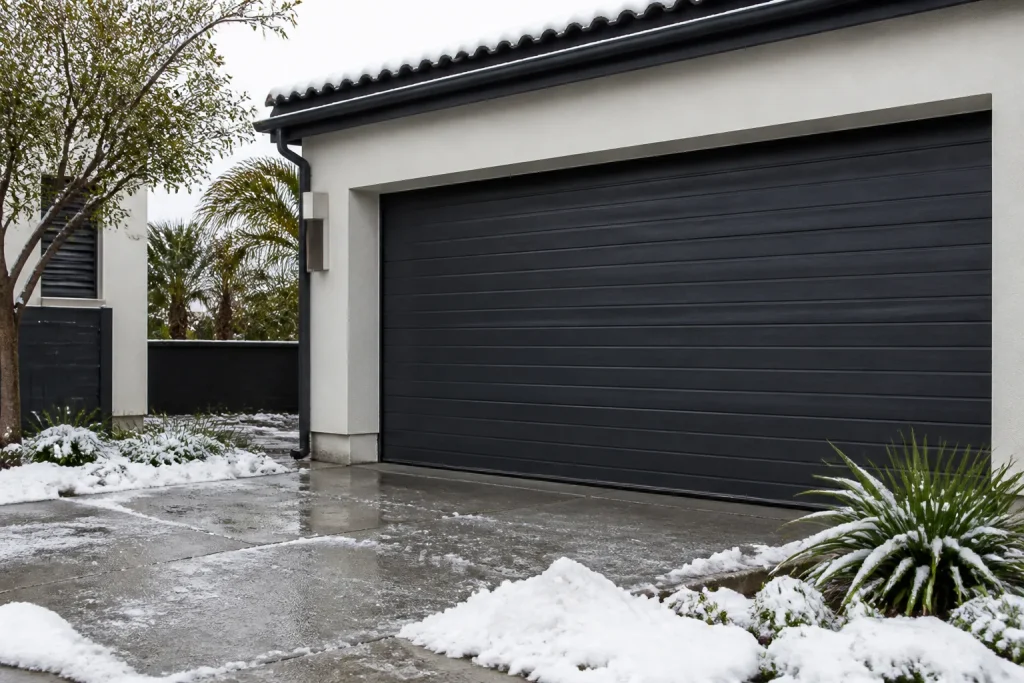
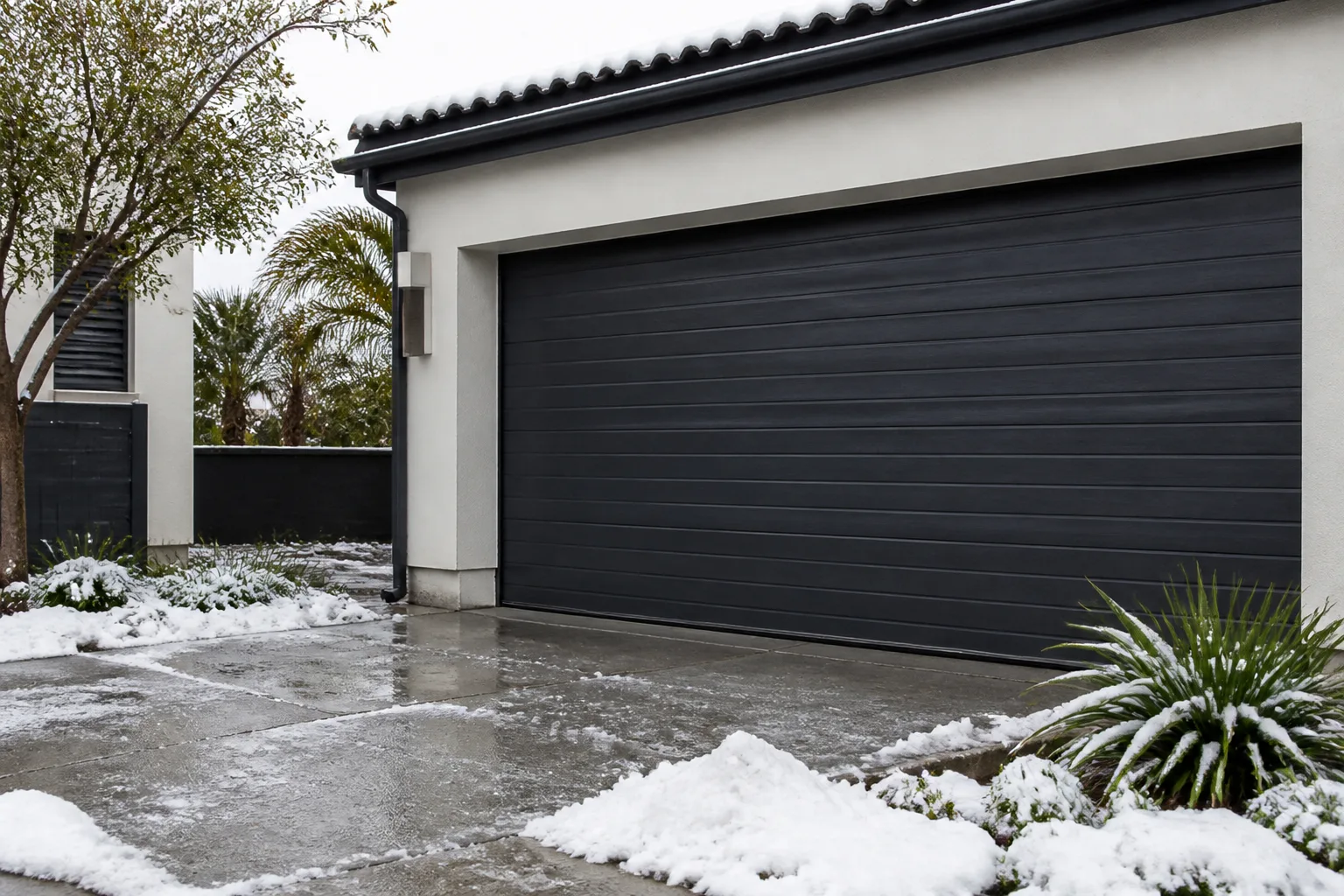
Preparing Your Home’s Garage Door for Winter in Los Angeles
Winter garage door prep in Los Angeles is less about freezing temperatures and more about wind, rain, and the damage a long dry summer already did to your seals, rollers, and springs. The failure points are predictable: sun-hardened bottom seals that crack and let water in, weatherstripping that Santa Ana winds peel back, and hardware that has gone dry and stiff from months without lubrication. If you’d rather not DIY any of this, call (254) 602-5116 and we’ll send a technician who does it by the book.
Most LA homeowners skip winter prep because “it doesn’t really get cold here.” Then February arrives and the garage floor is wet after every rain, the door rattles in the wind, and the opener sounds like it’s working twice as hard as it should. The checklist that matters for Los Angeles doesn’t look like the one written for Chicago or Denver. Here’s what actually needs attention before the rains come.
Why Santa Ana Winds Are Harder on Your Door Than Cold Weather
Santa Ana wind events regularly push 40 to 60 mph gusts through the canyons and into neighborhoods from the Valley to the Westside. Your garage door is the largest moving surface on the front of your home, and it takes that pressure directly. The wind pushes against the panels, flexes the door in its tracks, and tests every weatherstrip seam.
What we see most after a Santa Ana event is weatherstripping that has pulled loose at the corners. The adhesive or nails securing it failed because the material had already gone brittle from sun exposure. Once a flap of weatherstrip is loose, each gust works it further until you have a gap that lets dust, leaves, and eventually rain into the garage. We’ve pulled shredded weatherstrip out of doors in Encino and Sherman Oaks after particularly rough wind nights.
There’s also a less visible effect: wind-driven debris. Small branches, palm fronds, and gravel get thrown against the door. A dented panel weakens the structural integrity of the door and can throw off its balance. If your door took a hit during a Santa Ana event, check the panels for new dents or creases. A crease is a future crack.
When to call a pro: If the door no longer sits flush in the opening, pops or creaks when it moves, or if you can see daylight around the edges from inside the garage, the wind has likely shifted something in the track or hinges. That’s not a minor annoyance. A door out of alignment puts uneven load on the opener and cables. [Garage Door Repair in Los Angeles](/garage-door-repair-los-angeles/) covers realignment, panel repair, and weatherstrip replacement, and every job includes a written price before any work starts.
The Number One Winter Problem in LA: Sun-Hardened Bottom Seals
Most “winterize your garage door” articles lead with lubricating hinges or checking the opener battery. For Los Angeles, the real first step is inspecting the bottom seal. The rubber or vinyl strip along the bottom edge of your door takes direct sun for months on end. By October, it’s often hard, cracked, and flattened – no longer capable of keeping water out.
Here’s the pattern we see every year: the seal looks fine in September, then the first real rain in December or January exposes the damage. Water seeps under the door, pools on the concrete, and soaks whatever is stored near the door. The homeowner calls us in February and the bottom seal has the texture of old plastic – brittle enough to snap when you bend it.
Inspect yours before the rains start. Get down at eye level with the bottom edge of the door. Run your hand along the seal. If it feels stiff instead of pliable, or if you see cracks running lengthwise along the surface, it’s time to replace it. Most bottom seal replacement runs $85 to $180 in Los Angeles, depending on door width and seal type. Brand-name doors like Clopay and Amarr often use T-style or bulb-style seals that slide into a channel along the bottom panel – a straightforward replacement for a technician with the right profile on the truck.
A quick test: close the door and spray the bottom edge with a hose from outside. If water appears on the inside of the garage floor within a few minutes, the seal is done. Don’t wait until you’re moving wet boxes off the concrete.
Lubrication for LA’s Dry-Then-Wet Cycle: What to Use and What to Skip
Los Angeles can go six or eight months without meaningful rain. That dry stretch is when lubricant evaporates from rollers, hinges, and springs. Then the winter dampness arrives and you’re asking dry metal parts to move smoothly in humid air. The result is a door that groans, chatters, and puts extra strain on the opener.
The first rule: WD-40 is not the right product for a garage door. It’s a water displacer and solvent, not a persistent lubricant. What you want is a white lithium grease for the hinges and a silicone-based spray for the rollers, springs, and the torsion spring – the thick coiled spring mounted above the door that bears most of the lifting load. Silicone spray penetrates without attracting dust, which matters in LA’s dry conditions.
Here’s a basic winter prep sequence:
- Clean the tracks first. Wipe out dust and grit with a dry cloth. Don’t grease the tracks themselves – they’re designed to run dry.
- Lubricate the hinges. A small shot of white lithium grease on each hinge pin, then work the door up and down once to distribute it.
- Spray the rollers. Nylon rollers get silicone on the bearings. Steel rollers get a light coat on the wheel and stem. Skip the track.
- Coat the torsion spring. A thin, even film of silicone spray along the entire spring. You’re aiming for coverage, not dripping.
- Hit the opener chain or screw. If you have a belt drive, leave it alone. Chain and screw drives benefit from a light application.
This takes fifteen minutes and costs a few dollars in product. Do it once now and again in spring, and you’ll notice the door runs noticeably quieter.
Test Your Weatherstrip Before December: The Light-Gap and Paper-Drag Tests
Weatherstripping on the sides and top of the door frame is the second line of defense against wind-driven rain. In Los Angeles, it’s also what keeps dust out during the dry months and what Santa Ana winds attack during the winter. The failure is usually slow – a corner lifting here, a flattened section there – until one windy storm finds the weakness.
Two tests tell you what you need to know:
The light-gap test. Stand inside the garage with the door closed and the lights off. Let your eyes adjust, then look along all four edges of the door. If you see daylight anywhere, that’s a gap. Even a sliver lets wind and water through, and it grows once the wind starts working on it.
The paper-drag test. Close the door on a piece of paper placed between the door and the frame. You should feel noticeable resistance when you pull the paper out. Move it around the perimeter. If the paper slides out freely in any spot, the weatherstrip has compressed too far and needs replacing.
Acceptable clearance is about one-eighth of an inch or less. More than that and you’re losing conditioned air, letting in debris, and inviting moisture. Replacement weatherstrip runs roughly $90 to $200 installed in Los Angeles, depending on how many sides need work and the profile of the strip. If you’re at all unsure, [Garage Door Cable Repair in Los Angeles](/garage-door-cable-repair-los-angeles/) technicians check weatherstrip and seal alignment on every service call as part of the baseline inspection.
The One Adjustment Worth Having a Professional Make: Torsion Spring Tension
Torsion springs – the thick coiled springs mounted above the door – are calibrated to balance the weight of your specific door panel. That calibration drifts. Temperature changes cause metal to expand and contract, and over time the spring loses a small amount of tension. In Los Angeles, the shift from warm October days to 45°F December nights is enough to expose a spring that was already borderline.
Here’s the problem: when the spring is under-tensioned, the door doesn’t stay where you leave it. It drifts downward when you open it halfway. That makes the opener work harder to lift the full weight of the door, which shortens the life of the opener motor and gears. An over-tensioned spring is worse – it can slam the door upward with force, and a spring under that much tension is dangerous to adjust without proper tools and training.
A pro can test the balance in about ten minutes. The door should stay put when opened halfway by hand. If it drifts up or down, the spring tension needs adjusting. In Los Angeles this typically runs $30 to $60 as part of a service call, though if the spring is old or showing wear, replacement is the smarter move. We’ve pulled springs off doors in Pasadena and Glendale that were a decade old and had been “adjusted” by homeowners who got lucky – and we’ve also seen the ones who didn’t get lucky. A spring that lets go while someone is standing under it is a serious injury. This is the one item on the list we tell homeowners not to touch themselves.
When to call a pro: If the door is heavy to lift by hand, drifts when left halfway open, or makes a loud bang when it moves, you need spring service. [Garage Door Opener Repair in Los Angeles](/garage-door-opener-repair-los-angeles/) technicians also inspect spring balance during opener service calls, because an opener working against a badly balanced door fails much sooner.
Coastal Fog and Condensation: The Hidden Hardware Corrosion Problem
If you live west of the 405 – Santa Monica, Venice, Marina del Rey, Playa del Rey, or up the coast into the Palisades – you have a different winter issue than inland homeowners. Marine layer fog rolls in most winter mornings and condenses on any metal surface that isn’t protected. Your garage door hardware – hinges, brackets, cable pulleys, and spring fittings – is sitting in that moist air for hours each day.
What happens over a few winter seasons is surface corrosion. Hinges stiffen. Brackets develop rust bloom at the bolt holes. Cable pulleys lose their smooth rotation as corrosion works into the bearing surface. None of this fails suddenly. It fails the way coastal metal always fails – gradually, then all at once when a cable snaps or a hinge binds.
The countermeasure is the lubrication schedule above, done twice per winter if you’re within a mile or two of the coast. A silicone spray on the hardware after a foggy morning routine gives the metal a thin protective film. For Wayne Dalton and Craftsman doors with exposed metal hinges, this matters more than for brands with sealed bearings.
Wade Mercer has run service calls through coastal neighborhoods in LA for years now, and the doors that get a winter hardware check almost never fail on cables or hinges. The ones that do are almost always carrying three or four years of unaddressed coastal corrosion.
A Simple Fall Checklist for Los Angeles Homeowners
If you only do five things before the winter rains arrive, do these:
- Inspect and flex the bottom seal. If it’s stiff, cracked, or flattened, replace it. Cost in LA: $85 – $180.
- Run the light-gap and paper-drag tests on all four sides of the door. Any visible light or loose paper means weatherstrip replacement is due.
- Lubricate hinges, rollers, and the torsion spring with silicone spray. Skip the WD-40. Skip the tracks.
- Check door balance by opening it halfway and releasing it by hand. If it drifts, call a pro for spring inspection – don’t adjust it yourself.
- Clear the photo-eye sensors and test the auto-reverse function. Winter brings wet leaves and debris that can block the safety sensors at the base of the tracks.
The Bottom Line
Winter in Los Angeles doesn’t demand snow shovels or anti-freeze, but it does demand attention to the seals, hardware, and spring tension that a long dry summer quietly degraded. The bottom seal is the most common failure point – inspect it now, before the rains expose it. The light-gap and paper-drag tests take two minutes and tell you whether your weatherstrip is still doing its job. Lubricate the moving parts with the right product, and have a professional check your torsion spring balance if the door doesn’t stay where you leave it.
If you’re in Los Angeles and need help, Brock Garage Door Repair offers free estimates – call (254) 602-5116. We’ll give you a written price before any work starts, and every repair is covered by our 365-Day Done Right Promise. If it fails within a year, we come back and make it right at no charge. That’s the Garrison Standard – show up in the window, price in writing, do it by the book, leave it clean, stand behind it for a year.
Frequently Asked Questions
For most LA homeowners, a basic winter prep – bottom seal replacement plus weatherstrip and lubrication – runs $150 to $350, depending on door size and how many sides need new stripping. The price is quoted and agreed before any work starts. Call (254) 602-5116 for an exact quote.
Yes, lubrication is a DIY-friendly task if you’re comfortable on a ladder. Use a silicone-based spray on rollers and springs and white lithium grease on hinge pins. Never use WD-40 – it’s not a persistent lubricant. Never grease the tracks. Never touch the torsion spring beyond applying a light silicone coat to it. If you’re unsure, a technician can do the full service on one call.
You’re likely feeling the effects of a torsion spring that has lost tension. Metal contracts in cooler temperatures and, over time, the spring drifts out of calibration. The door doesn’t balance properly, so it feels heavier to lift and the opener strains more. This is a professional adjustment – springs under high tension are dangerous to work on without proper training. Garage Door Repair in Los Angeles includes spring inspection and balance correction.
Close the door and inspect the seal at floor level. If it’s stiff, cracked, flattened, or no longer touches the concrete evenly, replace it. A hose test – spraying water at the bottom edge from outside and checking for leaks inside – gives you a definitive answer within minutes. In our experience, most LA garage doors need a new bottom seal every three to five years, sooner if the door faces afternoon sun.
It’s the cheapest way to avoid a January failure. A technician can check spring balance, weatherstrip integrity, cable condition, and opener operation in about thirty minutes. Many homeowners treat it as an annual checkup, the same way they service their HVAC before summer. If you’d like one, call (254) 602-5116 – a live person answers 24/7, including holidays.
Written by Wade Mercer, Owner at Brock Garage Door Repair, serving Los Angeles since 2001.
Need Garage Door Help?
Call Brock Garage Door Repair - licensed & insured, here with fast after-hours help in Los Angeles.
(254) 602-5116