
Last updated October 9, 2026
Full 25-point door and opener safety check with every visit - springs, cables, rollers, tracks, and your LiftMaster or Chamberlain opener included
You get a price before we start. It does not change when the truck arrives.
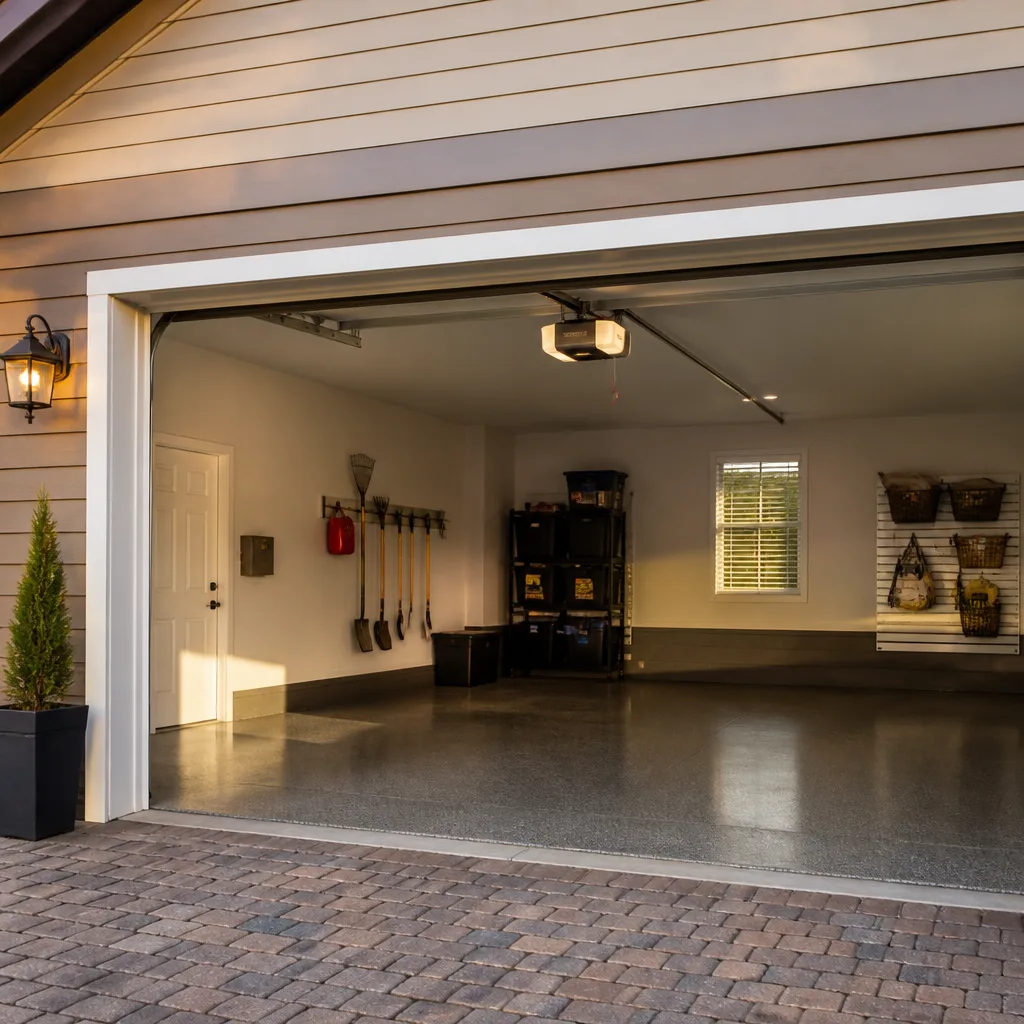
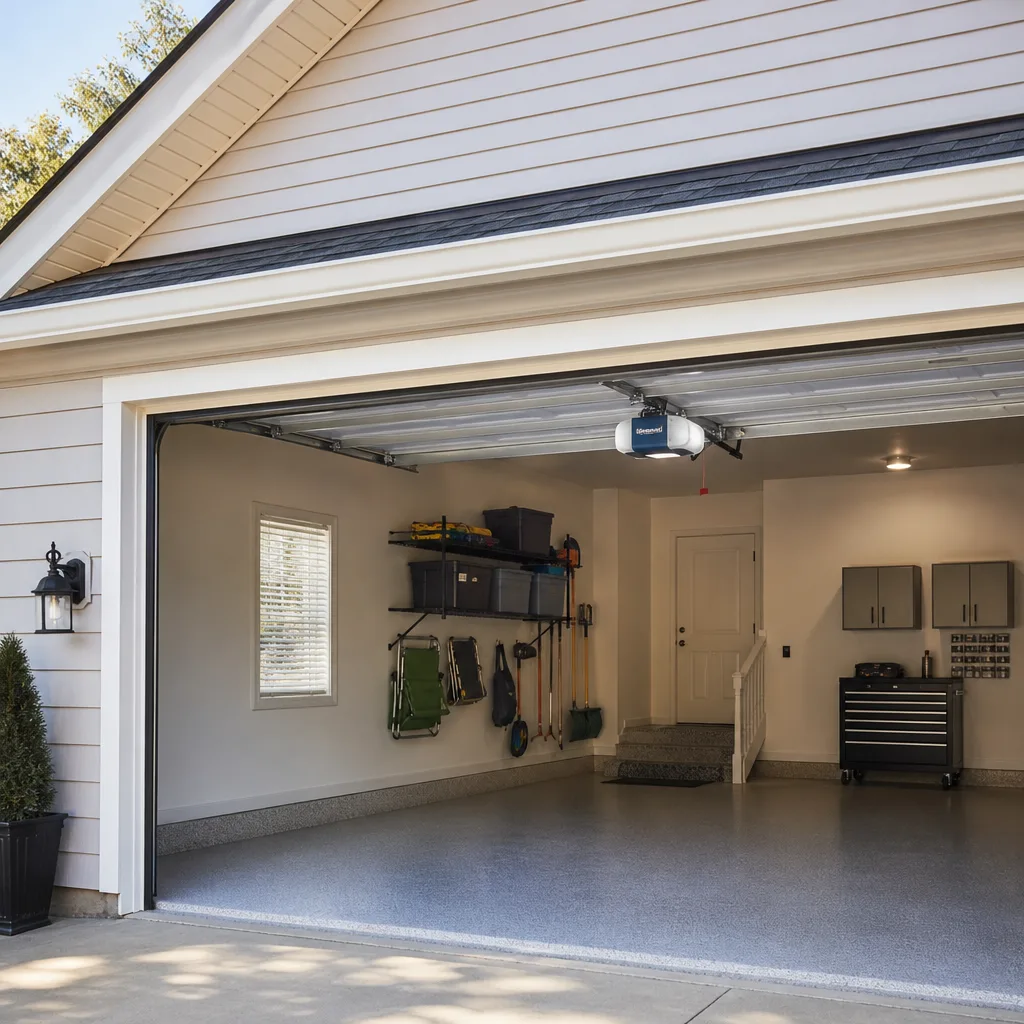
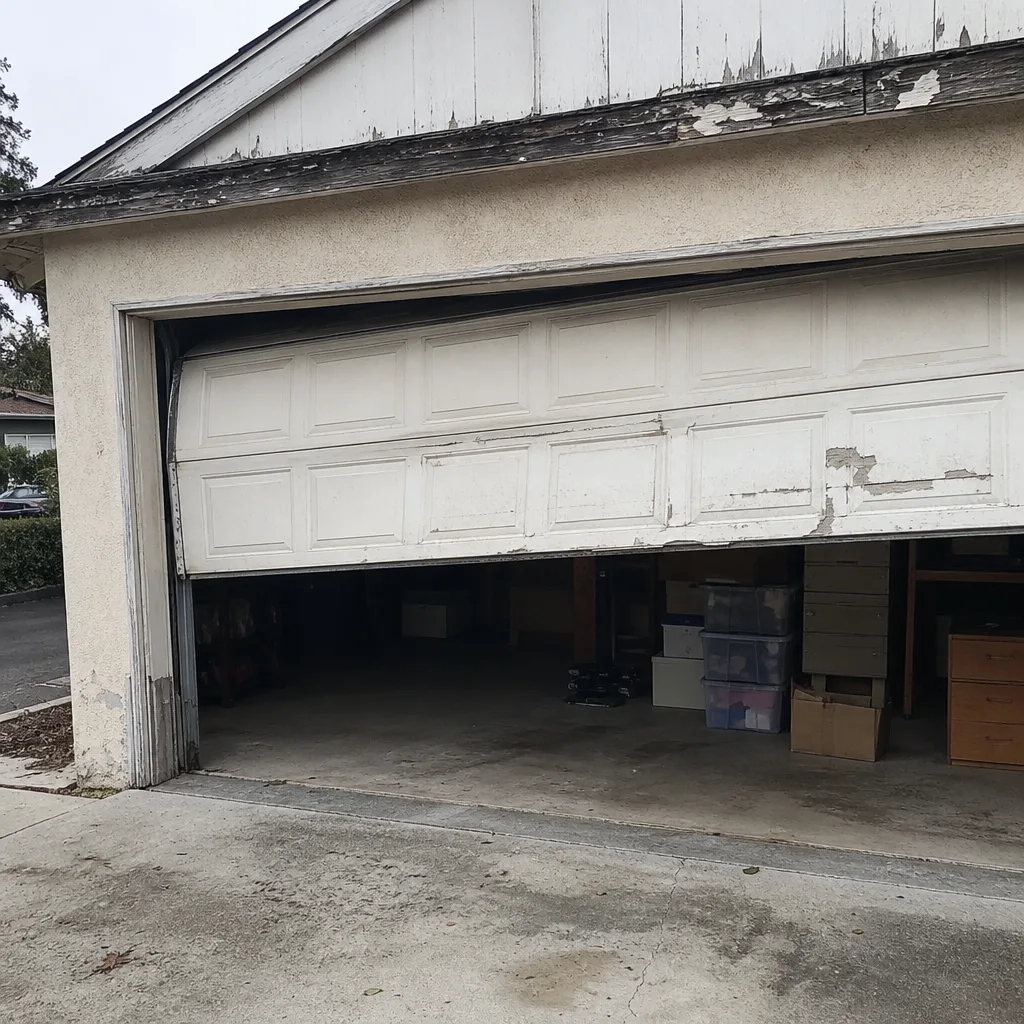 Before
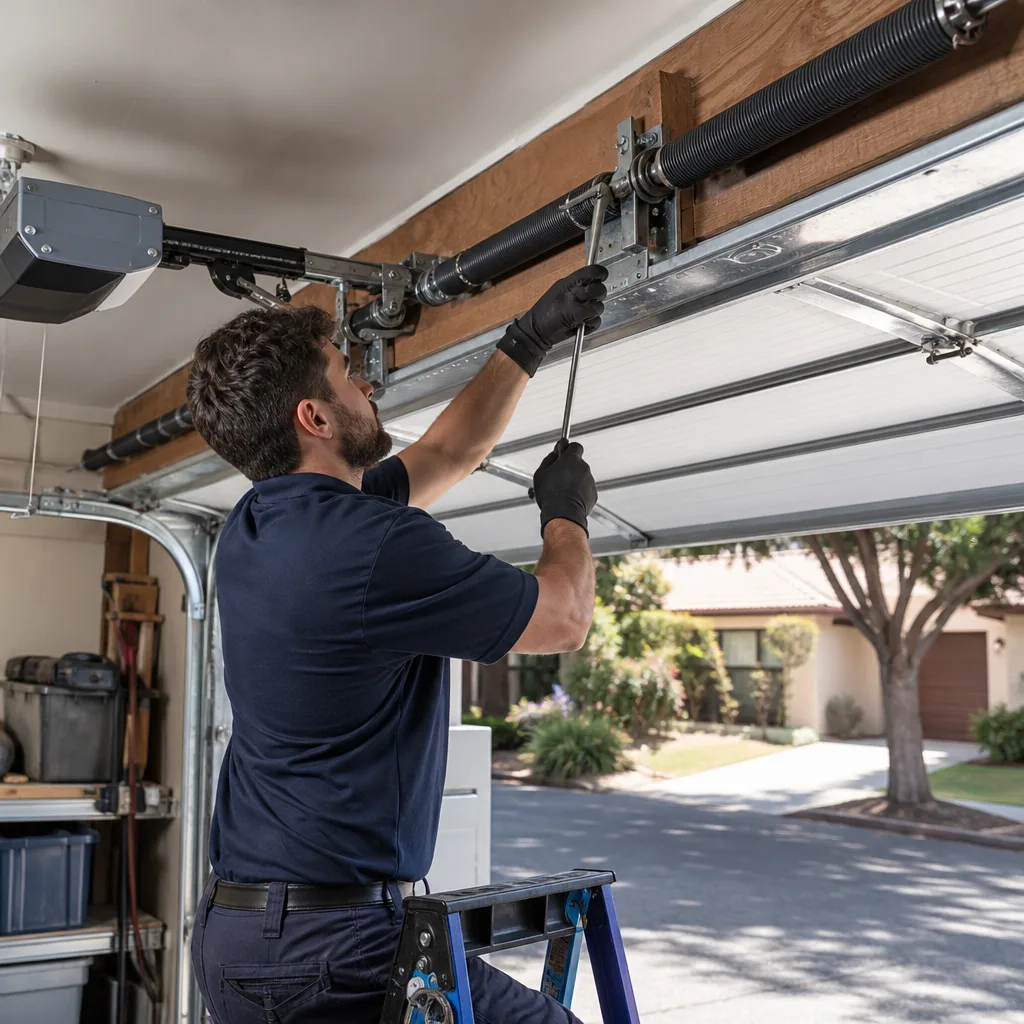 After
After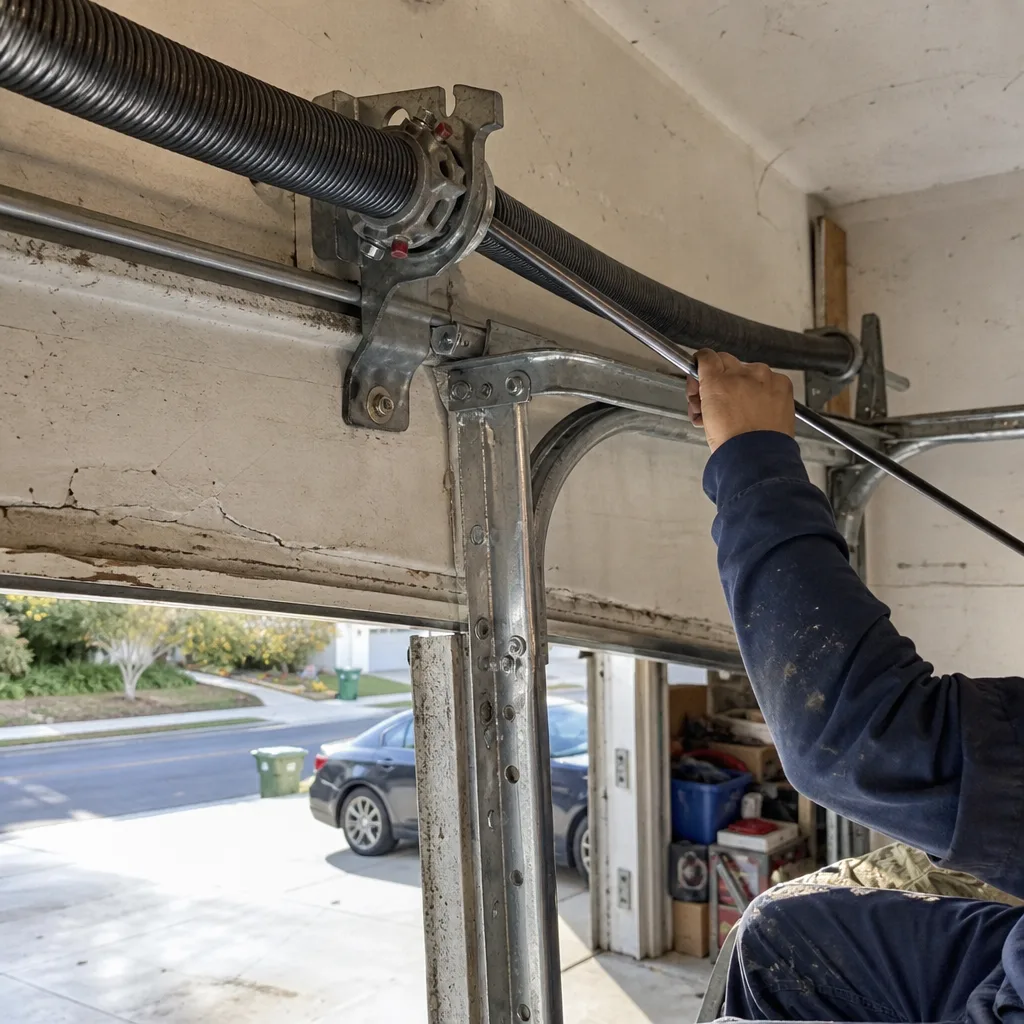 Before
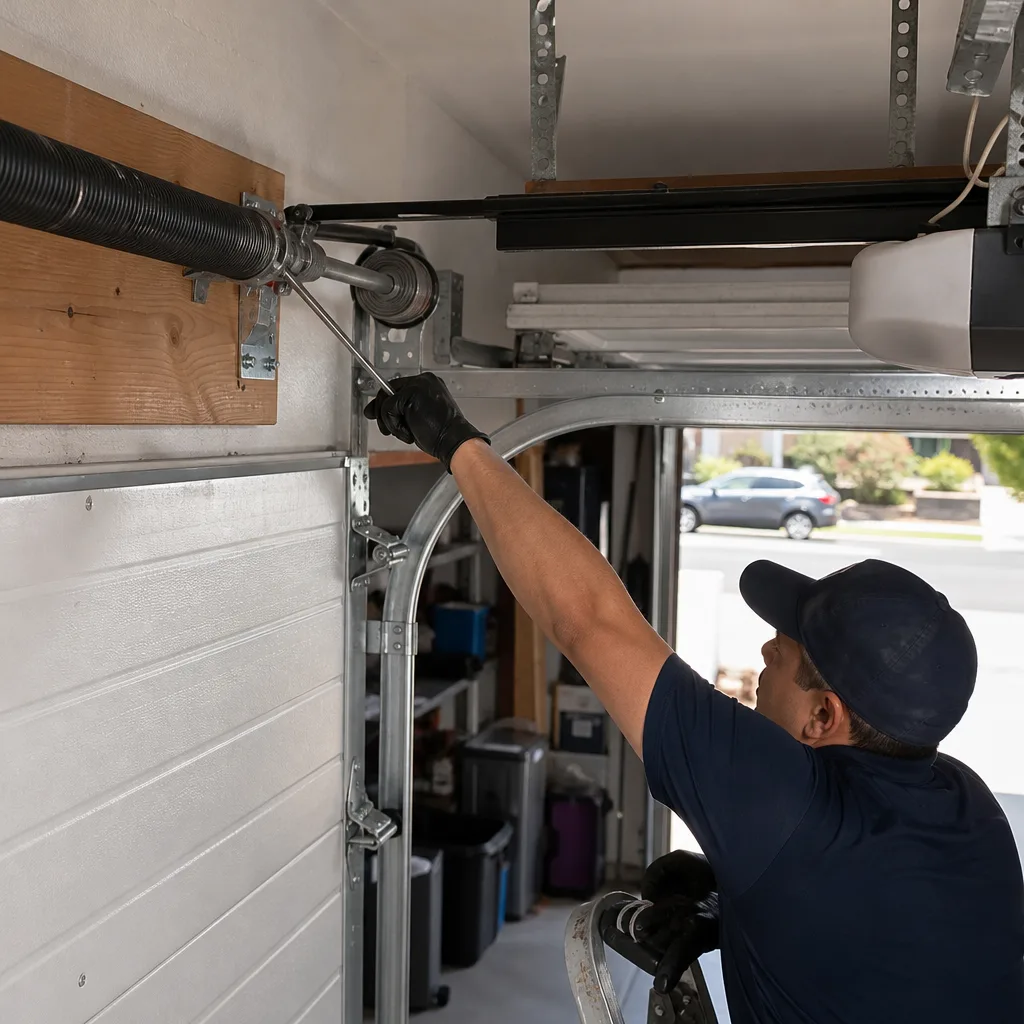 After
After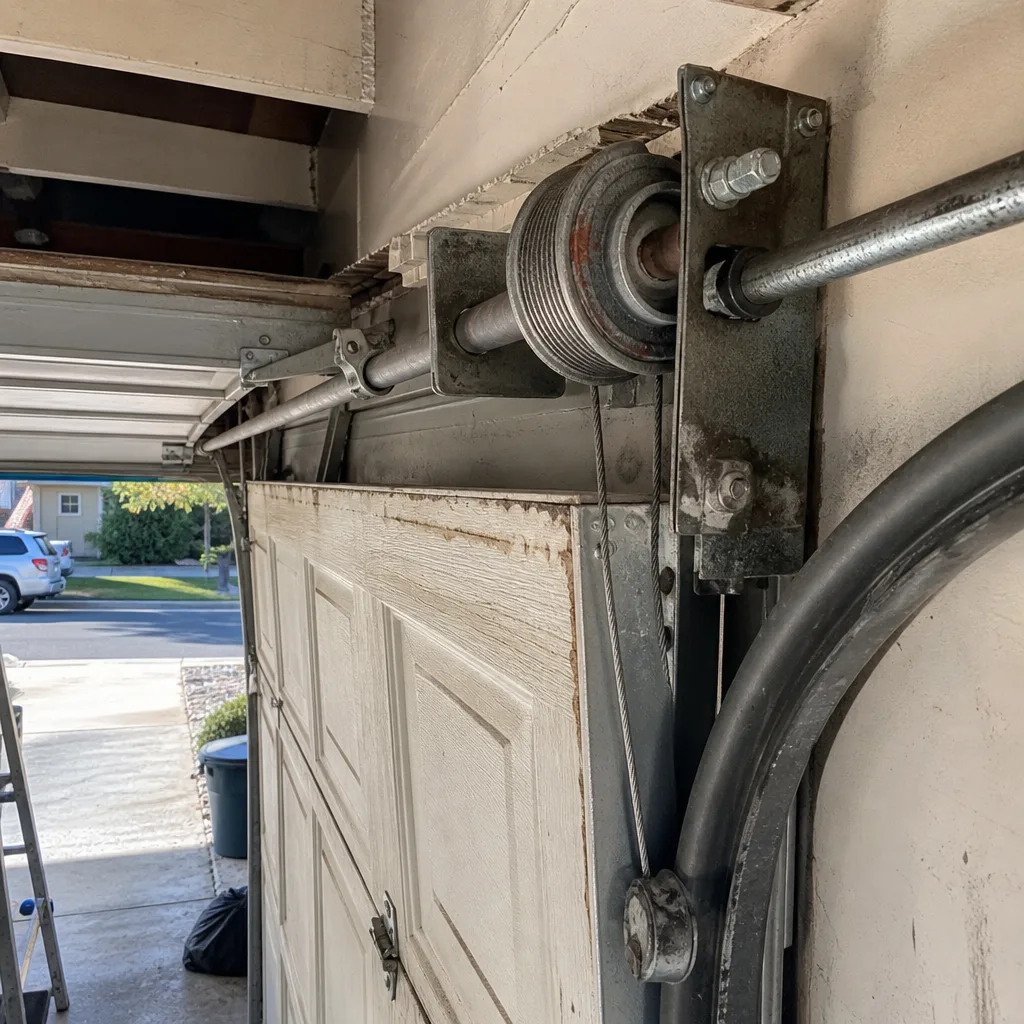 Before
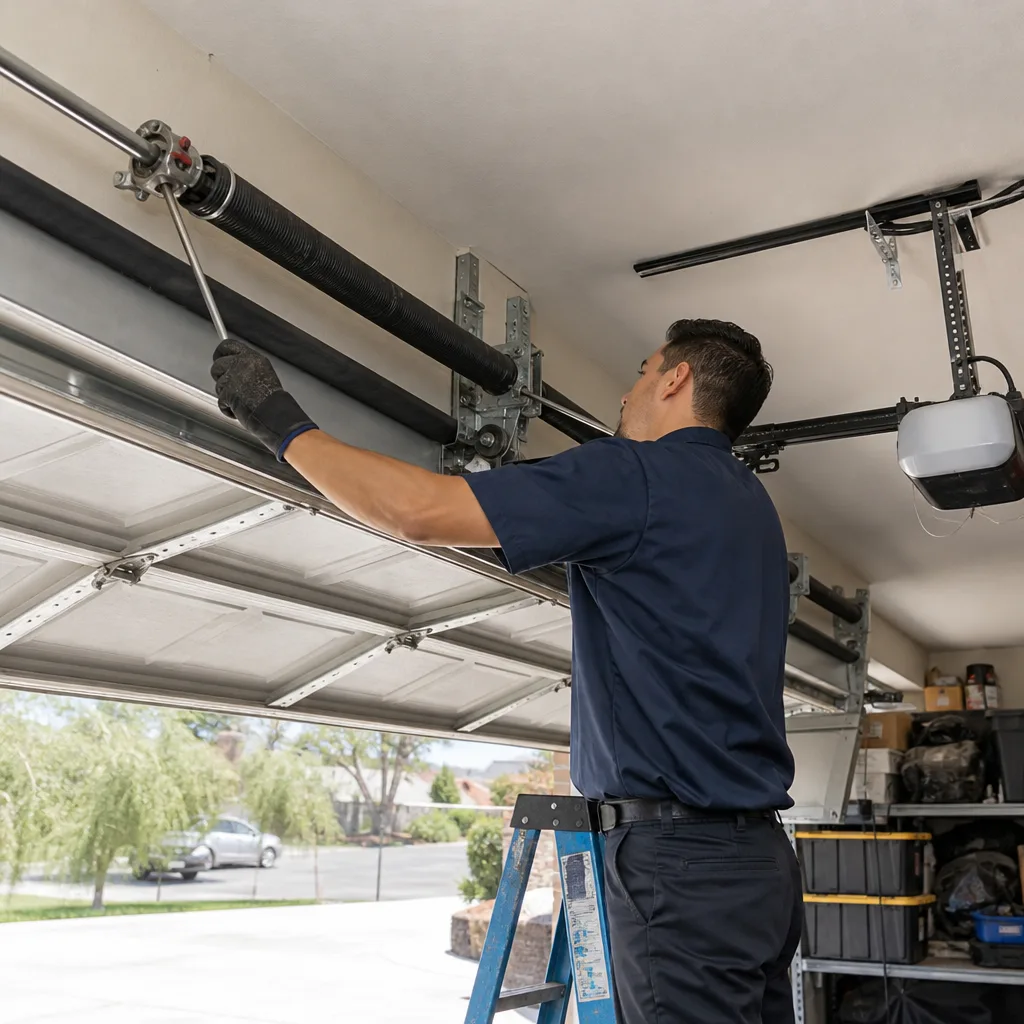 After
AfterGarage Door Repair Troubleshooting: Common Problems and How to Fix Them
A torsion spring on a standard residential garage door holds roughly 200 foot-pounds of torque when wound. That’s enough stored energy to break bone, sever fingers, or worse if it lets go while you’re standing in the wrong spot. Most troubleshooting guides skip right past that fact and walk you through “inspecting the spring” like it’s no different from checking a lightbulb. This guide draws the line clearly: which symptoms you can safely investigate yourself, which ones mean you step back and pick up the phone, and how to describe what you’re seeing so a technician in Los Angeles can diagnose it in five minutes instead of thirty.
Quick Answer
Most garage door failures trace back to four causes: broken springs, worn rollers, misaligned tracks, or failed opener components. Safe DIY troubleshooting covers visual inspection from a distance, documenting symptoms with photos, and basic maintenance like lubrication and bolt tightening. For Garage Door Repair Warning Signs Every Homeowner Should Know, check our guide before you start. Anything involving torsion springs, cables under tension, or the opener’s internal gears should be handled by a trained technician. Use the symptom triage table below to sort your problem before you touch anything.
Table of Contents
- Symptom Triage: Safe to Look vs. Stop and Call
- What That Sound Actually Means: Spring, Roller, or Loose Bolt
- How to Tell a Spring Problem from a Cable Problem from a Track Problem
- Why Your Door Reverses Before Closing (It’s Usually Not the Sensor)
- Documenting the Problem Before You Call: Photos That Save Time
- Maintenance You Can Do Yourself Without Risk
- Garage Door Troubleshooting in Los Angeles: What the Climate Does
- Common Mistakes to Avoid
Symptom Triage: Safe to Look vs. Stop and Call
Before any homeowner touches garage door hardware, they need to know which investigations are safe and which are not. The rule is simple: anything that involves releasing or adjusting spring tension, removing cables, or disassembling the opener is a stop-and-call situation. Anything that involves looking, listening, photographing, or tightening loose bolts from a stable position is generally safe.
Here is the breakdown, symptom by symptom:
Safe to Look At Yourself
- Door is noisy during operation – You can safely watch the rollers traverse the track, listen for where the sound originates, and visually check for loose bolts or worn roller wheels.
- Door sticks or hesitates partway up – You can check for visible debris in the tracks, loose hardware on the door panels, or weathering on the weatherstripping.
- Remote or keypad works inconsistently – You can check batteries, clear obstructions from the photo-eye path, and verify the opener is receiving power.
- Door closes and immediately reverses – You can check the photo-eye alignment, inspect the closing force setting, and clear any small objects from the floor sensors.
- Visible rust or wear on rollers, hinges, or track brackets – You can photograph and document this safely from standing height.
Stop and Call Immediately
- Torsion spring is visibly broken – You’ll see a gap in the coil, usually near the center mounting bracket. Do not attempt to touch, unwind, or adjust anything near it.
- Lifting cable is frayed, loose, or hanging from the drum – A cable that’s off the drum means the spring was doing all the work or the door was recently under force. Both conditions are dangerous.
- Door is off balance when opened manually – If the door rises halfway and then drops, or requires significant effort to lift, a spring has likely failed. Testing this is safe; fixing it is not.
- Bottom panel is damaged or wheel came off the track – This changes the door’s weight distribution. Continuing to operate the opener can compound the damage.
- Any loud bang or snapping sound during operation – That’s a spring letting go. The door may still partially operate, but the remaining system is under abnormal stress.
In Los Angeles, where many homes have detached garages that double as workshops or storage, an unbalanced door frequently gets ignored until a cable snaps or a panel bends. We see it regularly. The earlier you identify the problem, the smaller the repair bill.
What That Sound Actually Means: Spring, Roller, or Loose Bolt
Garage doors talk. The specific sound you hear tells you a lot about what’s failing, if you know how to listen. Here is the plain-language translation of the most common noises:
The Spring Snap
If you hear a loud bang that sounds like a firecracker or a heavy object hitting the floor, that’s a torsion spring breaking under load. The sound is sudden and sharp, often described as a gunshot-like pop coming from above the door. Sometimes you’ll notice the door suddenly feels heavy when operated manually afterward. In other cases, the opener motor will strain and stall because it’s trying to lift a door that the spring is no longer counterbalancing. This is a stop-and-call situation. Period.
The Rattle
A persistent rattle or vibration during travel usually means loose hardware: bolts on the hinges, track brackets, or the opener’s mounting strap. The sound will typically change depending on which section of track the door is on, because different joints flex differently at different angles. Tightening bolts with the door closed and the opener disconnected is safe. If the rattle continues after hardware is confirmed tight, it’s often a worn roller bearing.
The Squeal or Grind
A high-pitched squeal that’s consistent with door movement points to rollers that have lost their lubrication or have flat-spotted bearings. Metal rollers eventually wear internally and start to drag instead of roll. A grind is worse: that often indicates the roller is dragging across the track due to a misaligned track section or a door that’s pulling to one side. In Los Angeles, our dry conditions accelerate roller bearing wear because fine dust works its way into the bearing race over years.
The Ticking or Clicking
A rhythmic tick that matches the speed of the opener drive chain or belt is usually the drive mechanism contacting the rail or a worn sprocket. If the opener is a chain drive, the chain may have stretched and needs adjustment. A loose chain will sag and slap the rail, producing a metallic clicking. This is an opener-level issue, and while it’s not immediately dangerous, it will wear down the sprocket faster if left alone.
How to Tell a Spring Problem from a Cable Problem from a Track Problem
One of the most common calls we get in Los Angeles starts with “my door won’t open” and ends with a repair that could have been diagnosed in the first two minutes. The key is knowing which system is actually failing. Spring, cable, and track problems present differently, and here’s how to distinguish them from a safe distance:
Spring Problems: The Symptom Profile
- The door opens several inches and then stops, or the opener strains and stalls.
- When you pull the emergency release (the red cord hanging from the opener rail) and try to lift the door manually, it doesn’t hold position; it’s extremely heavy.
- You can see a visible separation in the torsion spring coil above the door.
- The door appears level when closed, but moves unevenly when the opener begins to lift.
One broken spring means the remaining spring is shouldering the full load with half the lifting capacity. The door may still open with effort, but running it repeatedly in that state is how you turn a $200 spring replacement into a $500 opener motor failure. Stop using the door until the spring is replaced.
Cable Problems: The Symptom Profile
- The door lifts unevenly, with one side visibly higher than the other as it starts to travel.
- You can see a cable hanging loose or spray-frayed near the drum at the top of the track.
- The door binds or jams at a consistent point during travel, usually where the cable has jumped the drum groove.
- You hear a rubbing sound along one side as the door moves.
Cables are under the same tension load as the springs. A cable that’s frayed or off its drum should never be touched by hand. The cable itself is not expensive; the labor to safely de-tension the spring, set the drum, and re-spool the cable is what you pay for. In our market, most cable repairs run $150 – $275, depending on cable type and drum condition.
Track Problems: The Symptom Profile
- The door moves freely for part of its travel, then binds or jumps at a specific spot.
- You can see a visible gap between the roller and the track channel in one section.
- The door makes a scraping sound, and you can see fresh metal wear marks on the track itself.
- The vertical and horizontal track sections are visibly out of alignment at the joint, or a bracket has pulled loose from the wall.
Track problems are often the slowest to develop and the easiest to ignore. A Los Angeles home that shifts during the rainy season, or a car bumper that grazes the bottom track bracket, can knock things just enough to start a wear pattern. Track misalignment is sometimes adjustable with standard hand tools, but if the track itself is bent or the brackets have pulled from the framing, replacement is the permanent fix.
Why Your Door Reverses Before Closing (It’s Usually Not the Sensor)
The photo-eye sensors at the bottom of the door tracks take the blame for most “door closes halfway then goes back up” calls. In our experience, sensors are responsible less than half the time. Here’s what else causes it:
- Closing force setting is too low. The opener has an internal force adjustment that tells the motor how much resistance is acceptable before it reverses for safety. If the door’s rollers are dragging, the weatherstripping is stiff, or the track is slightly misaligned, the motor hits that resistance threshold and reverses. Technicians see this more than bad sensors in Los Angeles, especially on older openers that have gone years without a force adjustment.
- A roller has flat-spotted or the bearing is grinding. Increased friction triggers the same safety reverse. The sensor never entered the equation; the motor simply felt too much resistance.
- The door’s balance has changed due to a weakening spring. If the opener has to work harder to lower the door because the spring isn’t counterbalancing properly, it’ll reverse thinking it hit an obstruction.
- The photo-eye sensors are actually misaligned. The lights on the sensors will usually indicate this: one sensor will have a steady light, the other will blink or go dark. This is the sensor problem everyone defaults to, and it’s the easiest to check.
- Direct sunlight hitting the receiver sensor. This one catches a lot of Los Angeles homeowners off guard. Intense afternoon sun hitting the photo-eye can wash out the infrared beam. If your door reverses only at certain times of day, that’s your clue.
The takeaway: if your sensors are aligned and clean, the reversal is almost always downstream of the closing force setting, a worn roller, or an aging spring. Those require different fixes, and none are DIY.
Documenting the Problem Before You Call: Photos That Save Time
A five-minute diagnosis call starts with good documentation. We ask every Los Angeles homeowner who calls us for service to do the following before they dial. It makes the conversation faster and the first visit more likely to be the only visit:
- Photograph the entire door from the inside. Stand back far enough to capture the full width of the door, the springs above it, and the track on both sides. This gives the technician a baseline before anything is touched.
- Photograph the torsion spring area specifically. Get a clear shot of the spring’s center mounting bracket. If the spring is broken, the gap will be visible in this photo. This is a hands-off photo: use your zoom, not your footstool.
- Photograph each track where the vertical section meets the horizontal curve. That’s where misalignment and roller wear show up first.
- Photograph any cables or drums. If a cable is frayed or off the drum, capture it wide enough to see how it’s routed.
- Video the door in operation, if it moves at all. A 10-second clip of the door opening and closing tells a technician more about balance, sound, and travel than any verbal description. Hold the phone steady, stand to the side, and capture the full door.
- Note the opener brand and approximate model. LiftMaster, Chamberlain, Genie, Craftsman, and Raynor all have different mounting and adjustment patterns. The brand sticker on the opener motor housing is usually visible.
When you call Brock Garage Door Repair for our Garage Door Repair services, you’ll speak with a live person who can walk you through exactly which photos will help most. For homeowners in the Los Angeles area planning a garage door opener repair or cable repair, a photo set like this routinely cuts the on-site diagnosis time in half.
Maintenance You Can Do Yourself Without Risk
Most garage door maintenance is genuinely safe and will extend the life of your system. Here’s what you can do with the door closed and the opener unplugged:
Tighten Loose Hardware
Door panels, hinges, and track brackets all vibrate during operation. Over years, that vibration loosens bolts. With the door closed and the opener disconnected, walk the inside perimeter with a socket set and snug any bolt that has backed out. Don’t over-torque: the goal is snug, not stripped. This single habit eliminates a large share of rattles and door sag in Los Angeles, where older garage door installations often used undersized lag bolts into drywall anchors that have since loosened.
Lubricate Moving Parts
Use a silicone-based or lithium-based spray lubricant on the rollers (metal rollers only, skip nylon-wheel rollers), hinges, and the torsion spring. A light coating is enough; you’re not hosing down the door. If your rollers are sealed-bearing nylon wheels, don’t lubricate them at all. The spring benefits from a thin coat to reduce friction between coils. Do this twice a year, and factor in that Los Angeles’s dry air means the factory lubrication on older opener internals dries out faster than coastal climates.
Check the Balance
Disconnect the opener by pulling the red emergency release cord. With the door closed, lift it manually to about waist height. If it stays put, the springs are doing their job. If it drops, the springs have weakened. If it shoots upward, the springs are overtensioned. These are both signs you need a professional. Testing the balance is safe. Adjusting the springs is the thing that lands people in the emergency room.
Inspect Weatherstripping and Bottom Seal
The rubber seal at the bottom of the door keeps water, dust, and rodents out. In Los Angeles neighborhoods, cracked or flattened weatherstripping lets hot air in and conditioned air out. Replacement strips cost little and slide into the bottom retainer channel without tools. If the retainer itself is mangled, that’s a more involved replacement best left to a technician.
Garage Door Troubleshooting in Los Angeles: What the Climate Does
Los Angeles homes have idiosyncrasies that affect garage door performance in ways a national guide won’t mention. Hot, dry summers bake the grease out of opener gears and rollers. Homes built in the 1950s through 1970s often have original track hardware that was sized for lighter wooden doors, then upgraded to insulated steel doors without upgrading the tracks. The combination of heat cycling, drought-dry air, and that legacy hardware mismatch means Los Angeles technicians see roller failures and track fatigue earlier than other markets. For a local breakdown, see Garage Door Warning Signs: A Los Angeles Homeowner’s Reference Guide.
Garages in Los Angeles also serve a lot of purposes: workshops, gyms, storage units, even home offices. That means the door cycles more often than the national average. A door that opens four times a day puts more wear on rollers, hinges, and the opener’s drive mechanism than one that opens twice. The springs don’t care how often the door cycles; they have a rated cycle life measured in thousands of operations. But everything else wears faster.
For those of us running service routes across the city, from the older coastal neighborhoods to the valley heat, the pattern is consistent: most emergency calls come from homeowners who noticed something small three weeks ago and kept hitting the button. We’d rather take the ten-minute maintenance call than the three-hour emergency call, and your garage door would too. Browse more guides & resources to stay ahead of problems.
Brock Garage Door Repair handles garage door repair across the Los Angeles area with technicians trained on LiftMaster, Chamberlain, Genie, Clopay, Amarr, Wayne Dalton, Craftsman, and Raynor systems. We work to a standard our customers can hold us to, and the price is always written before the work begins. The Brock Garage Door Repair home page has more about how we run service calls.
Common Mistakes to Avoid
- Attempting to reset or rewind a torsion spring. This is the #1 injury source in garage door work. The spring is under massive tension, and any mistake during winding releases that tension instantly. No YouTube video makes this safe. Call a professional.
- Continuing to operate a door with a known broken spring. Every additional cycle puts the opener motor, the remaining spring, and the cables under load they weren’t designed to handle. What could have been a $200 repair becomes a $600 repair.
- Ignoring a cable that’s sitting loose on the drum. A loose cable means the door’s tension system has failed in some way. Continuing to use the opener compounds the misalignment and can pull the door off its track entirely.
- Replacing the opener on an unbalanced door. If the door doesn’t hold position manually, a new opener will struggle from day one and its service life will be a fraction of what the manufacturer rates. Balance comes first; opener replacement comes second.
- Using WD-40 on rollers and hinges. WD-40 is a water displacer, not a lubricant for high-contact metal parts. It strips away existing grease and leaves surfaces with minimal protection. Use silicone or lithium spray instead.
- Adjusting the opener’s force setting to mask a mechanical problem. Cranking the closing force up because the door keeps reversing treats the symptom, not the cause. It also creates a safety hazard: a door with excessive closing force is a pinch risk for kids and pets.
- Skipping the photo documentation before calling. When you can’t describe what “that sound” was, a technician on the phone is guessing. Photos and a short video turn the diagnostic conversation into something concrete.
When to Call a Professional
Call a professional any time the problem involves a spring under tension, a cable that’s off its drum or fraying, a door that’s off its track, or an opener that’s making grinding noises from the motor housing. These are not maintenance items; they’re repair items, and the difference matters.
Also call if your door is unbalanced, if you hear a banging sound during operation that you can’t trace to a specific loose bolt, or if the door closes and reverses despite clean, aligned sensors. These are compound issues that typically require diagnosing multiple components at once.
Brock Garage Door Repair offers free estimates in Los Angeles – call (254) 602-5116. A live person answers 24 hours a day, seven days a week. The price is quoted and agreed before any work starts, and every repair is covered by our 365-day written guarantee.
Frequently Asked Questions
You’ll typically see a visible gap in the spring coil above the center of the door, or you’ll hear a loud bang during operation followed by the door refusing to lift normally. When you pull the emergency release and try to lift the door manually, it will feel extremely heavy and won’t hold at waist height. If any of these symptoms match, stop using the door and call a professional.
The most common reasons are photo-eye sensors that are misaligned or blocked, a closing force setting that’s too low, or a door that’s binding in its tracks and triggering the safety reverse. Check the sensor alignment and clear the floor area first. If the door still won’t close, the problem is likely mechanical, and a technician can diagnose it quickly.
Most spring replacements in the Los Angeles area run $180 – $340 per spring, depending on the spring’s size, cycle rating, and whether you’re replacing one or both. Roller replacements typically run $90 – $160 for a full set. Track realignment or minor adjustment work usually falls in the $100 – $200 range. Every Brock Garage Door Repair job includes a written price before work begins, so the number you’re quoted is the number on the invoice. Call (254) 602-5116 for an exact quote.
Yes, lubrication of hinges, metal rollers, and the torsion spring is a safe and simple maintenance task you can do twice a year with a silicone or lithium spray. Avoid WD-40, which strips lubricant rather than adding it. The one thing you should never lubricate is the inside of a sealed-bearing roller; it’s designed to run dry.
A loud bang during operation is usually a torsion spring snapping. The spring is under several hundred pounds of torque, and when it fails, the release is sudden and sharp. A bang can also come from a cable breaking or a panel separating at a hinge. In any case, a bang means something structural failed, and the door should not be operated until it’s inspected.
Garage door repair addresses the mechanical door system: springs, cables, rollers, tracks, panels, and balance. Garage door opener repair addresses the motor unit, drive mechanism, sensors, remote programming, and limit settings. A door that won’t move at all could be either; a door that moves but reverses, grinds, or makes opener-level noise is usually an Garage Door Opener Repair in Los Angeles situation. Brock handles both, and often the diagnostic call identifies both working together.
Yes. Our Garage Door Cable Repair in Los Angeles service covers frayed cables, cables that have jumped the drum, and cables that snapped due to spring failure. Cable repair always includes a spring tension check because the two systems operate together. A cable that failed usually indicates the spring was underperforming, and a proper repair addresses both.
The Bottom Line
Troubleshooting a garage door comes down to sorting symptoms into two buckets: what you can safely see and what requires a trained hand. Sounds, balance, and visual wear patterns tell you a lot if you listen and look before you touch. Springs, cables, and anything under tension belong to a professional, full stop. Document what you see with photos, keep up with basic lubrication and bolt checks, and call sooner rather than later when something changes. In Los Angeles, Garage Door Repair in Los Angeles that’s handled early costs less and lasts longer. If you need us, we answer the phone around the clock at (254) 602-5116.
Written by Wade Mercer, Owner at Brock Garage Door Repair, serving Los Angeles since 2001.