
Last updated October 9, 2026
Full 25-point door and opener safety check with every visit - springs, cables, rollers, tracks, and your LiftMaster or Chamberlain opener included
You get a price before we start. It does not change when the truck arrives.
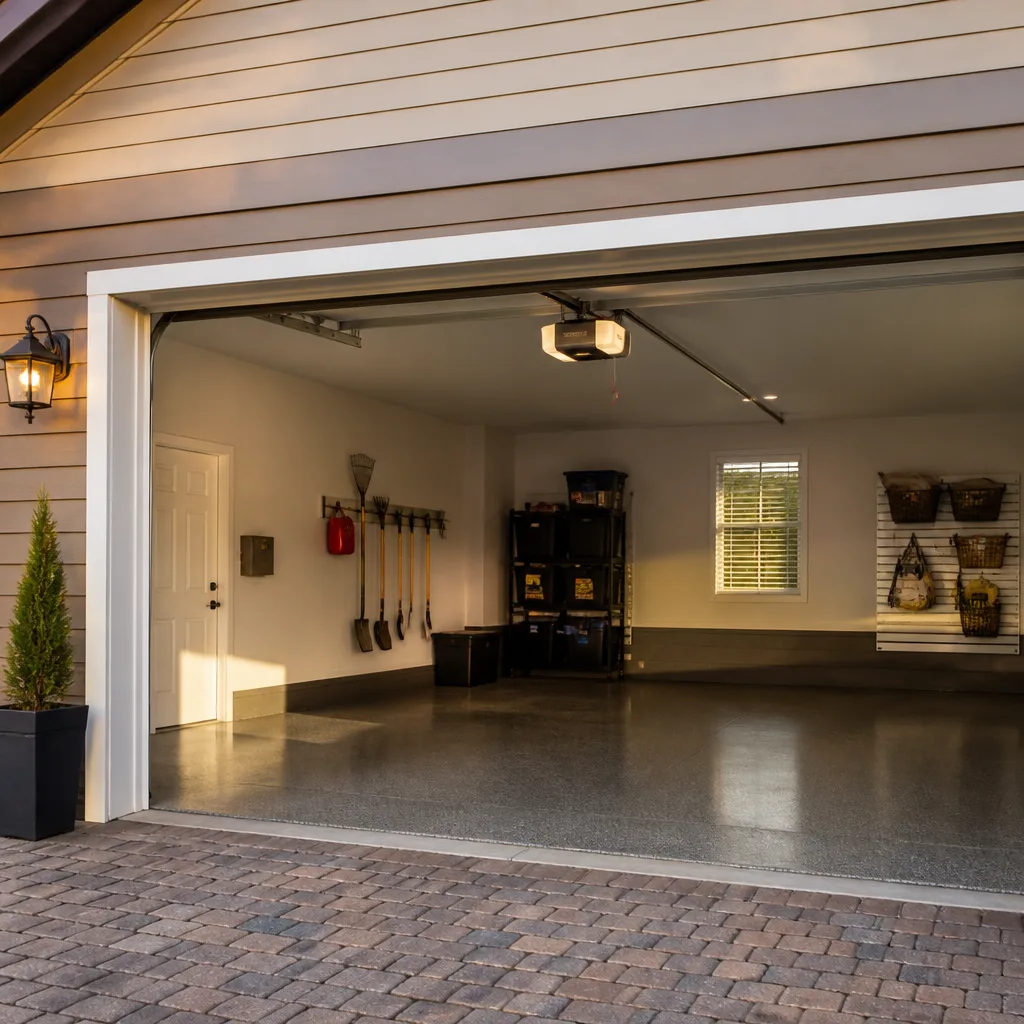
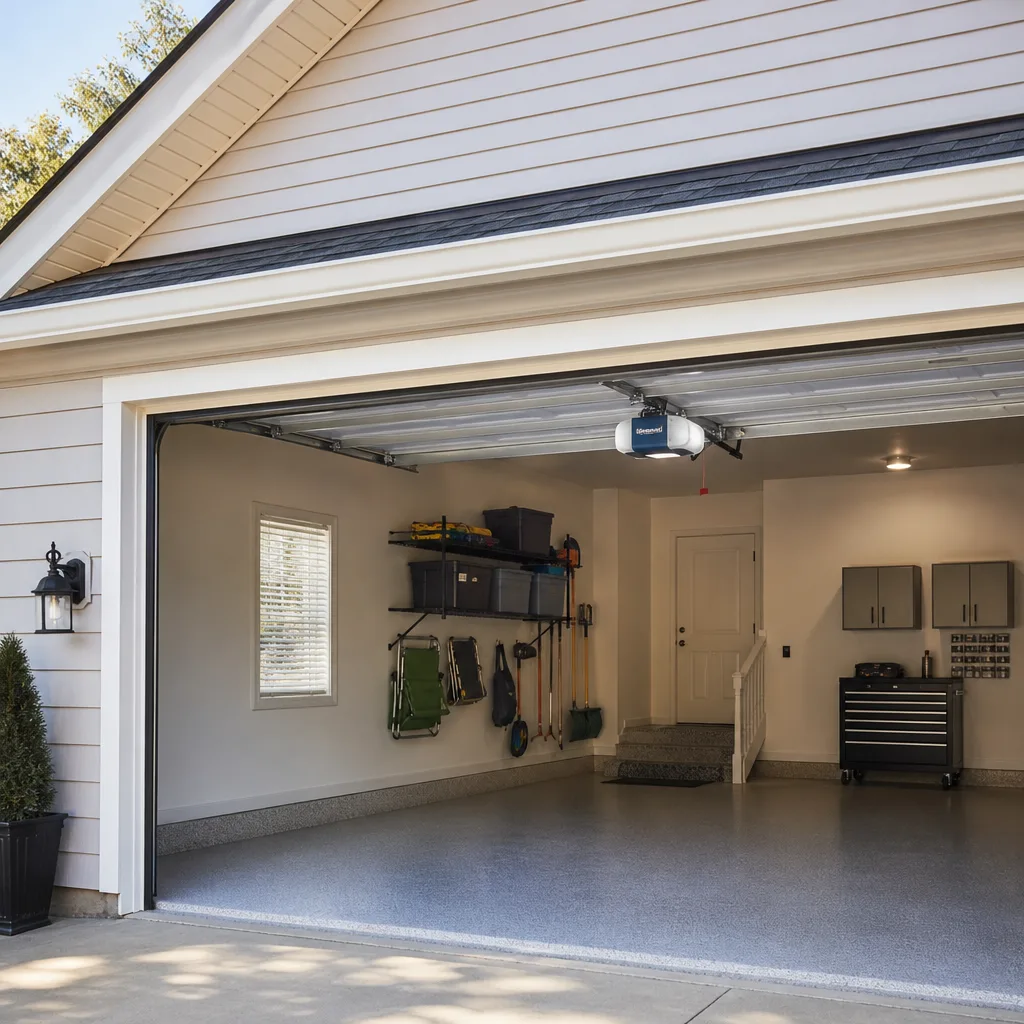
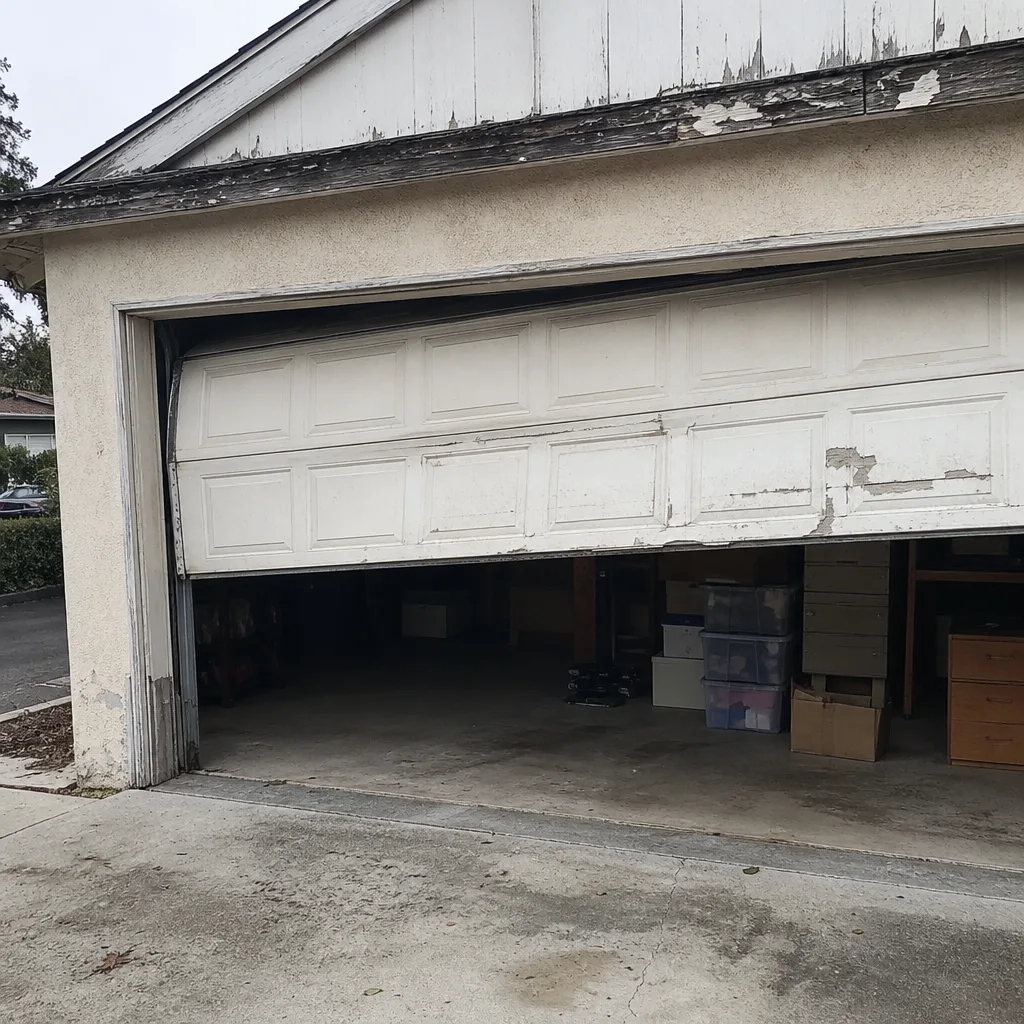 Before
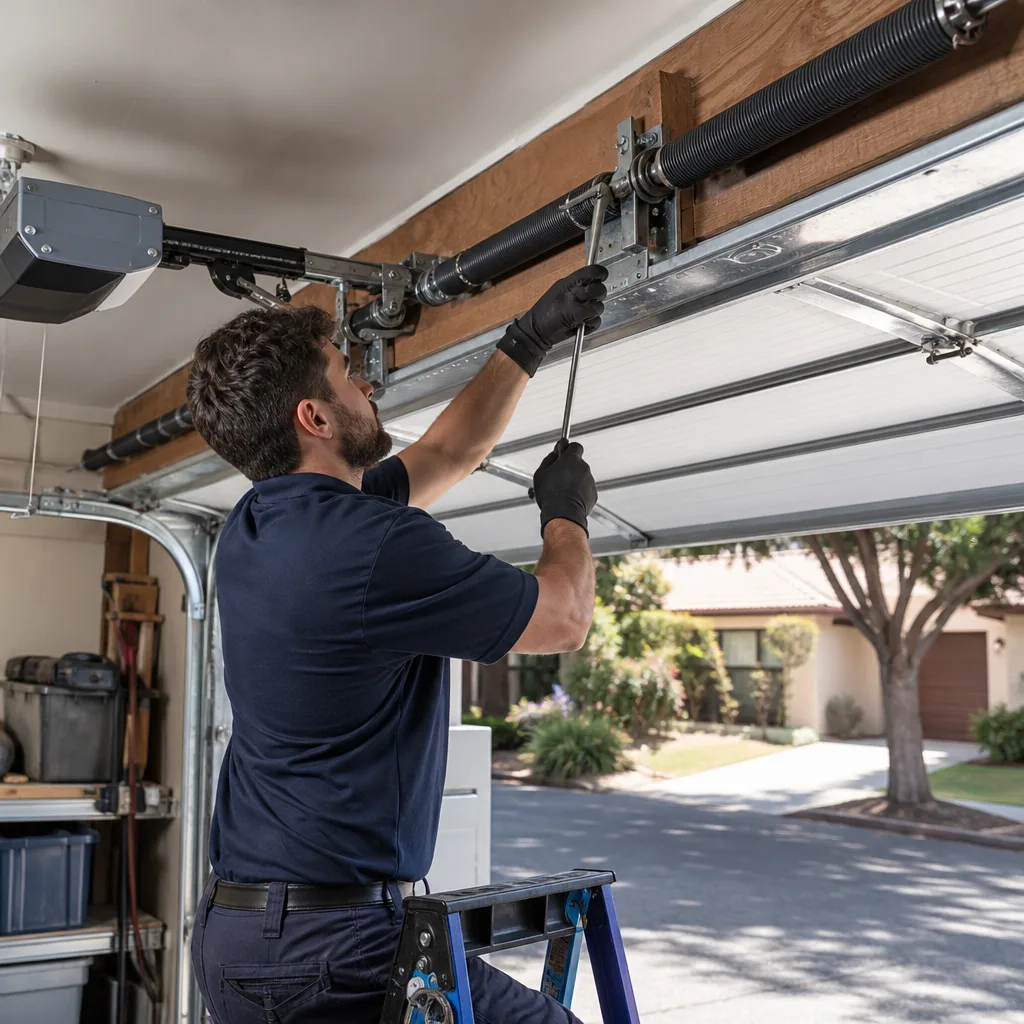 After
After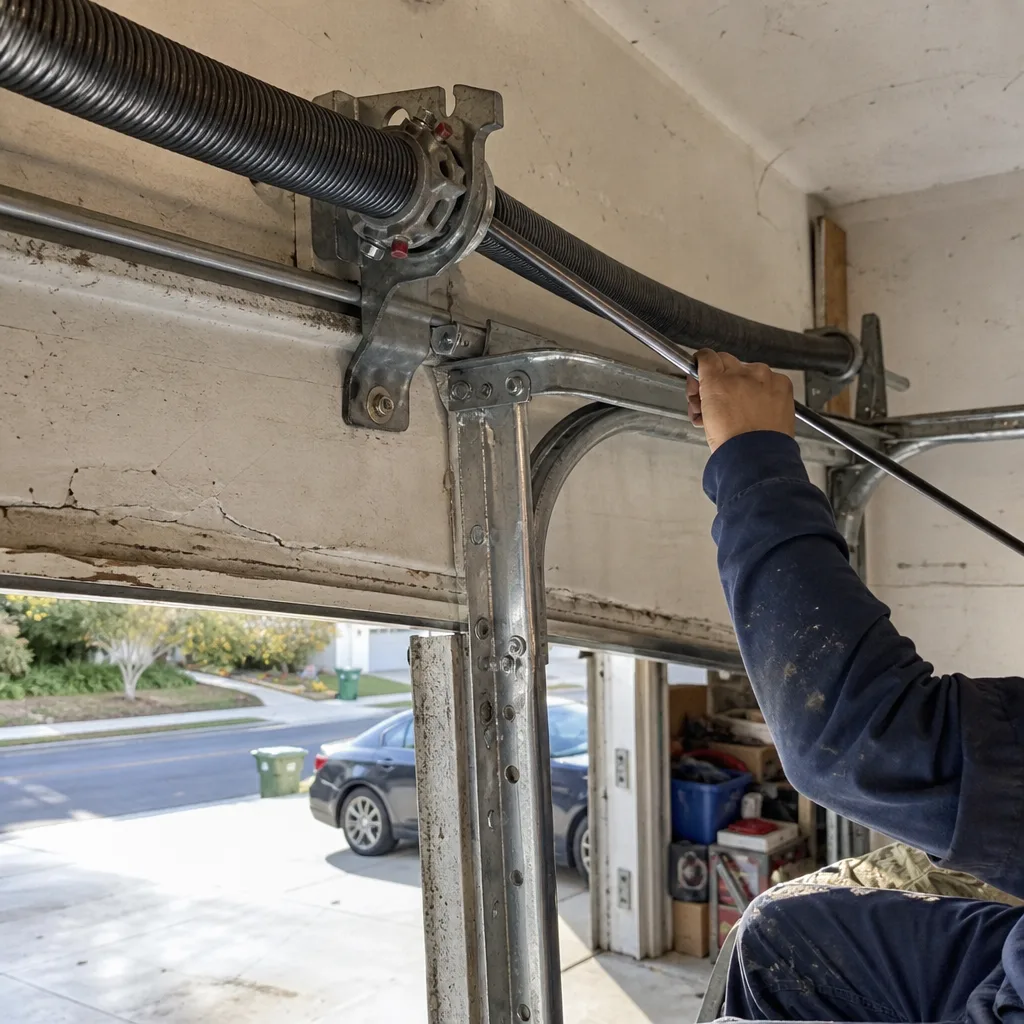 Before
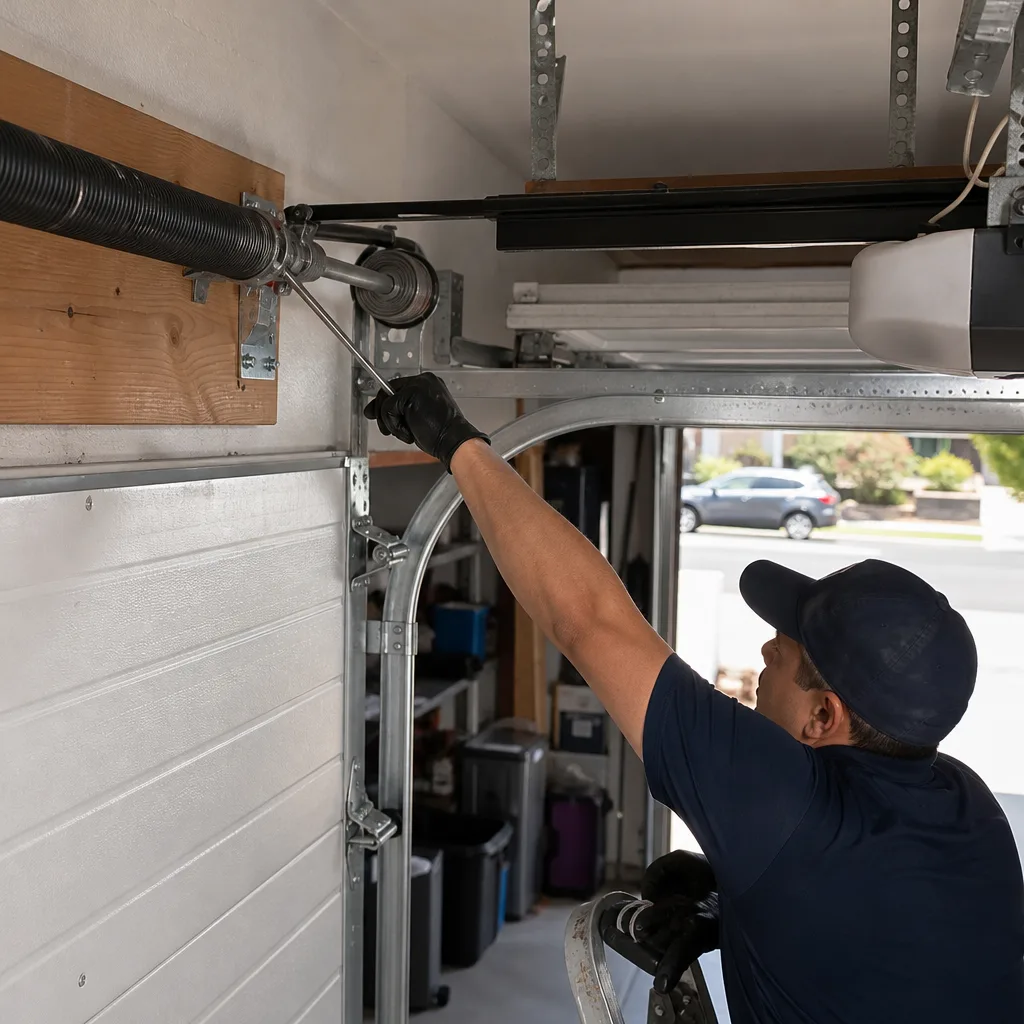 After
After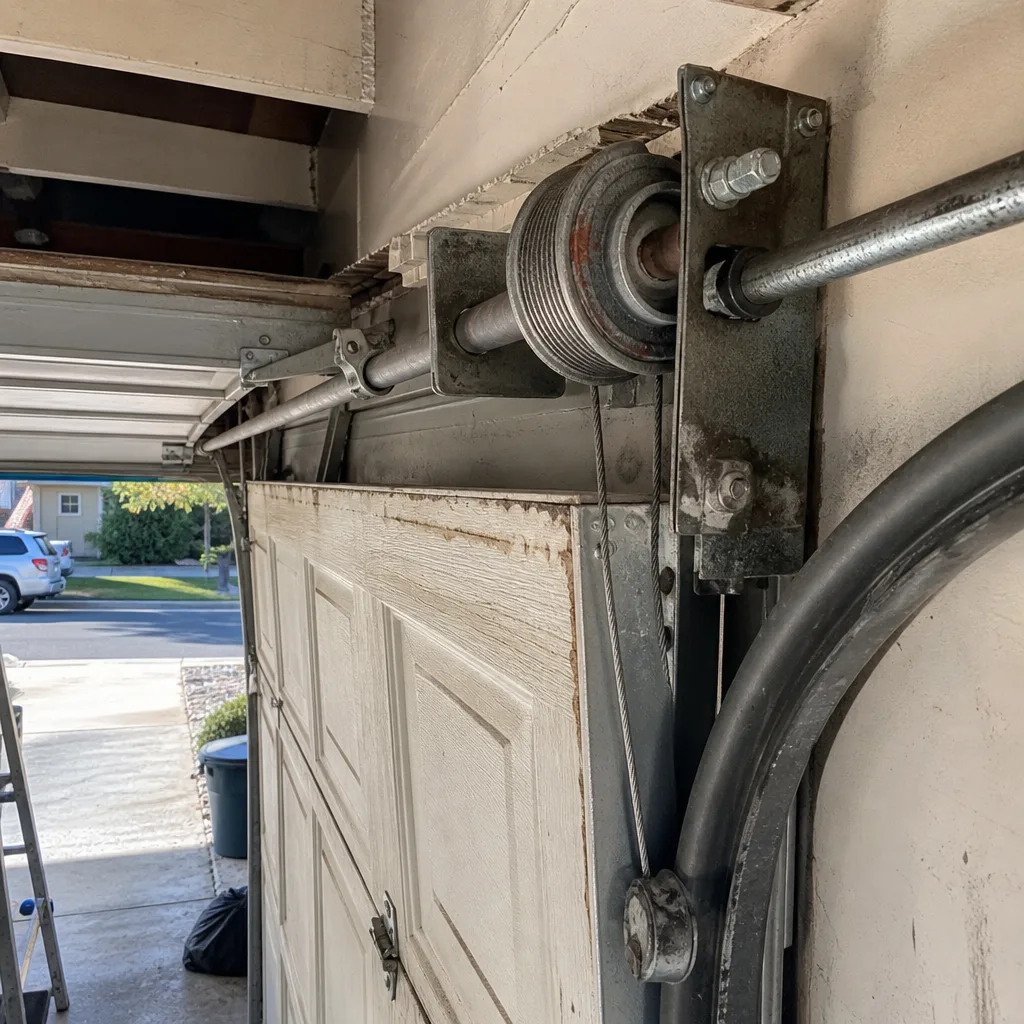 Before
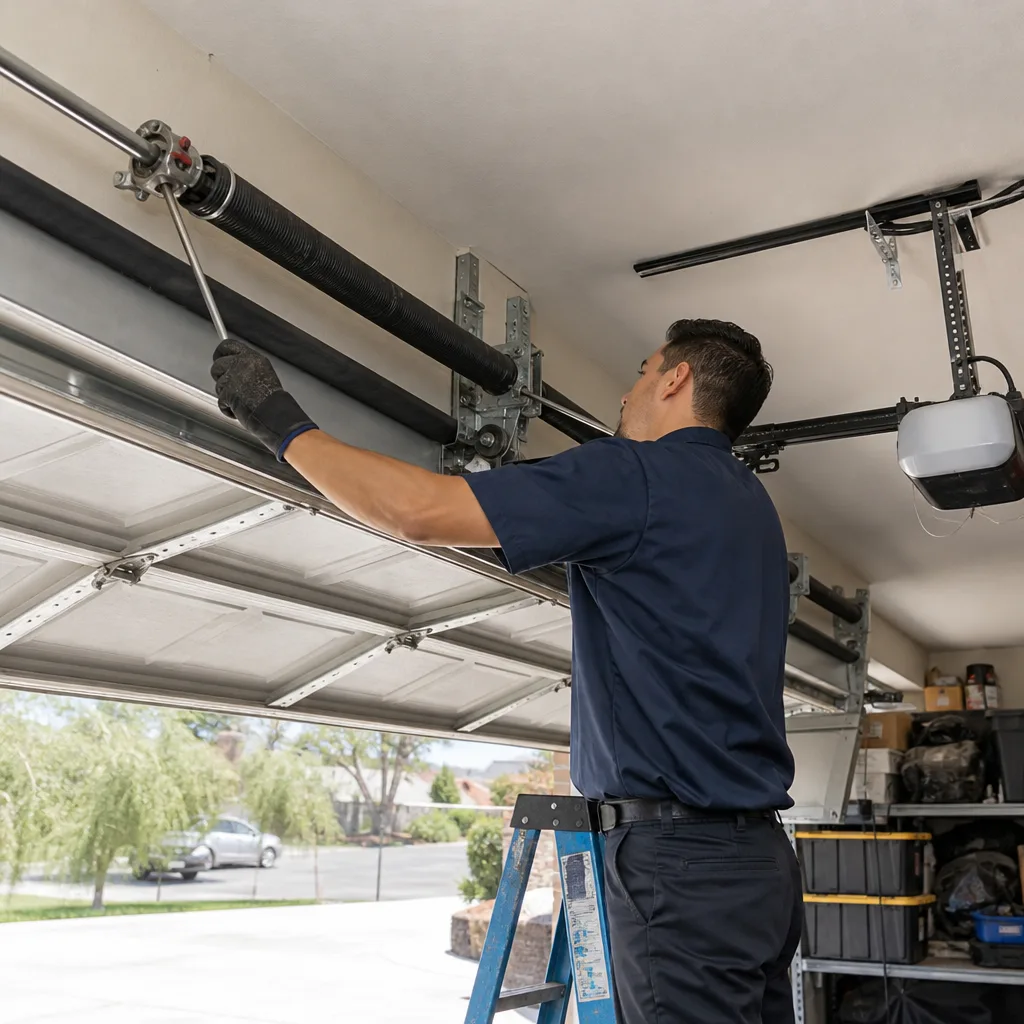 After
AfterGarage Door Repair Warning Signs Every Homeowner Should Know
A garage door doesn’t usually fail without warning. It fails because the warnings looked like minor annoyances until the spring snapped at 6:45 on a Tuesday morning with a car trapped inside. In Los Angeles, where the average garage door cycles 1,500 to 2,000 times a year and coastal moisture works on metal components year-round, the wear progression is predictable. If you know what to look for, you’ll catch most failures two to six weeks before they happen. This guide walks you through the Garage Door Warning Signs: A Los Angeles Homeowner’s Reference Guide that matter, ranked by urgency, so you can schedule a repair on your terms instead of calling in a panic.
Quick Answer
Most garage door failures announce themselves two to six weeks in advance through audible or visible changes: grinding, squealing, or popping sounds, a door that moves slower than it used to, fraying cables, a door that hangs crooked or doesn’t stay open, and springs that show visible separation or rust. If you hear a loud bang and the door won’t move, a spring has snapped and the door should not be operated. Catching the earlier warning signs means a $150 to $275 cable repair instead of a $350 to $600 emergency spring replacement plus a door that won’t open at all.
Table of Contents
- The Five Sounds That Mean Something Is Wrong
- The 3-Minute Visual Spring Inspection That Predicts Failure 60 to 90 Days Out
- Why a Slower Door Is a Mechanical Warning, Not a Quirk
- Cable Fraying: What Early vs. Advanced Damage Looks Like
- A Door That Hangs Crooked or Doesn’t Stay Open
- Track Problems You Can Spot From the Ground
- How to Log Warning Signs for Your Technician
- Common Mistakes to Avoid
- When to Call a Professional
- Frequently Asked Questions
- The Bottom Line
The Five Sounds That Mean Something Is Wrong
Sound is the first diagnostic tool you have, and each noise points to a different problem. In our experience across Los Angeles garages, from Van Nuys to Torrance, the same five sounds show up again and again. Here they are, ranked from “schedule it this week” to “stop using the door now.”
- Squealing or squeaking – This is the earliest and most common warning. It usually means dry rollers, hinges, or bearings. The fix is often lubrication and minor hardware tightening, which is inexpensive if caught early. Schedule it within the week. Left alone for months, dry rollers grind flat and the squeal becomes a grind.
- Grinding or metallic scraping – Grinding means metal is rubbing against metal where it shouldn’t. The roller bearings have failed, or the rollers themselves are worn flat. This is no longer a lubrication problem; it’s a parts problem. Continued use chews up the track and spreads the damage.
- Rumbling or vibration – A low rumble felt through the door and opener usually signals that the torsion spring – the thick coiled spring mounted above the door that bears most of the lifting load – has lost tension. The opener motor is now working harder to compensate, which shortens the life of the opener. This is a week-or-two issue for most homes.
- Popping or cracking during operation – Popping sounds often come from a torsion spring that is binding and releasing in small increments. Sections of the spring may be seizing against each other. This is a spring that is days to weeks from failure. If you hear repeated popping, stop running the door and call a professional.
- A sharp bang, like a gunshot – That is the sound of a torsion spring snapping. The door will not open, and the spring will need full replacement. Do not attempt to operate the door. Do not try to open it manually by pulling the release cord with force; the door is now dead weight, often 150 to 300 pounds. Leave it closed, or if it’s open, call for immediate help.
For homeowners in Los Angeles who aren’t sure which sound they’re hearing, a short phone video recorded during operation takes ten seconds and gives a technician a useful head start. We can often identify the issue from the audio alone before we even arrive.
The 3-Minute Visual Spring Inspection That Predicts Failure 60 to 90 Days Out
Torsion springs have a finite lifespan. Most are rated for 10,000 cycles, which translates to roughly seven to ten years for the average Los Angeles household. What’s less known is that springs show visible warning signs of impending failure well before they snap. This inspection takes under three minutes and requires no tools.
Here’s the step-by-step process:
- Close the garage door fully. The spring is under the least tension when the door is closed, which is the safest position for visual inspection.
- Look at the gap between the coils. On a healthy torsion spring, the coils are spaced evenly with small, consistent gaps. On a failing spring, you’ll see one or more larger gaps, often wider than the diameter of the spring itself. This separation means the metal has yielded and the spring is unwinding internally.
- Check for rust. Surface rust is cosmetic. Deep, flaking rust that alters the thickness of the coiled wire is structural. Los Angeles coastal areas like Playa del Rey and San Pedro see more of this than inland neighborhoods, but any garage that traps humidity will do it.
- Look at the spring’s overall shape. If it’s bowed in the middle or no longer sits straight against the header above the door, that’s a sign of internal fracture. The spring is holding itself together by habit, not by structural integrity.
- Check the stationary cones at each end. If you see gaps where the spring meets the mounting bracket, or if the mounting bracket itself appears loose or shifted, the spring assembly is moving under load. That is a serious warning sign.
If you see coil separation, rust that has eaten into the metal, or a bowed spring, the spring is realistically 60 to 90 days from failure. It may fail sooner. Every time the door cycles, that weakened section of steel is working harder than the rest of the spring. The failure mode is sudden and loud. Calling for a replacement before the snap is almost always less expensive than emergency service after it.
Why a Slower Door Is a Mechanical Warning, Not a Quirk
Gas stations have pumps that run slow and nobody thinks twice. A garage door that opens at half the speed it did six months ago is not the same thing. That change in speed is mechanical data, and it usually points to one of three issues:
- A weakening torsion spring. As a spring loses tension, the opener motor has to do more of the work. The door slows down because the counterbalance system is no longer counterbalancing. This is the most common cause we see in Los Angeles, especially on doors that are eight years old or older.
- Failing opener capacitors or a worn drive gear. If the spring checks out but the door still moves slowly, the opener itself may be on its way out. Motors don’t usually die all at once; they sag. A slowing door is the sag.
- Track obstruction or misalignment. If the track has been bumped by a car bumper or shifted due to settling, the rollers drag instead of rolling. The door moves but it fights the whole way up.
The key test here is comparison. If the door has always moved at this speed, it’s probably fine. If you find yourself thinking “this thing used to open faster,” that’s not nostalgia. That’s a measurable decline. A door that has slowed down should be inspected before the slowdown becomes a full stop, because the full stop is always on the way.
Cable Fraying: What Early vs. Advanced Damage Looks Like
Garage door cables are the tensioned steel wires that run along each side of the door, connecting the bottom bracket to the spring assembly. They carry the door’s weight during every cycle. When they fray, the only question is how much time is left. In Los Angeles, where garage doors cycle more frequently than in most markets because residents drive instead of using public transit, cable wear is one of our most common service calls. Our Garage Door Cable Repair in Los Angeles page covers the specific repair process in detail.
Here’s how to distinguish the stages of cable damage:
Early fraying: You’ll see small, hairlike strands of steel springing out from the cable’s surface. These are individual wire strands that have broken. The cable is still round and mostly intact, but the failure process has started. This stage is a “schedule a repair this week” situation. Most cable repairs in this stage run $150 to $275, depending on cable type and drum condition.
Advanced fraying: The cable looks fuzzy or shredded over a section longer than an inch. You can see the interior of the cable, and the wire strands no longer form a smooth spiral. At this stage, the cable is carrying the door’s weight on a fraction of its original steel. Replacement is urgent; if it snaps while the door is up, the door can fall. That is not an exaggeration. That is the physics of a unilateral cable failure on an unbalanced door.
Where to look: The best inspection point is the bottom bracket, where the cable attaches near the floor on each side, and the cable drum, the small spool where the cable wraps near the top of the track. Check both sides. A cable that has jumped off the drum is also an emergency condition, because it means the tension system has failed on one side and the door is now dangerously out of balance.
One note for safety: do not touch or attempt to re-seat a cable. The tension on a garage door cable is enough to sever fingers, and spring-loaded recoil adds another layer of hazard. If you see fraying or a derailed cable, leave the door where it is and call a professional.
A Door That Hangs Crooked or Doesn’t Stay Open
Your garage door should hold its position at any point in its travel. If you can raise the door to the halfway mark and it drifts down on its own, the spring tension is wrong. If the door hangs visibly crooked when partially open, one side is carrying more load than the other.
Here’s the test:
- Open the door to the halfway point using the opener, then stop it.
- Watch it for ten seconds. A healthy door stays put within an inch of where you stopped it.
- If it slides down more than a few inches, the spring is failing or was installed with incorrect tension.
- If one side is higher than the other when you look at the bottom edge, you have a cable problem, a spring problem, or both.
This matters more than most homeowners realize, because a door that won’t hold position puts uneven load on one side of the spring and one cable while it sits. That uneven load accelerates wear. A door that drifts down also creates a security gap at the bottom and, in Los Angeles where garages often store more than cars, that gap is an invitation.
A crooked door should not be operated until it’s inspected. The imbalance means one cable or spring is doing double duty, and that overstressed component will fail while the door is in motion.
Track Problems You Can Spot From the Ground
Garage door tracks are the vertical and horizontal rails that guide the rollers. Most track problems announce themselves visually or through specific noises, and most can be spotted without climbing a ladder.
- Gaps between the track and the wall or ceiling brackets. The track should be firmly attached at every bracket point. If it’s pulling away, the structure is working loose. Loose track means the door is shaking with every cycle.
- Bent or dented track sections. In Los Angeles, where garages are tight and cars are long, low-speed bumper contact with the track is common. A dented track creates a pinch point where the roller catches. You’ll hear it as a bump or thump at the same point in the travel every time.
- Worn rollers. Nylon rollers with ball bearings should roll quietly. If you see flattened spots, or if the roller wobbles on its stem, the bearing is gone and the roller is dragging. Metal rollers eventually grind themselves and the track flat.
- Rust or visible tracking wear on the inside of the curve. The curved section where the horizontal track meets the vertical track takes the most abuse. Deep wear marks there mean the door has been binding for a while.
Track alignment is not a do-it-yourself adjustment. Tracks are connected to the spring system, and any adjustment means re-balancing the door. What you can do is spot the problem early enough that the fix is a bracket tightening or roller replacement instead of a full track rebuild.
How to Log Warning Signs for Your Technician
Here’s something most homeowners don’t do, and every good technician wishes they would: keep a simple record of what you’re seeing and hearing. You don’t need a spreadsheet. A phone note is enough.
When you call a repair company, that note saves both of you time. The technician arrives already knowing whether they’re looking for a spring issue, a cable issue, or an opener problem. That can cut diagnostic time from 45 minutes to 15, and in a market like Los Angeles where dispatch distances are long, a sharp diagnostic lead saves you money on every visit.
Here’s what’s worth writing down:
- The date you first noticed the issue. Was it last week or six months ago? Progression speed matters.
- The sound, in your own words. “Squeal when opening” or “grind at the halfway point” is enough. Don’t try to sound technical. Listen and describe.
- What the door does differently. Slower to open, bounces at the bottom, drifts down from halfway, doesn’t close all the way.
- The conditions. Cold mornings, rainy days, or only after the door sits for a while. Patterns are diagnostic.
- Photos or a short video. A ten-second clip taken from the inside of the garage during operation is worth 500 words of description.
This is the same intake process we follow at Brock Garage Door Repair home: listen first, diagnose second, price third, fix fourth. When a homeowner comes to the call with clear notes, the job moves faster and the diagnosis is more precise.
Common Mistakes to Avoid
- Lubricating instead of repairing. If the sound is grinding, not squealing, lubrication hides the symptom without touching the cause. The problem stays hidden until it fails more expensively.
- Continuing to use a door that makes a new sound. Every cycle on a failing component brings it closer to failure. A door that started grinding on Monday can snap a spring on Thursday.
- Adjusting the spring yourself. Torsion springs store enough energy to cause serious injury or death. This is the one repair on a home that clinical data consistently flags as a professional-only job. Do not do it.
- Replacing the opener without checking the spring. A failing spring taxes the opener motor. We’ve seen Los Angeles homeowners replace a $300 opener only to have the old spring kill the new unit within a year. Check the spring first.
- Ignoring the problem because the door still opens. The whole point of the warning signals is that the door works until it doesn’t. “Still opens” is not a diagnosis; it’s a countdown.
- Calling without knowing your door’s brand. Knowing whether you have a LiftMaster, Genie, or Raynor system helps the technician bring the right parts. Most Los Angeles homes have one of eight major brands, and a quick look at the opener’s label answers the question in seconds.
- Accepting a verbal quote. In Los Angeles, a verbal estimate means the number can change when the work is done. A written price protects you. Always ask for the number in writing before work begins.
When to Call a Professional
Call a professional the day you notice a new sound, a change in speed, or visible wear on a spring or cable. Waiting converts a maintenance problem into a failure problem, and failure problems always cost more. The specific situations that warrant an immediate call: you hear a loud bang, the door won’t open or close, a cable has frayed or derailed, the door hangs visibly crooked, or the door drifts down from the halfway point. In Los Angeles, Brock Garage Door Repair offers free estimates for all Garage Door Repair services. Call (254) 602-5116 and a technician will assess your door, explain what’s happening in plain English, and put the repair price in writing before any work begins.
Frequently Asked Questions
A torsion spring replacement in Los Angeles typically runs $250 to $550 for a standard double-spring setup, depending on the spring size, cycle rating, and brand of the door. Most of what you’re paying for is the spring itself and the precision labor to install and balance it correctly. Call (254) 602-5116 for an exact quote on your door; we put the price in writing before any work starts.
Frayed or damaged garage door cables are always replaced, never repaired. The cable is a safety component under constant tension, and any attempt to patch or re-splice it creates a weak point that will fail without warning. Most cable replacements run $150 to $275 in the Los Angeles market. Call (254) 602-5116 for a written price for your specific door.
A garage door that stops at the halfway point usually indicates a broken or severely weakened torsion spring, a cable that has come off its drum, or an opener force setting that’s been tripped by an obstruction. If the spring is intact but the door still won’t pass the midpoint, a stretched or derailed cable is the most common cause we see in Los Angeles garages. This condition requires immediate professional inspection.
Standard torsion springs are rated for 10,000 cycles, which in a typical Los Angeles household means seven to ten years of service. Homes where the garage is the main entry point – which is most of Los Angeles – put 1,500 to 2,000 cycles a year on the door, and the spring countdown is constant. If your springs are approaching the seven-year mark and you’ve noticed slowing or noise, a proactive replacement is the cheaper path.
No. Grinding means metal is wearing against metal, and every cycle is removing material that cannot be replaced through lubrication. Continued use turns a $150 roller replacement into a $400 track repair or worse. Stop using the door and schedule an inspection. The door will hold where it is; the risk comes from running it.
Our technicians work on LiftMaster, Chamberlain, Genie, Clopay, Amarr, Wayne Dalton, Craftsman, and Raynor systems, and we stock the most common springs, cables, rollers, and opener parts on the truck. Most single-visit repairs in Los Angeles are completed same day. If your door requires a specialty part, we’ll tell you before any work is scheduled and put the timeline in writing.
The Bottom Line
Garage doors fail on a schedule of their own, but the schedule broadcasts itself well in advance. Squeals become grinds, grinds become pops, and pops become a banging spring on a Tuesday morning. The fix is simple: pay attention to sounds, check the spring and cables once every few months, log what you see, and call when the door starts talking. Most repairs in Los Angeles are far cheaper when caught in the warning window than after the failure; see our more guides & resources for ongoing maintenance tips. And when you do call, ask for the price in writing before the work starts. That one habit separates a good repair experience from a regret.
Written by Wade Mercer, Owner at Brock Garage Door Repair, serving Los Angeles since 2001.