
Last updated October 9, 2026
Full 25-point door and opener safety check with every visit - springs, cables, rollers, tracks, and your LiftMaster or Chamberlain opener included
You get a price before we start. It does not change when the truck arrives.
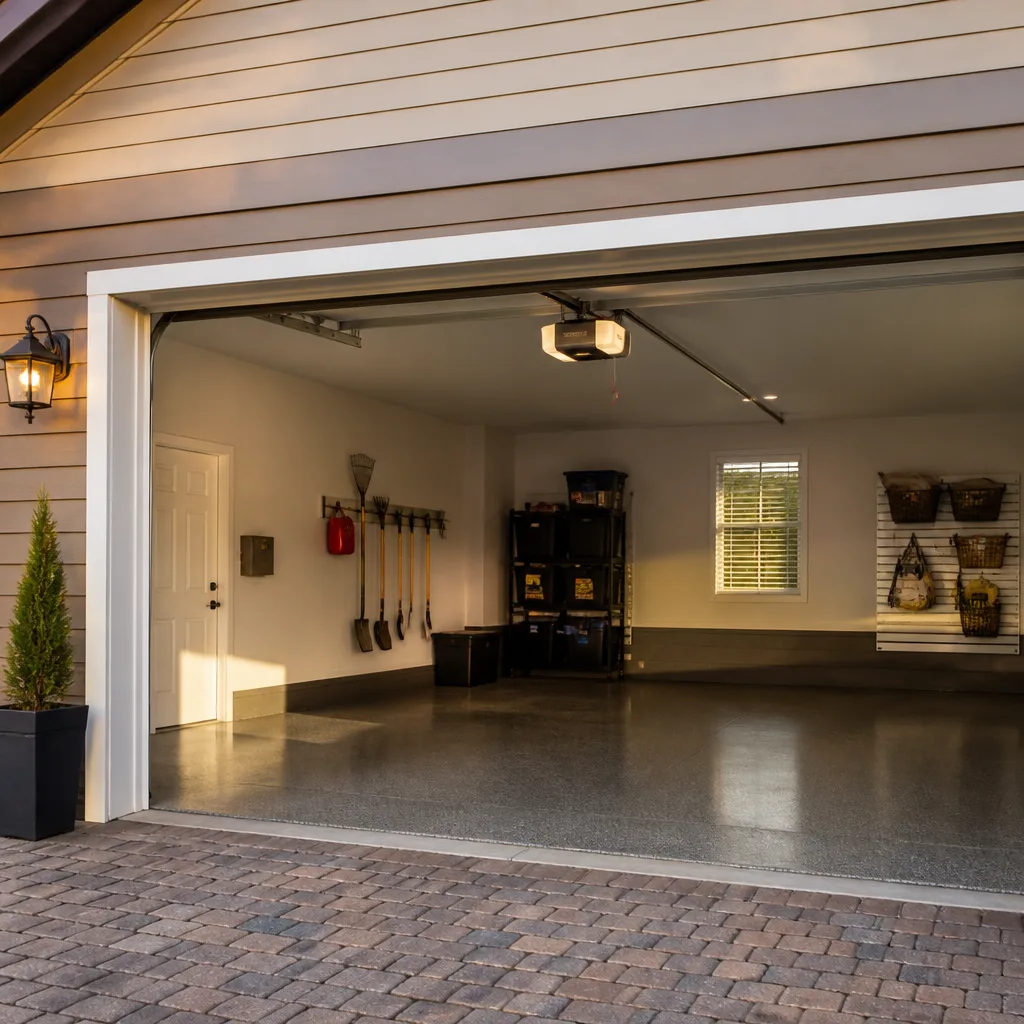
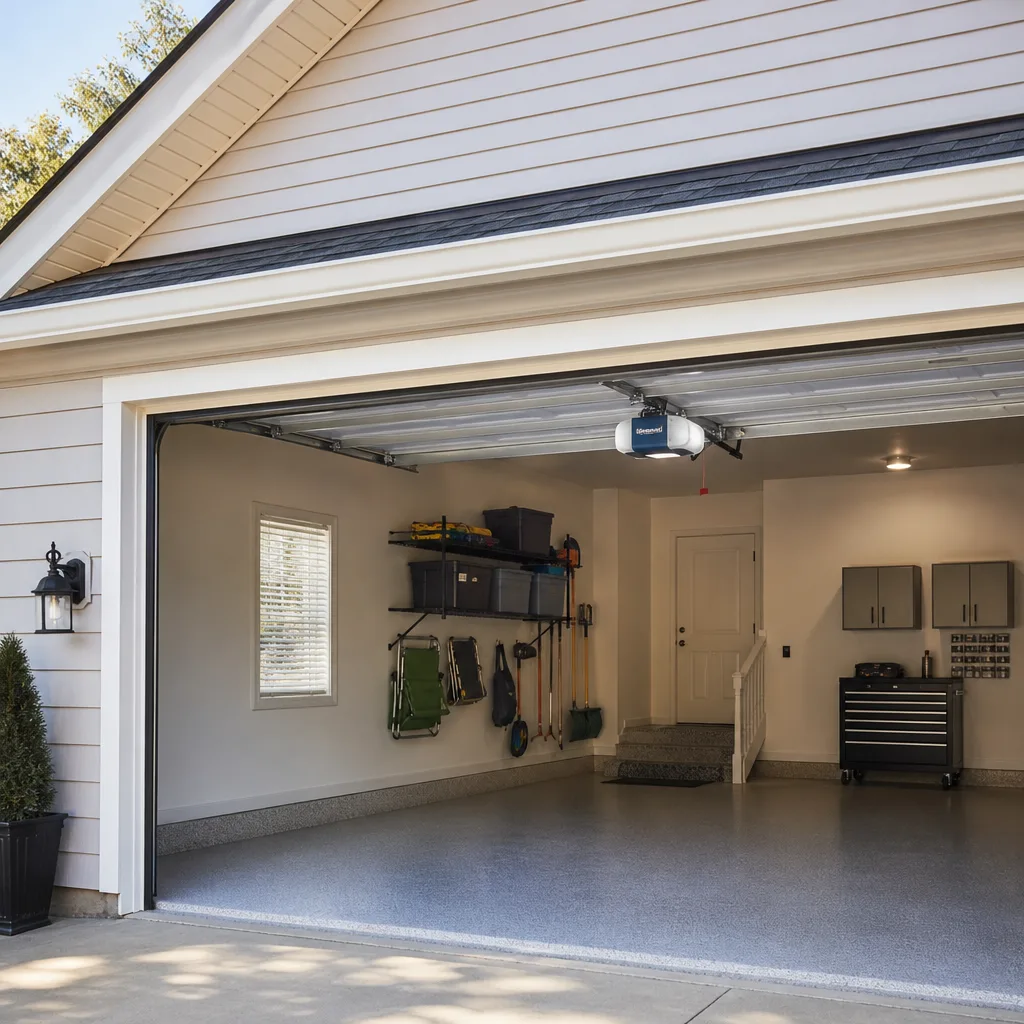
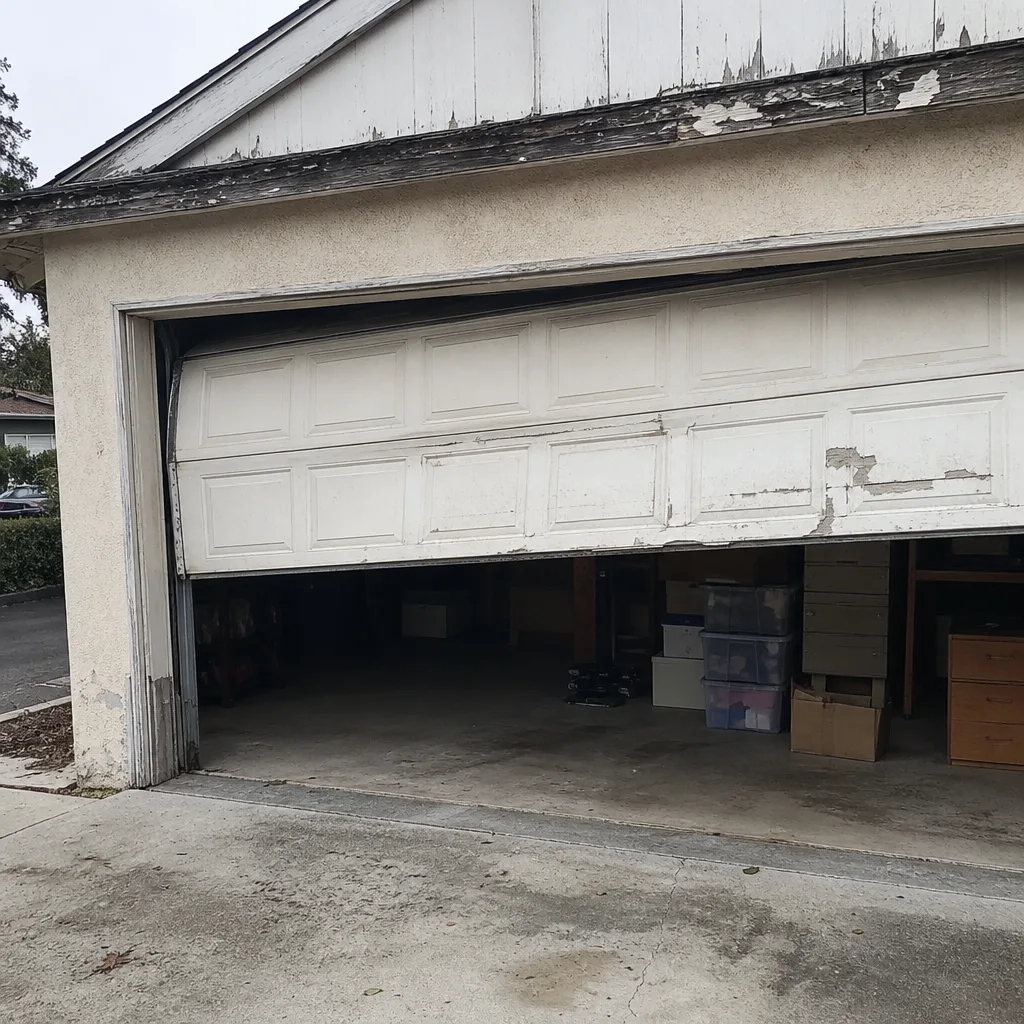 Before
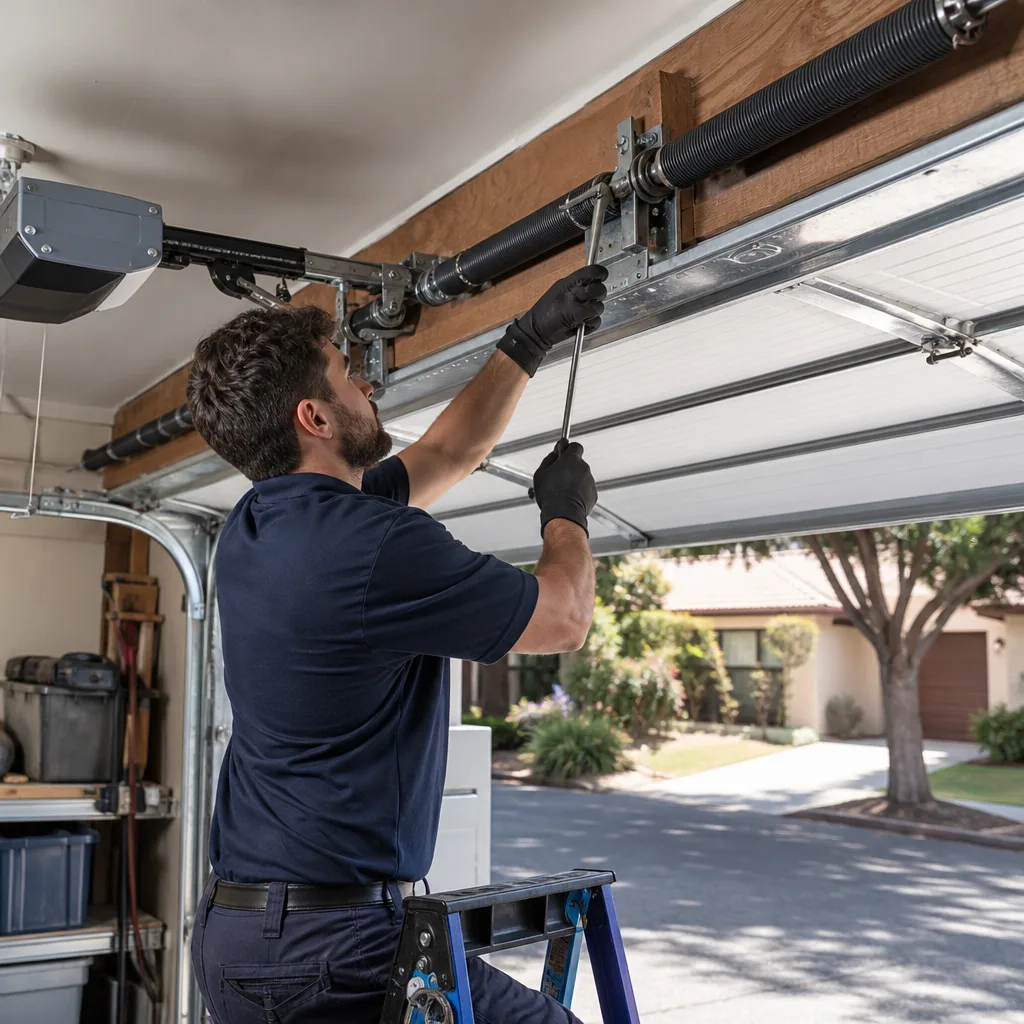 After
After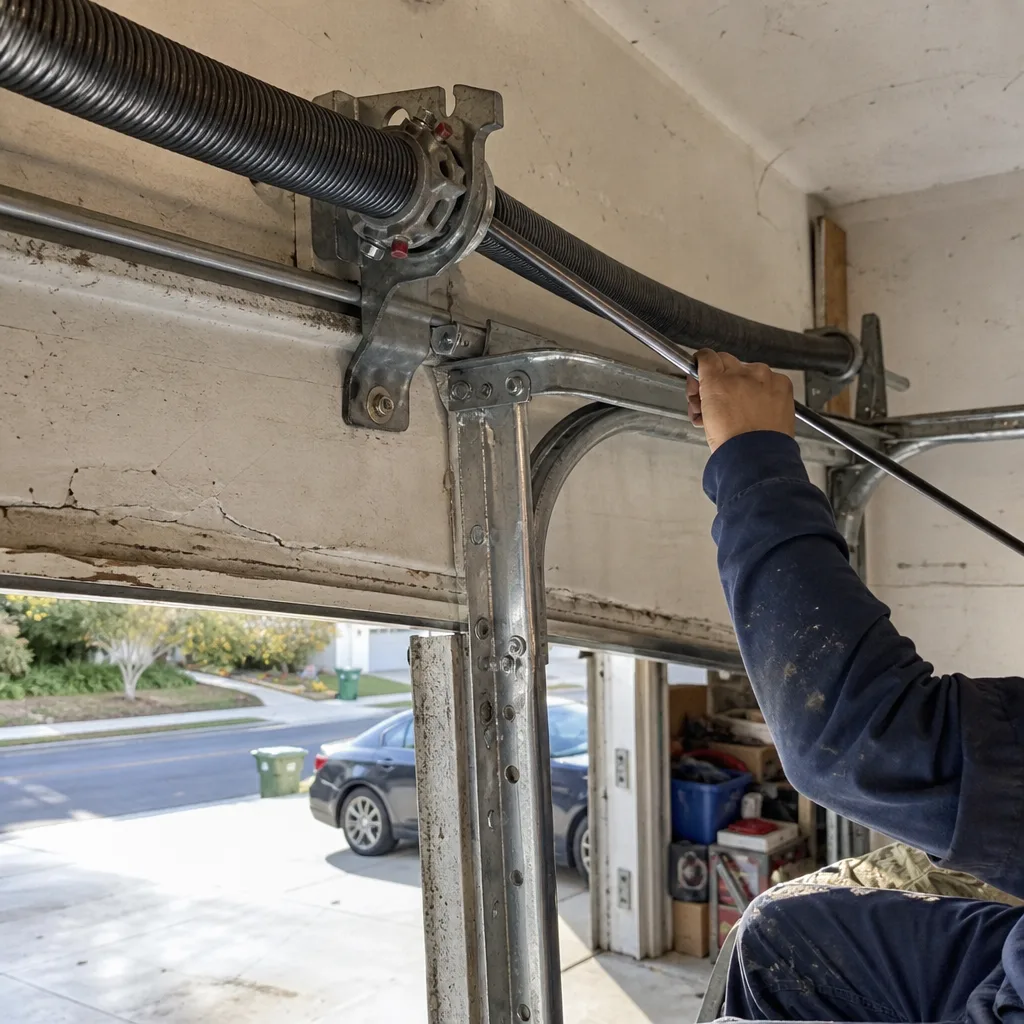 Before
 After
After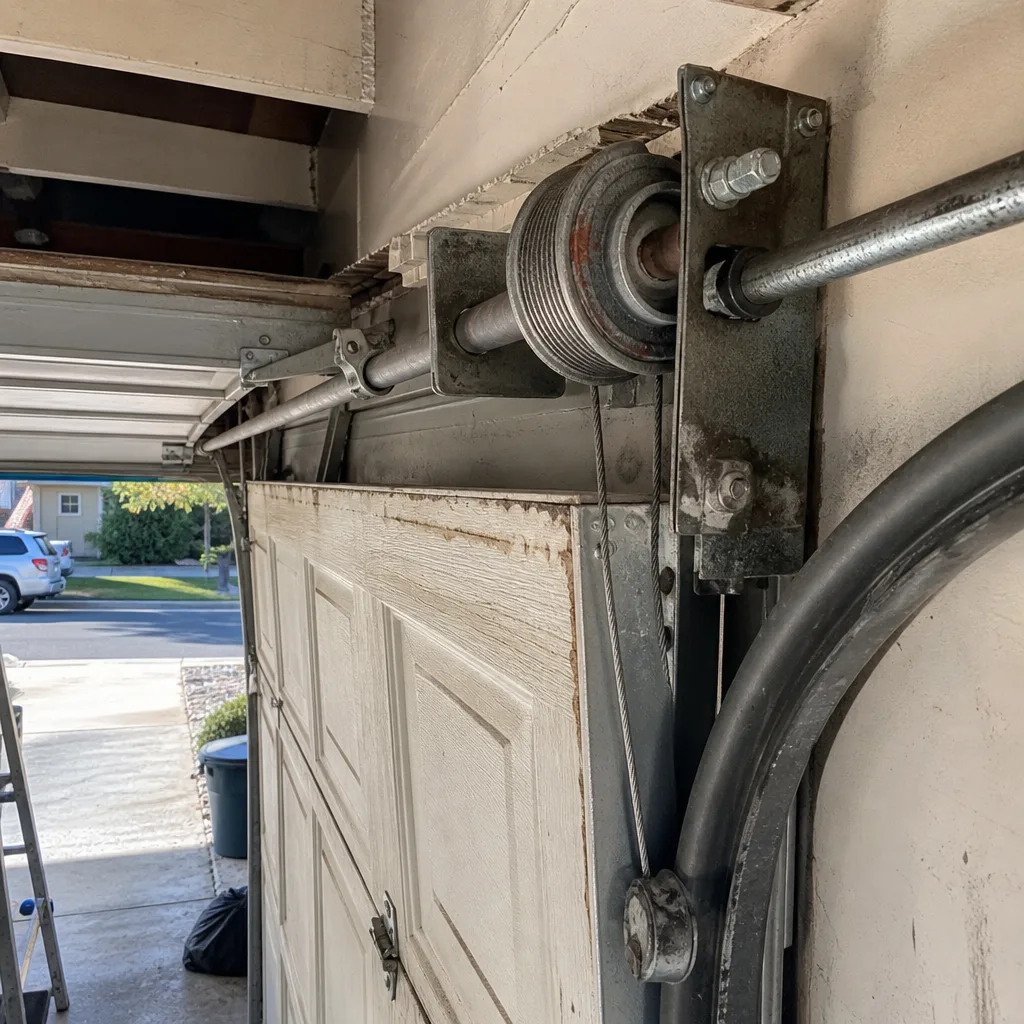 Before
 After
AfterGarage Door Warning Signs: A Los Angeles Homeowner’s Reference Guide
Here’s a counterintuitive finding from two decades of service calls across Los Angeles: the most expensive garage door failures are rarely the ones that happen suddenly. They’re the ones where the door kept opening, kept closing, kept doing its job at 90 percent, while a specific warning sign was dismissed as normal. A door that shudders slightly on the way up is telling you the torsion spring is losing tension. Most homeowners in Los Angeles ignore that shudder for six months, right up until the spring snaps and the door won’t move at all. This guide ties each warning sign to the repair it predicts, with real cost ranges, so you can act before a $95 fix becomes a $400 replacement. For broader repair timelines, see how long garage door repair takes.
Quick Answer
Garage door warning signs in Los Angeles fall into four categories: sound-based (grinding, popping, slapping), visual (rust streaking, UV chalking, seal curling), operational (reversal hesitation, uneven lift, slow response), and opener-specific (motor hum, light flicker, remote inconsistency). Each maps to a specific repair consequence. Most warning signs signal problems that cost $150 to $400 to fix now, versus $600 to $1,200 if the component fails completely. The rule we tell every LA homeowner: if the door behaves differently than it did last month, that difference is data, not noise. For more guides & resources on keeping your door healthy, explore our blog.
Table of Contents
- Sound-Based Diagnosis: What Your Door Is Telling You
- Visual Warnings Specific to Los Angeles Conditions
- Operational Warnings That Predict Imminent Failure
- Opener Warning Signs vs. Mechanical Warning Signs
- The ‘Still Opens’ Trap: Why 90% Function Can Mean Two Weeks to Failure
- What Each Warning Sign Costs to Fix in Los Angeles
- Brand-Specific Notes: Chamberlain, Genie, Clopay, Amarr
- Common Mistakes to Avoid
Sound-Based Diagnosis: What Your Door Is Telling You
Most garage door problems announce themselves audibly before they reveal themselves visually. The challenge in Los Angeles is that ambient noise, adjacent structures, and the general hum of the city can mask early sounds. When we diagnose over the phone, the first question we ask is: what does it sound like, exactly? The specific noise tells us which component is failing.
Grinding noise: This is the most common sound complaint we hear in LA. A grinding or rumbling sound during operation typically means the metal rollers are worn or the track is misaligned. Metal rollers wear down over time, especially in homes near the coast where salt air accelerates metal fatigue. The roller bearings lose their smooth surface, and you get metal-on-metal contact. The repair is usually straightforward: replace the rollers and realign the track. Cost range in Los Angeles: $130 to $220 for roller replacement, slightly more if the track needs repositioning.
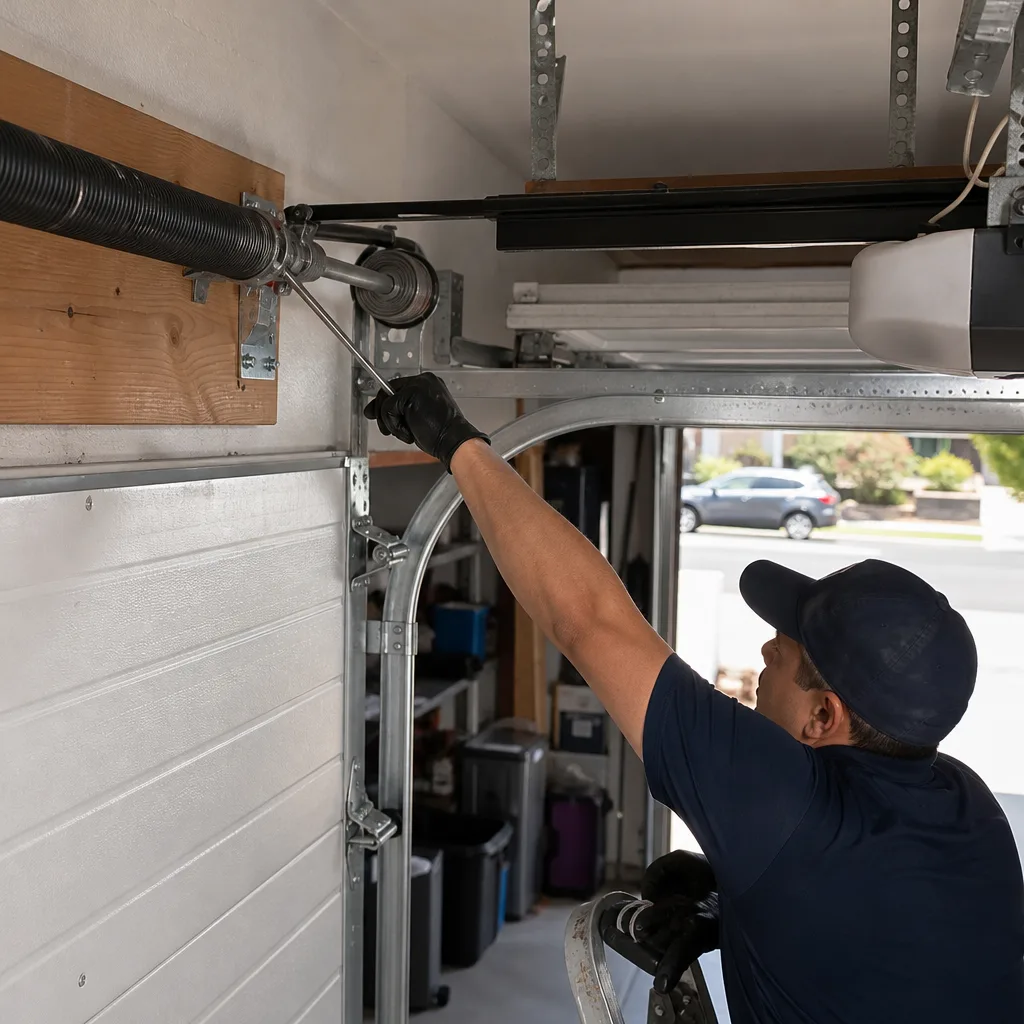
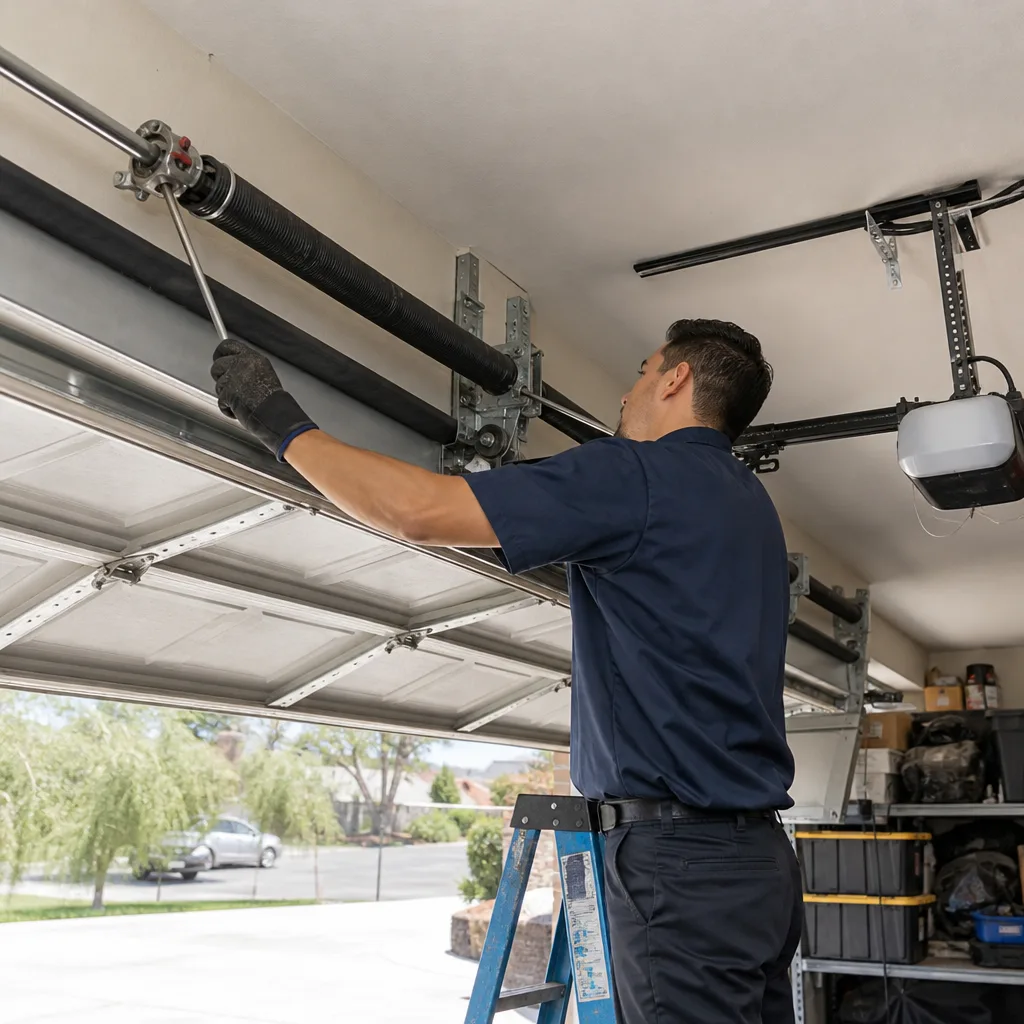
Popping noise: A popping or snapping sound, especially during the first few inches of lift, is the torsion spring. The torsion spring is the thick coiled spring mounted above the door that bears most of the lifting load. When individual coils within the spring lose tension, you hear a pop as they release. This is a high-tension component under extreme force. Do not attempt to adjust it yourself. A qualified technician uses specialized winding bars and follows a precise sequence. In Los Angeles, torsion spring replacement typically runs $220 to $340, depending on spring size and cycle rating.
Slapping noise: A slapping or banging sound, particularly when the door approaches the full-open position, points to the lift cables. The cables can develop slack if the drum is worn or if a cable has begun to fray. When slack develops, the cable slaps against the track or the door panel. This is the warning sign we most want LA homeowners to take seriously, because a cable snapping under tension is dangerous and will leave the door hung unevenly. Cable replacement in LA runs $150 to $275, depending on cable type and drum condition. You can read more about this in our guide to Garage Door Cable Repair in Los Angeles.
The useful framework we use: grinding means rollers or track, popping means spring, slapping means cables. The sounds are distinct, and matching the sound to the component saves time and money.
Visual Warnings Specific to Los Angeles Conditions
Los Angeles has its own set of environmental factors that affect garage doors: intense UV exposure, temperature swings between the valleys and the coast, and for some neighborhoods, salt air. These conditions create visual warnings that homeowners often overlook because the door still works.
Rust streaking on torsion springs: Torsion springs in Los Angeles develop rust streaks, especially near the coast. Rust is not just cosmetic. It weakens the spring steel along the coil surface. A rusted spring is a spring approaching failure. When we see rust streaking during a service call, we recommend replacement before the spring snaps. A broken spring takes the door out of service entirely, often at the worst possible time. The replacement cost is the same whether you replace before or after failure: $220 to $340 in LA. But the convenience cost is different. Replacing before failure is scheduled. Replacing after failure is an emergency.
UV chalking on panels: If you run a finger across the door panel and come away with a chalky residue, that’s UV chalking. The sun in Los Angeles breaks down the paint surface on steel doors over time. Chalking itself doesn’t threaten the door’s function, but it signals that the protective coating is degrading. Left unattended, the underlying steel becomes vulnerable to corrosion. For most LA homeowners, this is a maintenance signal, not a repair trigger. But on older doors with significant chalking, panel replacement becomes more cost-effective than repainting. New panels for a standard single door start around $300 installed, depending on the manufacturer.
Bottom seal curling from heat cycles: The rubber bottom seal (sometimes called weatherstripping) curls and hardens in LA’s heat. This is particularly fast in the San Fernando Valley, where summer temperatures stress rubber components. When the seal curls, gaps open at the bottom of the door. You’ll notice leaves, dust, or even rodents in the garage. In LA, rodent access through a failed bottom seal is a genuine issue, particularly in older neighborhoods. Seal replacement is inexpensive: $80 to $130 installed. But it’s a repair that protects everything stored in the garage.
Operational Warnings That Predict Imminent Failure
Operational warnings are patterns in how the door behaves. These are the signs most often dismissed, because the door does eventually open and close. The question is not whether the door works. The question is whether it works the way it should, every time.
Reversal hesitation: When a closing door senses an obstruction, it reverses. That’s a safety feature. But if your door hesitates for two or three seconds partway down, reverses slightly, then continues down, the safety sensors may be misaligned or the force settings may be off. In Los Angeles, this matters because garage door safety standards are enforced under state law. UL 325 compliance requires that doors reverse reliably when they encounter resistance. A door that hesitates unpredictably is a liability. The fix is usually simple: clean and realign the safety sensors near the floor, or adjust the force setting on the opener. Sensor realignment or replacement runs $90 to $150 in LA.
Uneven lift: When one side of the door rises faster than the other, one of three things is happening: a cable is losing tension, a spring is weakening on one side, or a track is out of alignment. Uneven lift is a warning that the entire door is under asymmetric stress. That stress accelerates wear on rollers, hinges, and the opener. Left uncorrected, uneven lift is the precursor to cable failure. For context on repair timelines, see how long garage door cable repair takes. Cost to correct: $130 to $260, depending on the underlying cause.
Slow response on cold mornings: This is less common in Los Angeles than in colder climates, but homeowners in the valleys report it. When temperatures drop into the 40s, a garage door that responds sluggishly on the first open may have stiffened lubricant or a weakening capacitor in the opener. The capacitor is a small component in the opener motor that provides the initial surge of power. Capacitors fail gradually, and cold temperatures expose the weakness. Capacitor replacement is a $110 to $180 repair. Stiff lubricant is resolved with a proper lubrication service, around $75.
Opener Warning Signs vs. Mechanical Warning Signs
Here’s where we see LA homeowners spend money in the wrong place. The garage door opener and the garage door itself are two different systems, so how long garage door opener repair takes can differ from door repairs. They work together, but they fail separately. Treating an opener problem as a door problem, or vice versa, means paying for a repair that doesn’t fix the issue.
Opener warning signs include: the motor hums but the door doesn’t move, the remote works intermittently, the wall button works but the remote doesn’t, the opener light flickers, or the door opens halfway and stops. These point to the opener’s motor, capacitor, logic board, or remote signal. Opener repairs for major brands in LA typically run $140 to $300. You can find more detail in our guide to Garage Door Opener Repair in Los Angeles.
Mechanical warning signs include: the noises described above (grinding, popping, slapping), visible wear on rollers or cables, uneven lift, or a door that sags when half open. These are the door itself: springs, cables, rollers, tracks, hinges, and panels. Mechanical repairs run from $130 for rollers to $340 for springs.
The conflation is understandable. Both systems fail gradually. Both fail at inconvenient times. But the diagnostic approach is different. Our technician starts every call by disconnecting the opener and operating the door manually. That single step tells us immediately whether we’re looking at an opener issue or a door issue. For the LA homeowner, the practical version of this test: if you can lift the door manually and it feels balanced, the door is fine and the opener is the problem. If the door is heavy or unbalanced manually, the mechanicals need attention regardless of what the opener is doing.
The ‘Still Opens’ Trap: Why 90% Function Can Mean Two Weeks to Failure
The single most expensive mistake we see across Los Angeles is the assumption that a functioning door is a healthy door. This is the “still opens” trap. A door at 90 percent function is not 90 percent healthy. It’s a door where one component has already begun to fail and is now transferring stress to every other component.
- The spring micro-fractures: Torsion springs fail incrementally. A spring rated for 10,000 cycles loses a fraction of tension with every cycle. Near the end of its life, the door still opens, but it’s the opener doing more of the work. The spring’s tension is below what the door requires.
- The opener compensates: Modern openers adjust force automatically. As the spring weakens, the opener applies more force to compensate. The opener doesn’t know the spring is failing. It just works harder.
- The rollers wear faster: Extra force means extra friction on the rollers and hinges. Components designed for balanced operation now run under load. Wear accelerates.
- The cable takes uneven tension: As the door lifts unevenly, one cable carries more load. The cable frays. Fraying continues for weeks or months.
- Failure happens on a normal day: The spring snaps, or the cable parts, on a Tuesday morning when the door is on its way up for a routine day. The door is now inoperable, the spring or cable is at full failure, and the repair is now an emergency.
In our experience across Los Angeles, the pattern is consistent. The repair we do after “it just broke one day” is almost always the repair that was predictable six to eight weeks earlier. The homeowner didn’t miss a catastrophic warning. They dismissed a subtle one, because the door kept opening.
What Each Warning Sign Costs to Fix in Los Angeles
We believe in giving homeowners real numbers. Here’s what these warning signs typically cost to correct in Los Angeles, based on the work we perform across the city. These are ranges, not quotes. Your exact price depends on your door type, component sizes, and the condition of adjacent parts. Every price we give is in writing before work starts, so the number you approve is the number you pay.
- Grinding noise (worn rollers): $130 to $220. Roller replacement, typically nylon rollers, with track inspection.
- Popping noise (torsion spring): $220 to $340. Full spring replacement, including balance and cycle testing.
- Slapping noise (cable slack or fraying): $150 to $275. Cable inspection, tension correction, or cable replacement.
- Rust-streaked torsion spring: $220 to $340. Same as spring replacement. The rust is the warning; the replacement is the fix.
- UV-chalked panels: $300 and up for panel replacement, depending on the door manufacturer and panel count.
- Curled bottom seal: $80 to $130. Seal replacement, including removal of the old adhesive and surface prep.
- Reversal hesitation (sensor misalignment): $90 to $150. Sensor cleaning, realignment, or replacement.
- Uneven lift: $130 to $260. Depends on whether the cause is cable, spring, or track.
- Opener capacitor failure: $110 to $180. Capacitor replacement and opener testing.
- General lubrication service: $75. Includes spring, roller, hinge, and track lubrication.
These prices reflect the current LA market. They’re what a reputable, locally operated company should be charging. Anyone quoting significantly less is likely cutting somewhere that matters: using substandard springs with lower cycle ratings, skipping the balance test, or not standing behind the work. Anyone quoting significantly more should be asked to justify the difference.
Brand-Specific Notes: Chamberlain, Genie, Clopay, Amarr
LA garages feature a wide mix of equipment. We service all major brands, but a few have warning-sign patterns worth knowing.
Chamberlain openers: Chamberlain dominates the LA opener market. The most common Chamberlain warning sign we see is the opener running for a second and stopping. That’s typically the travel module or the RPM sensor. Chamberlain models from the last decade use plastic gears that wear predictably. If your Chamberlain makes a higher-pitched whine than it did when new, the gear is thinning. Gear replacement runs $140 to $200 in LA.
Genie openers: Genie’s warning sign is usually a remote that works at close range but fails at the end of the driveway. That’s a logic board or receiver issue, not a battery issue. We replace a lot of Genie receiver boards in LA, typically $160 to $240. One note: Genie systems are sensitive to LED bulb interference. If your Genie remote started misbehaving right after you swapped a garage door opener bulb for an LED, swap the bulb back before calling anyone.
Clopay doors: Clopay is a common LA door brand, especially in newer construction. Clopay doors with steel panels can develop UV chalking faster than other brands in direct sun, particularly darker colors on west-facing garages. The chalking is cosmetic, but it progresses. Waxing the door annually slows it down.
Amarr doors: Amarr’s Classica and Heritage lines appear often in LA’s mid-century neighborhoods. The warning sign we see with Amarr doors is hinge loosening on wood-frame sections. The hinges pull away from the panel over time, especially in heat. Tightening the hinge bolts is a simple fix. But if the wood around the hinge has split, the panel needs repair or replacement.
Our technicians are trained on all these brands, which means the fix matches the system, not a generic workaround. That’s the Garrison Standard applied to equipment.
Common Mistakes to Avoid
- Lubricating a noisy door without diagnosing the noise first. Lubricant quiets squeaks. It does not fix grinding, popping, or slapping. If the underlying cause is a failing roller or fraying cable, lubrication buys a few quiet days and then the problem returns louder.
- Adjusting the torsion spring yourself. Torsion springs hold enormous tension. A slip with a winding bar can cause catastrophic injury. This is a high-tension component under extreme force. The repair cost of $220 to $340 is a bargain compared to the medical cost of a spring accident.
- Assuming the door is fine because it opens. This is the “still opens” trap described above. A functioning door is not a healthy door.
- Replacing the opener when the door is the problem. If the door is heavy or unbalanced, a new opener will fail prematurely. Fix the door first, then assess the opener.
- Ignoring the bottom seal because it’s “just a rubber strip.” In LA, a failed seal is how rodents, dust, and heat get into the garage. For many homeowners, the garage is where they store tools, seasonal items, and sometimes a second refrigerator. The seal protects all of it.
- Waiting for the spring to snap so “at least there’s a clear diagnosis.” A rusted or popping spring is already diagnosed. The repair is identical whether you do it today or after failure. The difference is that today is a scheduled appointment and after failure is an emergency call.
- Picking a repair company on price alone. In LA’s garage door market, you can find quotes $100 below market from operators who use low-cycle springs and skip the balance test. The door works for a year, and then you’re paying for the same repair again. The Garrison Standard exists specifically because LA homeowners have been burned this way.
When to Call a Professional
Call a professional when the warning sign involves high-tension components: torsion springs, lift cables, or anything involving the door’s balance. These components operate under forces that can cause serious injury if handled incorrectly. Call when the door is uneven, when you hear popping or slapping from the spring or cable area, or when the door is heavy to lift manually. Call when you’ve applied the simple fixes (sensor cleaning, remote batteries, LED bulb swap) and the problem persists. Call when you’re not sure what the warning sign means. A reputable company will diagnose accurately and tell you what does and does not need repair. Brock Garage Door Repair offers free estimates in Los Angeles. Call (254) 602-5116 and describe what you’re hearing and seeing. We’ll help you determine whether it’s urgent or whether you have time to schedule.
Frequently Asked Questions
The most common warning signs LA homeowners report are grinding noises (worn rollers), popping sounds (weakening torsion spring), slapping noises (loose or fraying cable), uneven lift, reversal hesitation, and rust streaking on springs. Each maps to a specific repair, and most cost between $130 and $340 to correct before failure. Call (254) 602-5116 for a free assessment if you’re noticing any of these.
Torsion spring replacement in Los Angeles typically runs $220 to $340, depending on spring size, cycle rating, and door weight. This is a high-tension component, and professional installation is the only safe approach. The price should include balance testing after installation and should be given to you in writing before work starts.
Yes. We carry common springs, cables, rollers, and opener parts on our trucks, which allows us to complete most repair work on the first visit. A live person answers calls 24/7, so you can reach us when the problem happens, not the next business day. Call (254) 602-5116 to check current availability in your area.
Disconnect the opener and lift the door manually. If it feels balanced and opens smoothly by hand, the door is fine and the opener is the likely problem. If it’s heavy, uneven, or noisy when operated manually, the door’s mechanical components need attention first. This is the same diagnostic test our technicians use on every call.
A popping sound during operation is almost always the torsion spring losing tension. Individual coils slip as the spring weakens. This is the warning sign that most accurately predicts spring failure. Spring replacement in LA runs $220 to $340, and the work should always include a balance test afterward. A popping spring today means a broken spring within weeks.
No. The price we quote is the price you pay. We assess the door, give you the full price in writing before any work starts, and that number does not move unless you approve additional work. This is the Garrison Standard: written price before a single bolt turns, and every repair covered by our 365-Day Done Right Promise. If the repair fails within a year, we return at no charge.
The Bottom Line
Your garage door is the largest moving object in your home, and in Los Angeles it’s also the primary entry point for many households. The warning signs described here, the grinding, the popping, the slapping, the uneven lift, the rust streaking, are all early data points that something specific is failing. The door that still opens is not a door that’s healthy. It’s a door in the early stages of a predictable failure. The responsible move is to identify the warning sign, understand the repair it points to, and act before the failure becomes an emergency. Fixing a warning sign costs $130 to $340 in most cases. Fixing a full failure costs more, and it happens on the day you least want to deal with it. We’ve been repairing garage doors in Los Angeles long enough to know that homeowners who act on warning signs are the ones who never face a door that won’t open on a Monday morning.
Call (254) 602-5116 for a free estimate. A real person answers, day or night.
Written by Wade Mercer, Owner at Brock Garage Door Repair, serving Los Angeles since 2001.