
Last updated October 9, 2026
Full 25-point door and opener safety check with every visit - springs, cables, rollers, tracks, and your LiftMaster or Chamberlain opener included
You get a price before we start. It does not change when the truck arrives.
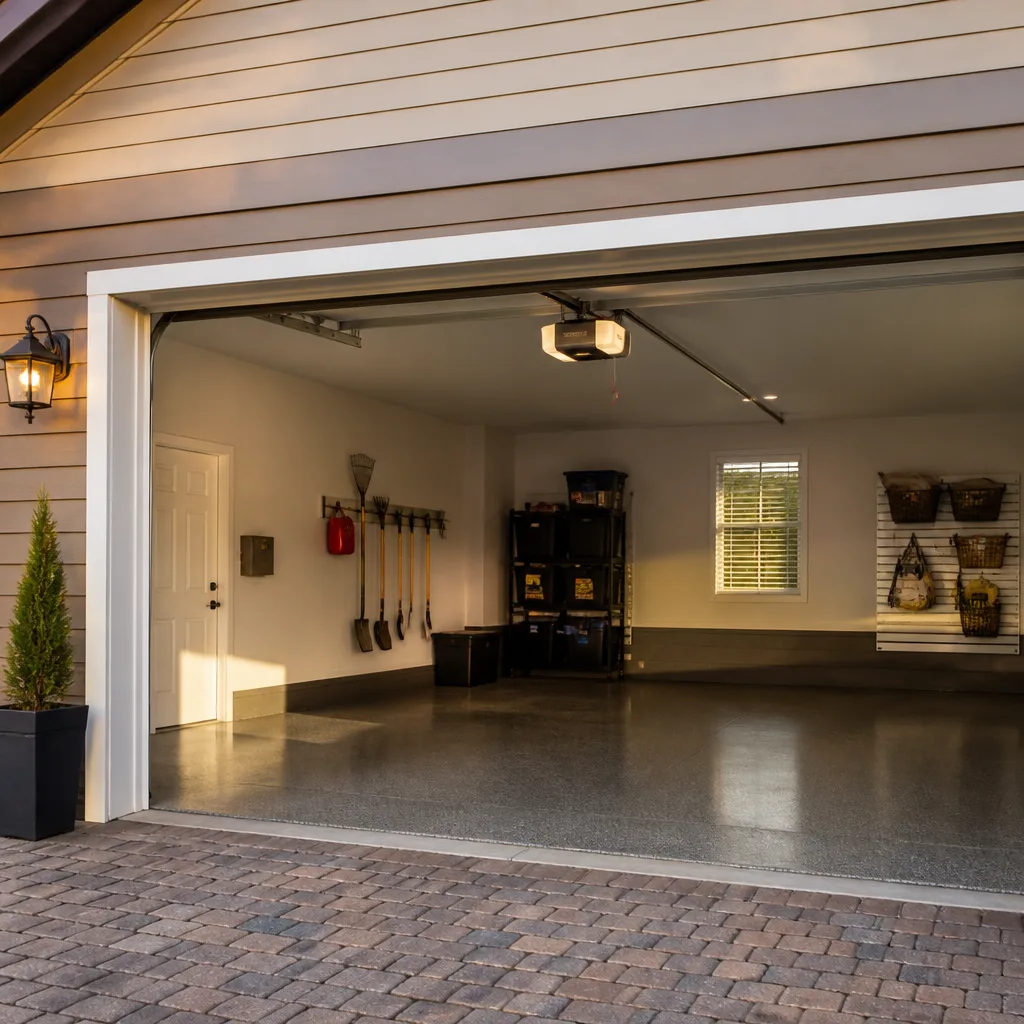
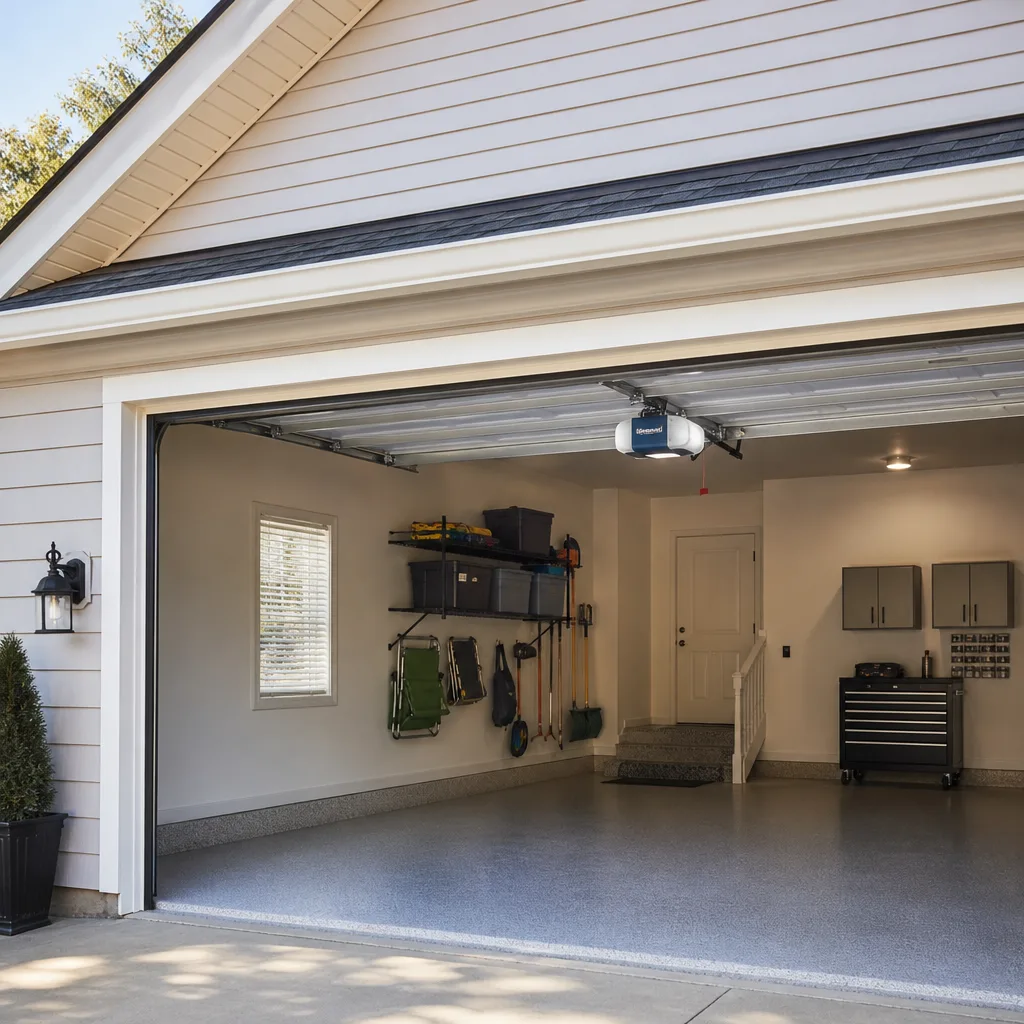
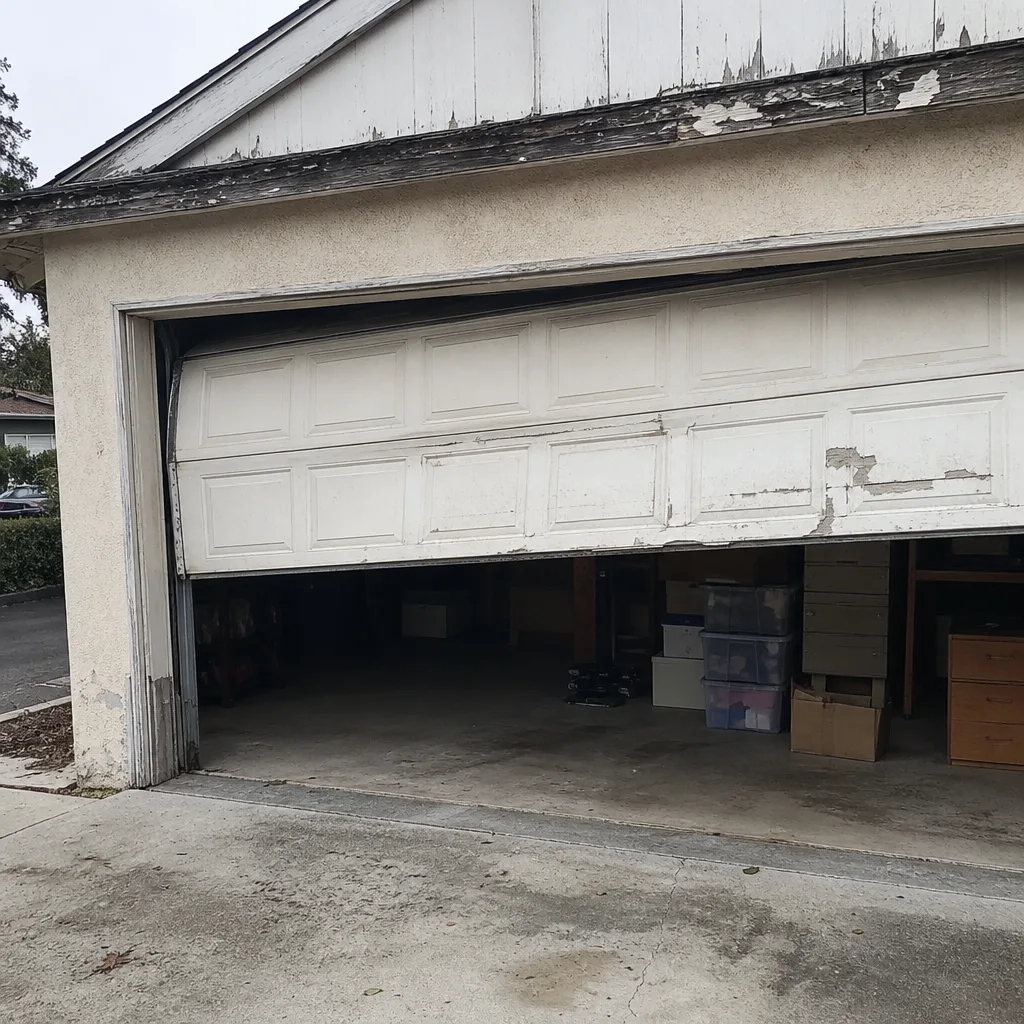 Before
 After
After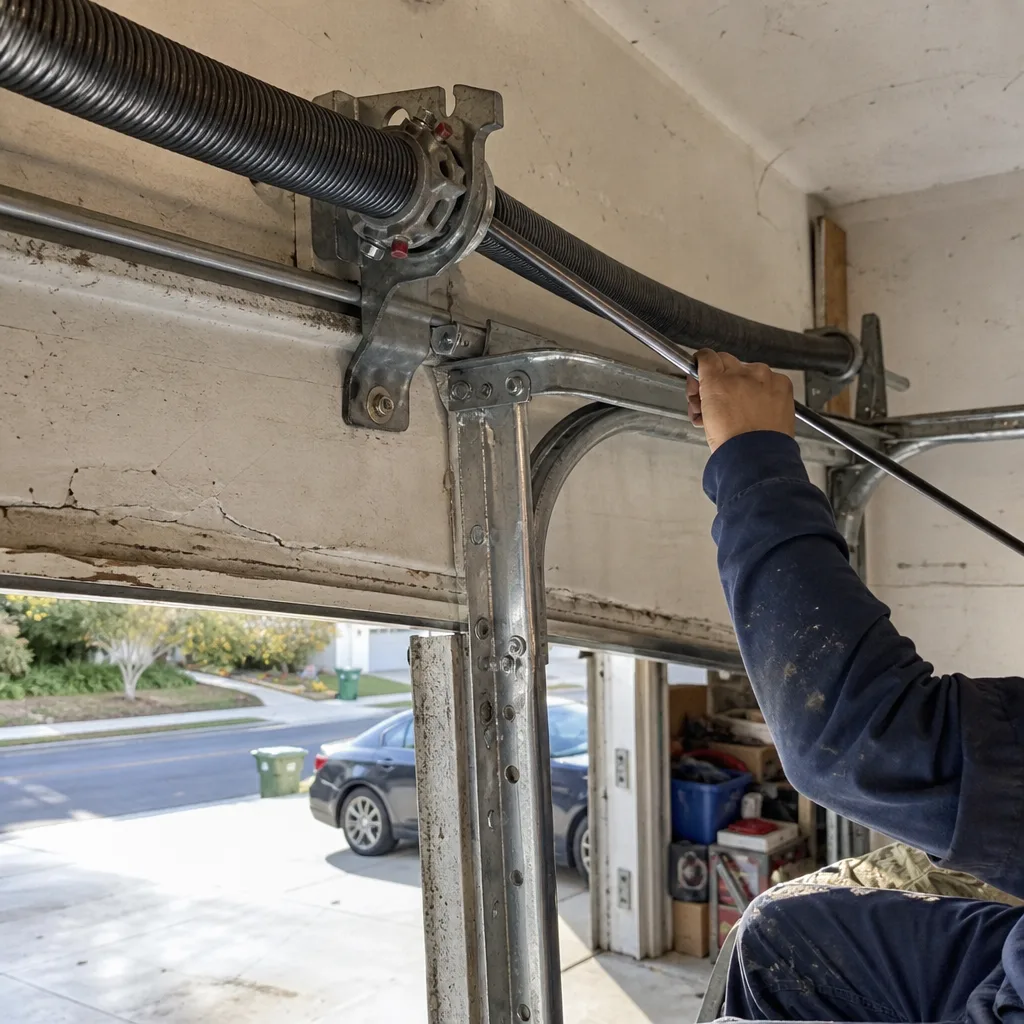 Before
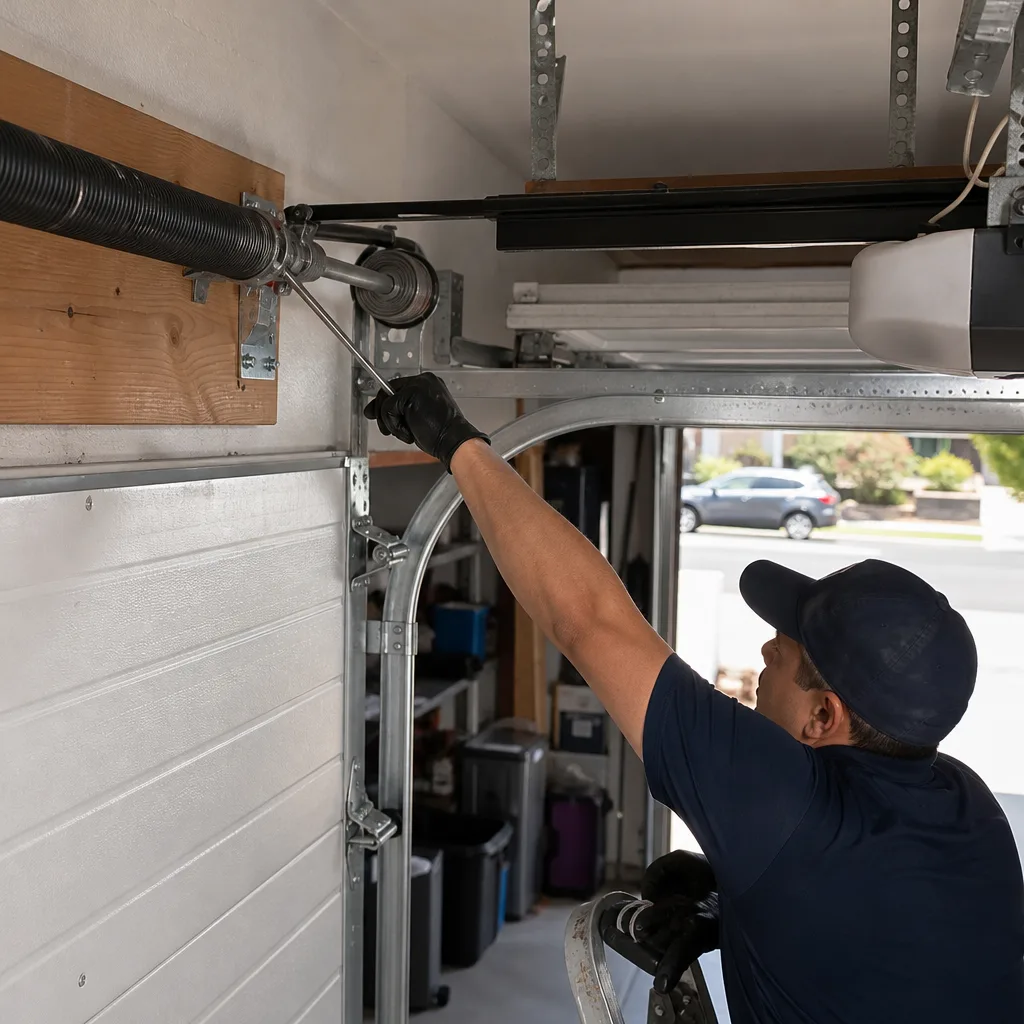 After
After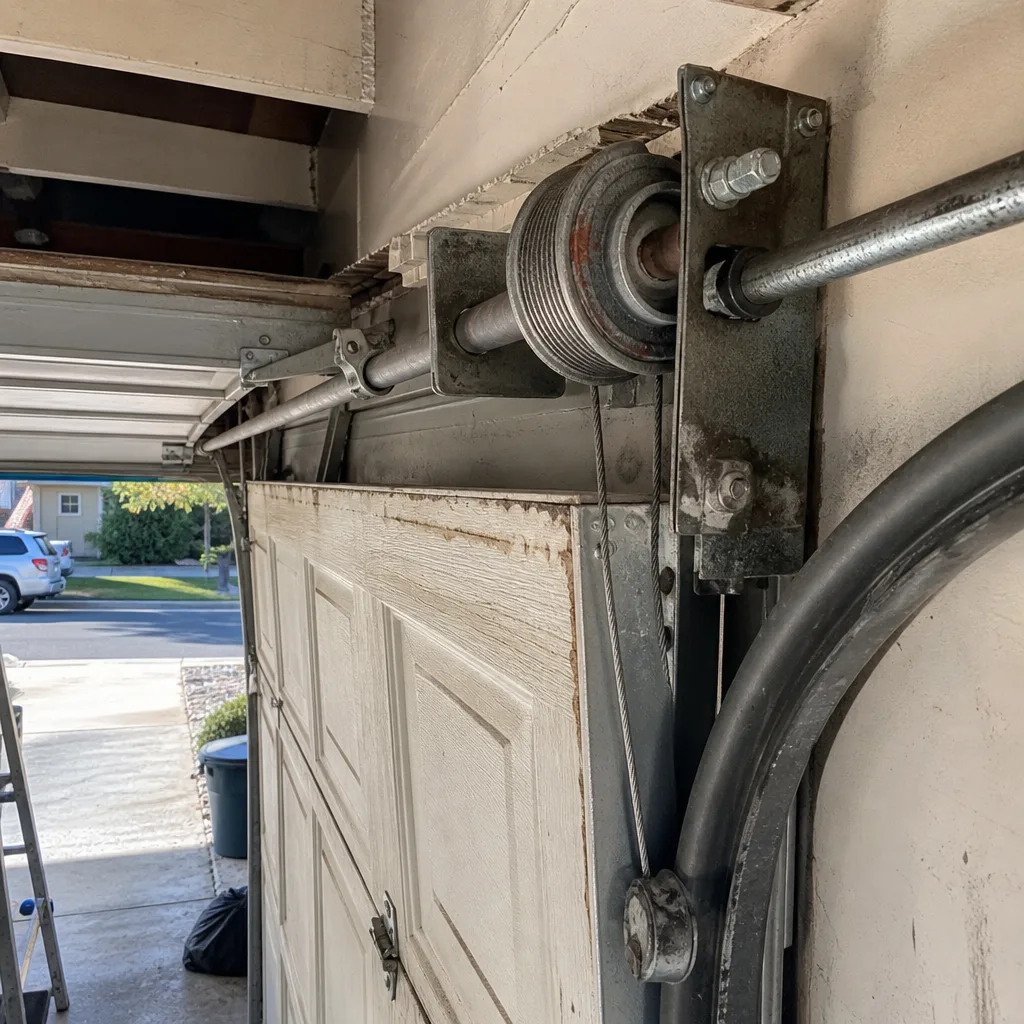 Before
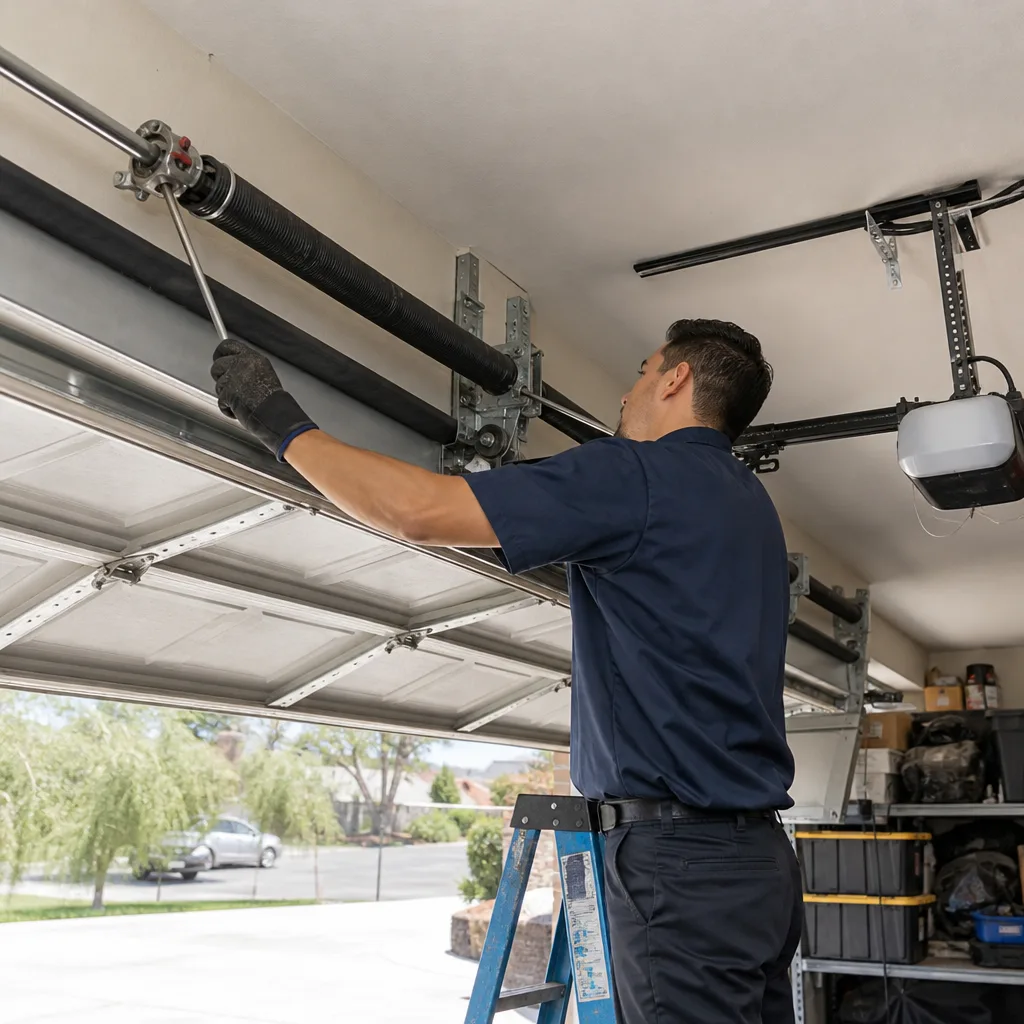 After
AfterDIY vs Professional Garage Door Repair: What’s Safe to Do Yourself
Garage door springs account for more than 20,000 emergency room visits annually in the United States. Most of those injuries happened to people who considered themselves competent with tools. A garage door looks simple from the driver’s seat, but the mechanism above your car holds enough stored tension to break bones, sever fingers, or worse. This guide separates the handful of genuinely safe homeowner tasks from the dangerous ones, and explains why the real question isn’t how handy you are. It’s whether the risk belongs on your shoulders at all. Throughout, we use Los Angeles as our reference point, because that’s where we work and where we see the same mistakes repeated across the city.
Quick Answer
Most Garage Door Repair services are not safe for DIY work, because the springs and cables hold lethal stored energy even when the door is closed. You can safely handle weatherstripping, sensor alignment, remote battery replacement, panel touch-up paint, and tightening visible loose bolts. Anything involving torsion springs, extension springs, cables, track realignment, or bottom brackets should be handled by a trained professional, ideally with written pricing and a written guarantee.
Table of Contents
- The Physics of a Garage Door: Why This Isn’t a Normal Home Repair
- What’s Actually Safe to Do Yourself
- The Hard-Stop List: Never DIY These Repairs
- Why “I Watched a YouTube Video” Isn’t Enough
- The Real Cost Math: Botched DIY vs Booking a Pro First
- California Contractor Law and Your Liability
- What a Professional Repair Actually Includes
- Common Mistakes to Avoid
- When to Call a Professional
- Frequently Asked Questions
- The Bottom Line
The Physics of a Garage Door: Why This Isn’t a Normal Home Repair
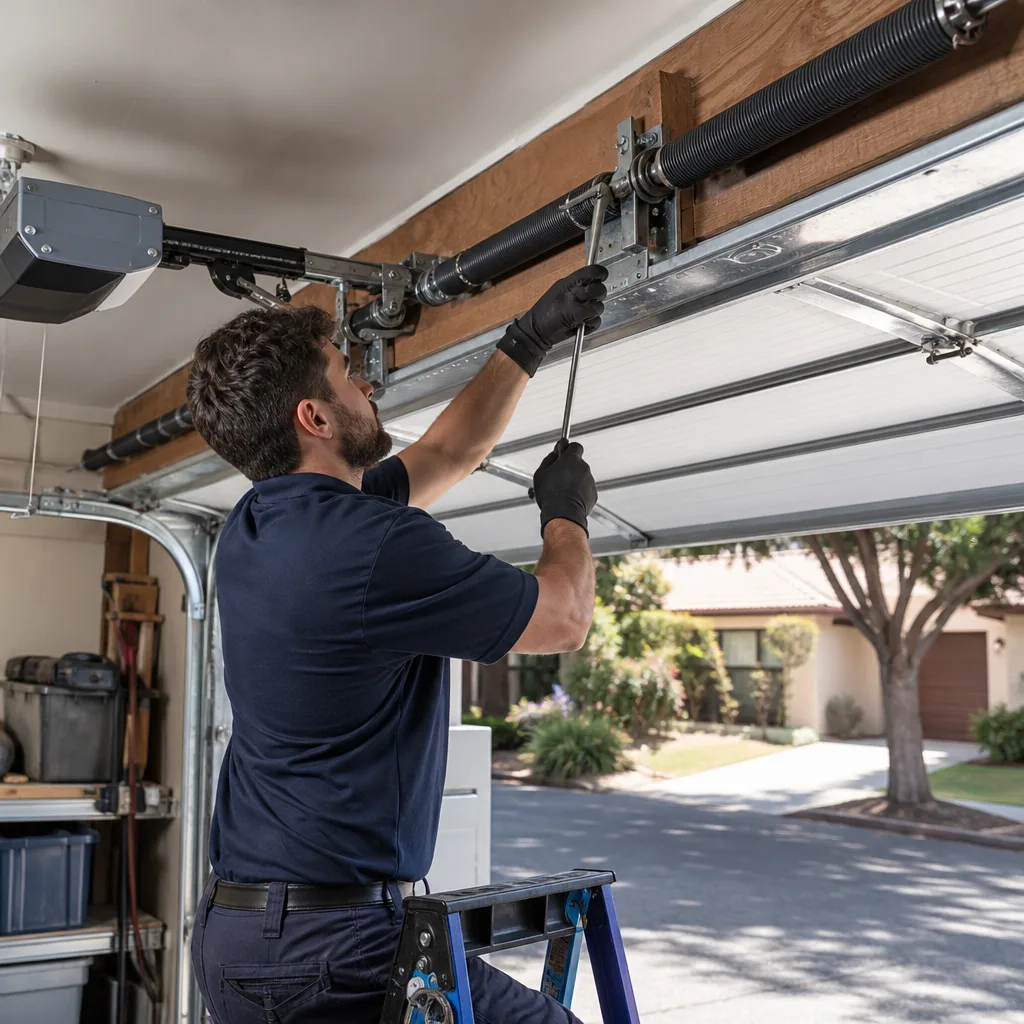
Your garage door weighs between 130 and 400 pounds depending on size, material, and whether it’s insulated. The springs do the heavy lifting. A torsion spring, the thick coiled spring mounted horizontally above the door, winds and unwinds to store enough torque to counterbalance the door’s full weight. When that spring is intact and calibrated, the door feels light enough to lift with one hand. When it breaks, the door becomes a dead weight that can drop hard enough to injure anyone in its path.
Here’s what most people don’t realize: a fully wound torsion spring stores roughly 50 to 100 foot-pounds of rotational force. That energy doesn’t disappear when the door is down. The spring remains under tension whether the door is open or closed. This is why spring work is fundamentally different from swapping a light fixture or fixing a cabinet hinge. You’re not working with a broken part sitting inert. You’re working next to a loaded mechanical spring, and the tool required to wind or unwind it functions like a lever against that stored energy. One slip, one wrong rotation, one off-brand winding bar that bends under load, and the release of force goes into whatever is holding the tool. Usually that’s your hand, your wrist, or your face.
In Los Angeles, the added variable is heat. High temperatures accelerate metal fatigue in older springs, particularly in the San Fernando Valley where summer garage temperatures regularly cross 110 degrees. We replace torsion springs that look fine externally but have micro-fractures from years of thermal cycling. A homeowner inspecting the spring sees a part that looks intact. A technician who has wound and unwound thousands of them knows what a near-failure spring feels like before it snaps. That distinction matters when the cost of being wrong is a hospital visit.
What’s Actually Safe to Do Yourself
Some garage door maintenance is genuinely low-risk and worth doing yourself. These tasks don’t involve spring tension, cables under load, or any component that stores mechanical energy. You’ll save a service call, and you’ll understand your door better. Here’s the definitive list.
1. Replacing Weatherstripping
The vinyl seal along the bottom of your door degrades in Los Angeles heat over two to three years. You’ll see cracks, flat spots, or daylight visible under the closed door. Replacement involves sliding out the old strip and feeding in a new one. No tools beyond a flathead screwdriver are usually needed. Weatherstripping kits cost $25 to $45 at any hardware store. This task is about as risky as replacing a shoe insole.
2. Aligning Safety Sensors
The two photo-eye sensors mounted near the floor on either side of your door track occasionally get bumped out of alignment, especially in busy garages where bikes, boxes, and cars crowd the space. If your door refuses to close and the lights on one sensor don’t light up, check whether the units are pointing at each other. A gentle nudge to realign them is safe and takes 60 seconds. Clean the lenses with a dry cloth. If alignment doesn’t fix the problem, the issue may be wiring or a failed sensor, which is a professional repair.
3. Replacing Remote Batteries
Most garage door openers use a 3-volt lithium coin battery (CR2032) or a 12-volt A23 cell. If your remote works intermittently or requires three or four button presses, the battery is usually the culprit. Pop open the remote case with a small screwdriver, note the battery type printed on the old cell, and swap in a new one. This costs under $10 and takes five minutes. If a fresh battery doesn’t restore consistent function, the remote’s logic board may be failing.
4. Touching Up Panel Paint
Steel garage door panels scratch and chip, particularly in Los Angeles neighborhoods where street parking spills into tight driveways. Cosmetic damage doesn’t affect function. Sand the chipped area lightly, apply a rust-inhibiting primer designed for metal, and brush on matching exterior paint. Amarr and Clopay sell touch-up paint kits matched to their door colors. This is purely visual work with zero mechanical risk.
5. Tightening Visible Loose Bolts
Garage doors vibrate thousands of times per year, which gradually loosens hardware. Walk around your door and look at the hinges, the track brackets, and the opener mounting straps. Any bolt you can reach without touching a spring, a cable, or the bottom corner bracket is fair game. Use the correct socket size to avoid rounding the bolt head, and snug the fastener until it’s tight. Don’t apply serious torque; most garage door hardware is designed for moderate tightness, and overtightening can strip the thread or distort the track.
All five of these tasks are safe precisely because they sit outside the tension system. If you stay within this list, you can maintain your door without putting your body near stored energy.
The Hard-Stop List: Never DIY These Repairs
The following components are off-limits for DIY work, regardless of your experience level. This is not a matter of confidence or skill. It’s a matter of physics and the consequences of being wrong.
Torsion Spring Replacement
A torsion spring must be wound to a precise number of quarter-turns, and that number varies by door weight, height, and spring size. The winding uses purpose-built steel bars inserted into the spring cone. If the bar slips, the spring unwinds violently. The bars used by untrained homeowners are often socket extensions or screwdrivers, neither of which is rated for the torque involved. We have corrected failed DIY torsion spring jobs across Los Angeles, and the pattern is consistent: the spring ended up under-wound or over-wound, the door balance was wrong, and the repair cost more than if the professional had been called first. Sometimes the homeowner was injured. Sometimes the door was damaged when the improperly tensioned spring let the door slam down.
Cable Replacement
Garage door cables run through pulleys and wrap around drums, carrying the tension that transfers spring force to the door. They are not passive parts. Even with the spring intact, cables remain under load, and they run with sharp edges, pinch points, and the potential to snap. A frayed cable that looks like it’s still holding will often fail the next time the door cycles. Replacing a cable requires unloading the spring system safely, which is the same skill set as spring work. Cable repair is genuinely dangerous for an untrained person.
Track Realignment
The vertical and horizontal tracks guide the door’s rollers through their full travel. When a track is out of alignment, the door binds, scrapes, or jumps. What most homeowners don’t see is that track alignment is directly tied to spring tension. A misaligned track often means the door is lifting unevenly, which means something upstream in the tension system is failing. Force-straightening a track while the door is under load can cause the entire assembly to shift suddenly. Track work also involves securing brackets to framing, and in many Los Angeles garages built before current code, that framing is compromised by decades of heat and settling.
Bottom Bracket Replacement
The bottom corner brackets are where the cables attach to the door. They bear the full counterbalance load every time the door opens. When these brackets fatigue and fail, they fail catastrophically, and the cable releases stored energy in an instant. Replacing them requires unloading the entire spring system. Anyone who attempts this job without the right procedure is working directly in the path of the most dangerous failure point on the door.
These four items account for the overwhelming majority of serious garage door injuries in the United States. The common thread is stored energy under control of hardware that looks simple but is not.
Why “I Watched a YouTube Video” Isn’t Enough
We understand how this happens. You open YouTube, watch a 12-minute video where a confident person replaces a torsion spring in one take, and it looks methodical. The video gives you the winding count, tells you to mark the old spring, and shows the whole job from start to finish. By the end, you feel like you’ve absorbed the procedure. What the video does not show is the day that person spent learning on a spring winding machine, the mistakes they made under supervision, the feel that develops along the way for when a spring is seating correctly versus when it’s about to jump.
Professional garage door technicians are trained through supervised practice. That typically includes hundreds of supervised winding and unwinding cycles on real springs before they touch a customer’s door unattended. They learn what a failing spring sounds like, how to read the wear pattern on a cable drum, and what to do when the job goes unexpectedly, because real jobs do go unexpectedly. Old Los Angeles doors from the 1960s and 1970s often have non-standard track legs, improvised spring anchor plates, or deteriorated wood blocking that a video shot on a clean 2018 door never accounts for.
Watching a professional complete a task confidently on video is not the same as being trained. A video cannot correct your hand position. It cannot stop you when you start unwinding a spring in the wrong sequence. It cannot tell you that the particular spring in your hand has a hairline crack that means it’s about to snap on the next quarter-turn. The credential gap is real, and the cost of it is measured in the injuries that come through emergency rooms.
The Real Cost Math: Botched DIY vs Booking a Pro First
The initial appeal of DIY spring replacement is financial. A pair of torsion springs costs $60 to $120 at a hardware store or online. A professional spring replacement in Los Angeles typically runs $200 to $400, depending on spring size, cycle rating, and whether other components need attention. On paper, the DIY path saves $150 to $300. Here’s the real math when the job goes wrong, which it does more often than most people assume.
A botched DIY spring job typically goes like this: the homeowner buys springs online, mismatches them to the door’s weight, and winds them too few or too many turns. The door either doesn’t balance, slams shut, or jerks when opening. The opener, now fighting an unbalanced door, strips its gear. The homeowner then calls a professional. By that point, the parts bill includes the original springs, the opener gear replacement, and potentially new cables and drums if the first attempt damaged them. The total bill lands in the $500 to $800 range. That’s $300 to $600 more than booking the professional first.
And the financial risk is the optimistic version. When a spring slips during winding, the injury is immediate: deep lacerations, crushed fingers, broken wrists. Emergency room visits in Los Angeles typically run $1,500 to $3,000 with insurance, and weeks of recovery on top of that. No video is worth that spread.
California Contractor Law and Your Liability
California law requires anyone performing garage door repair for payment of $500 or more, and anyone advertising such services, to hold a contractor’s license issued by the California Contractors State License Board. Typically, garage door contractors work under the C-61 D-28 Limited Specialty classification. This requirement exists for a reason: unlicensed repair work involving doors under spring tension creates risk for the worker, the homeowner, and the property.
The liability question cuts two ways. If you hire an unlicensed person and they’re injured on your property, your homeowner’s insurance may not cover the loss, because the injury occurred during unlicensed work the homeowner facilitated. If the unlicensed repair fails and damages your door, your car, or your home, recovering that loss depends on the unlicensed individual being solvent and willing to pay, which is rarely the case. If you perform the repair yourself and injure yourself, that’s an uninsured personal injury with no one to recover from.
We meet Los Angeles homeowners who have been burned by unlicensed handyman work. The door gets fixed once, sometimes at a very low price, and fails again within weeks. The handyman doesn’t answer the phone. The homeowner calls us because Brock Garage Door Repair home is known locally for putting the price in writing and standing behind the work for a full year. The fix often costs more than the original repair, because we’re correcting a problem layered on top of the original one.
What a Professional Repair Actually Includes
When you book a professional repair, you’re not just paying for the labor of replacing a part. You’re paying for a sequence that protects you, your door, and your home. Here’s what the sequence looks like at our operation, and at any reputable shop.
1. Inspection and Written Price
The technician walks the full door: springs, cables, drums, hinges, rollers, track, opener, sensors, balance. You get a written price before any work starts. That price is what you pay, not an estimate to be revised upward when the job gets going. If the number on the invoice differs from the number you approved, that’s a failed job, not a minor paperwork issue.
2. Safe Unloading of the System
Before touching a spring or cable, the technician safely unwinds the spring to release stored tension using the correct winding bars and clamping setup. This is the step that separates professional work from amateur attempts. There is no shortcut.
3. Correct Parts for the Door
The replacement spring is matched to the door’s exact weight, height, and cycle expectations. A 10,000-cycle spring lasts longer than a budget 5,000-cycle spring, and the price difference is modest. You should know which one you’re getting and why it matters.
4. Balance and Travel Verification
The door is cycled manually and then with the opener, several times, to confirm it balances at every point in its travel. The opener’s force settings are verified so the system isn’t fighting itself. The door is tested at half-open and full-open positions, not just closed to open.
5. Written Guarantee
In our case, the guarantee is the 365-Day Done Right Promise, in writing on every repair. If a covered repair fails within a year, a technician returns at no charge. A verbal promise is not a guarantee. If the person you hire won’t put the term in writing, that person is telling you something about their confidence in their own work.
Technicians at Garage Door Repair in Los Angeles are trained to service major brands including Chamberlain, Genie, Clopay, and Amarr, so the fix matches the system on your ceiling and not a generic workaround.
Common Mistakes to Avoid
- Replacing only one spring on a two-spring door. When one torsion spring breaks, its partner is usually near the same age and cycle count. Replacing only the broken side leaves an unbalanced wear pattern and a second failure likely within months. The second replacement call costs more than doing both correctly the first time.
- Using screwdrivers or ratchet extensions as winding bars. Proper winding bars are made from solid round steel and fit the spring cone precisely. Improvised tools bend under load, and a bent bar slipping out of a wound spring is how fingers get broken. This is the single most common cause of DIY garage door injuries we hear about in the Los Angeles area.
- Disconnecting the opener to “reset” a broken door. The red emergency release cord disengages the opener, and a door with a broken spring then becomes an uncontrolled falling object. Homeowners who pull the cord with the door in the raised position are often standing directly underneath when it drops.
- Tightening track bolts to “fix” a misaligned door. Track misalignment usually indicates a deeper issue in the spring or cable system. Cranking the track bolts tighter doesn’t fix the underlying problem and can distort the track enough to make the professional repair more expensive later.
- Buying the cheapest possible spring online. Budget springs from unverified sellers often carry lower cycle ratings than the originals. A spring rated for 5,000 cycles lasts roughly five to seven years of typical use. The price savings on the part vanish in the second replacement call three years sooner than expected.
- Ignoring a slow or jerky door until it stops working. Garage doors rarely fail without warning. A door that struggles, shakes, or makes a loud bang during operation is reporting a problem early. Addressing it early costs less than waiting for the spring to snap at the worst possible moment, such as when you’re about to leave for work.
When to Call a Professional
Call a professional the moment you notice a snapped spring, a frayed or snapped cable, a door that won’t stay up, a track that’s visibly bent or pulled from the wall, or a bottom bracket that shows rust, cracks, or movement. These are not watch-and-wait situations. Each one means the tension system is compromised, and every cycle before repair is a roll of the dice. If you’re in Los Angeles, Garage Door Cable Repair in Los Angeles and opener work are services that should sit with a trained technician. Brock Garage Door Repair offers free estimates in Los Angeles, call (254) 602-5116.
Frequently Asked Questions
A professional torsion spring replacement in Los Angeles typically costs $200 to $400, including the spring, labor, and a written guarantee. High-cycle springs and doors with two springs run toward the higher end. The exact price depends on your door’s weight and the spring’s cycle rating, and it should be quoted in writing before any work begins. Call (254) 602-5116 for a free estimate and a written price.
No. Carefulness does not offset the stored energy in a wound torsion spring, and the tools most DIYers reach for are not rated for the torque involved. Professional training includes supervised practice on real springs before unsupervised work, which is not something a tutorial can replicate. The injury risk is well documented, and the cost of a failed DIY attempt usually exceeds the cost of calling a professional first.
The torsion spring is the most dangerous component, because it holds hundreds of pounds of counterbalance force under tension even when the door is closed. Cables and bottom brackets are close behind, because they carry that same force and fail catastrophically when they let go. All three should be handled only by trained technicians.
Most spring, cable, and opener repairs are completed in 60 to 90 minutes by a technician who carries the common parts on the truck. The work includes unloading the system, replacing the failed component, re-balancing the door, and cycling it several times to verify the job. You should also receive a written guarantee covering the repair on the spot.
No. A broken spring removes the counterbalance that supports the door’s weight, which means the door can fall with enough force to injure a person or crush whatever is underneath it. Stop using the door, leave it in the closed position, and call a professional. If you use an opener on an unbalanced door, you’re also likely to strip the opener gear, turning one repair into two.
Yes, heat accelerates metal fatigue in springs and degrades vinyl weatherstripping faster than milder climates. Los Angeles garages in the Valley routinely exceed 110 degrees in summer, which shortens spring life and hardens seals. A door that would last 10,000 cycles in a cooler climate may fail well before that here, which is why annual inspection of the full tension system is worth it in this market.
The Bottom Line
The DIY-versus-pro decision is not really about what a repair costs. It’s about whether the risk is transferable. Weatherstripping, sensors, batteries, paint, and visible bolts sit outside the tension system, and those are yours to handle. The springs, cables, tracks, and bottom brackets are a different category entirely. They store energy that does not care whether you’re careful, and the professionals who work on them have been trained through supervised practice, not observation. The financial case for DIY usually evaporates the moment you factor in the cost of correcting a mistake, and the physical risk is never worth the $200 savings. If your door is showing signs of spring or cable trouble in Los Angeles, get a written price from a shop that stands behind the work. For ongoing care, follow our Garage Door Cable Repair Maintenance Schedule: What to Do and When. That’s the whole decision.
More From Brock Garage Door Repair
For opener-specific guidance, read Garage Door Opener Repair in Los Angeles.
Written by Wade Mercer, Owner at Brock Garage Door Repair, serving Los Angeles since 2001.