
Last updated October 9, 2026
Full 25-point door and opener safety check with every visit - springs, cables, rollers, tracks, and your LiftMaster or Chamberlain opener included
You get a price before we start. It does not change when the truck arrives.
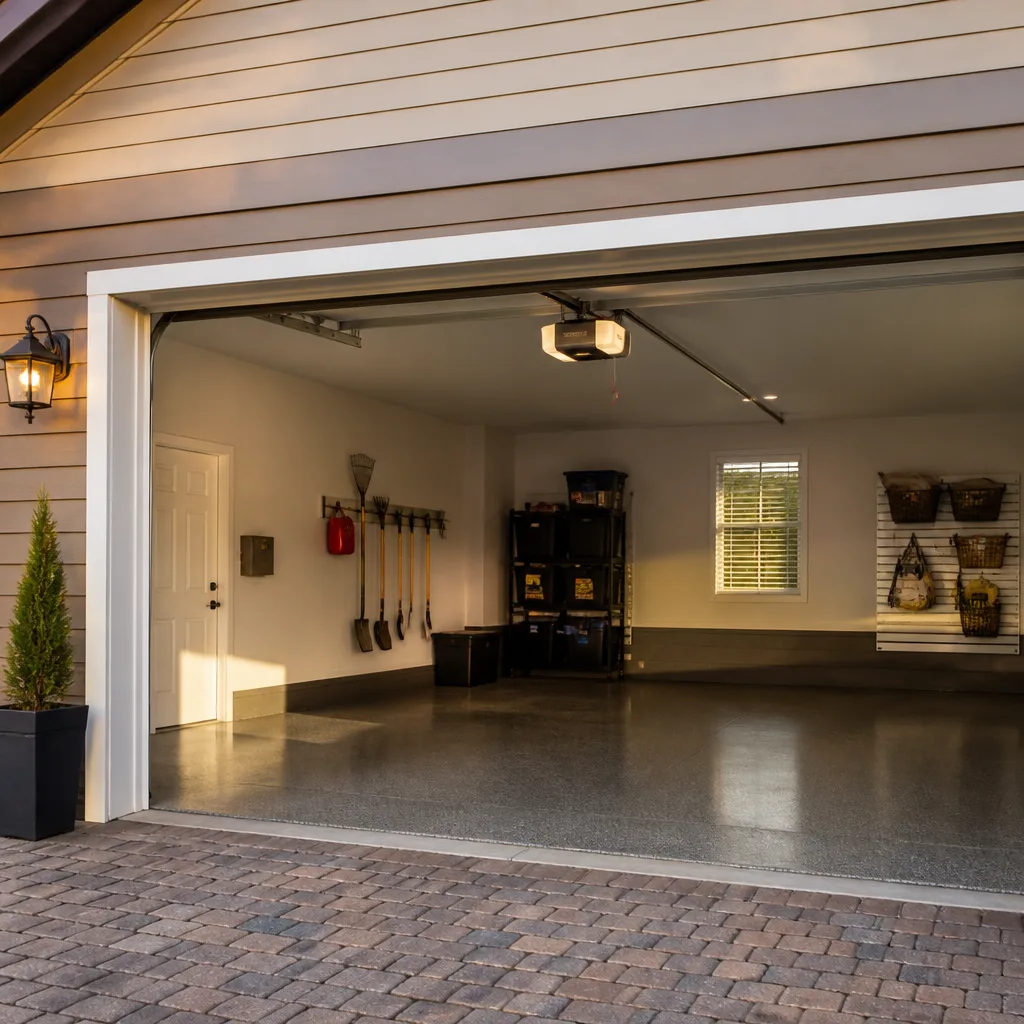
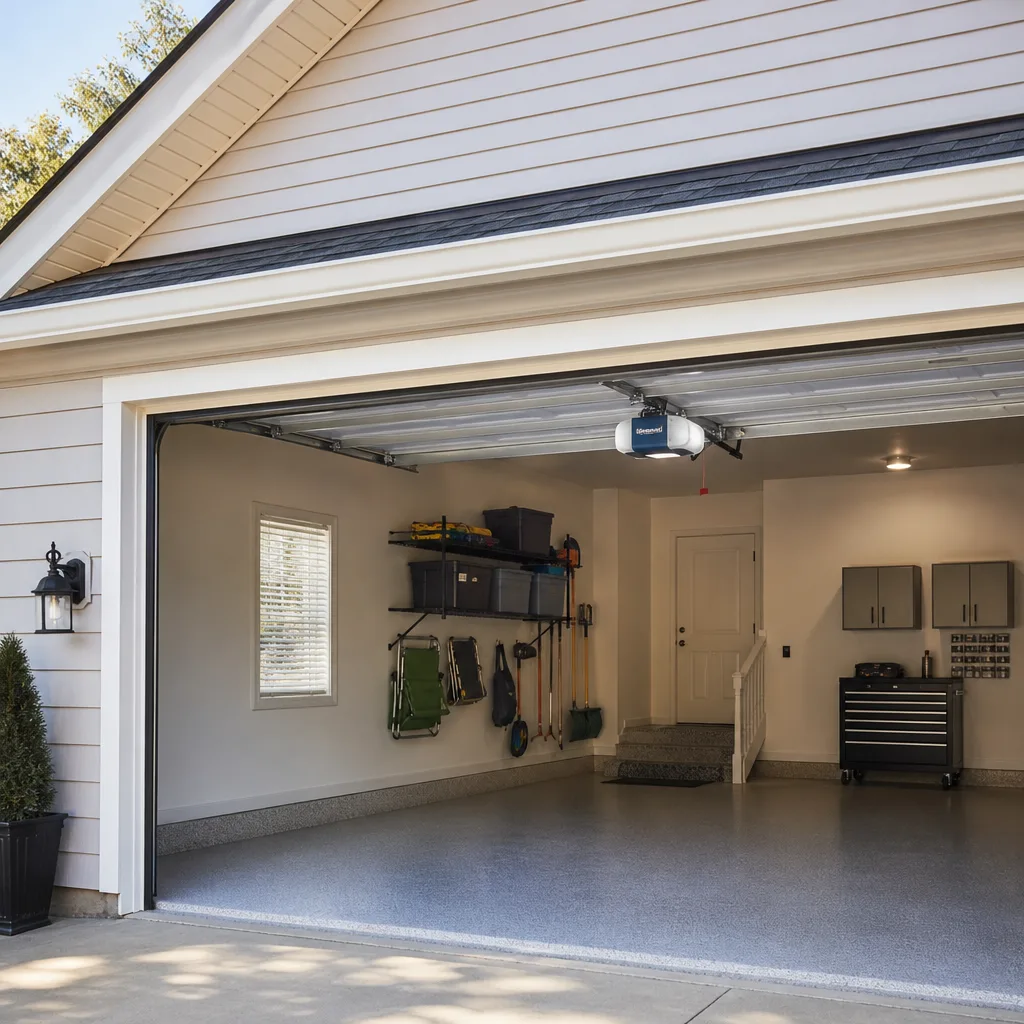
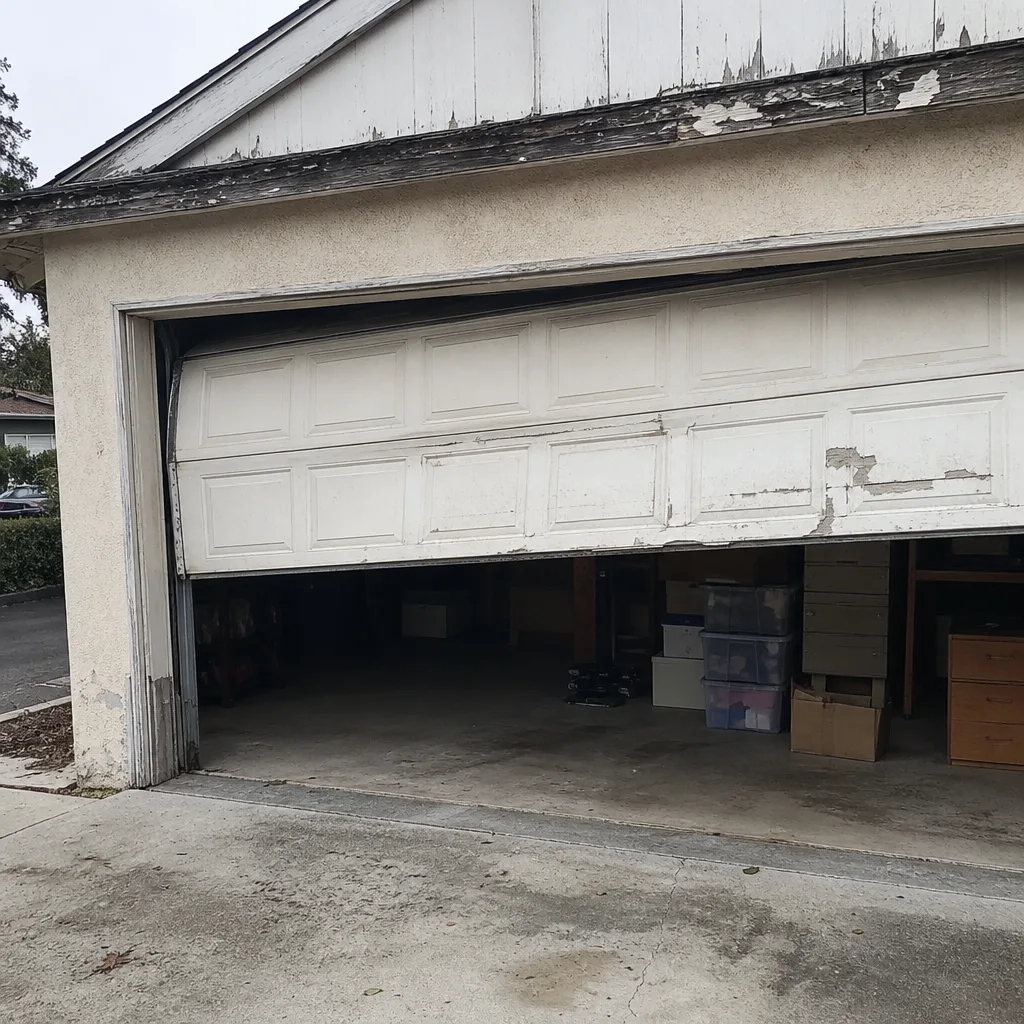 Before
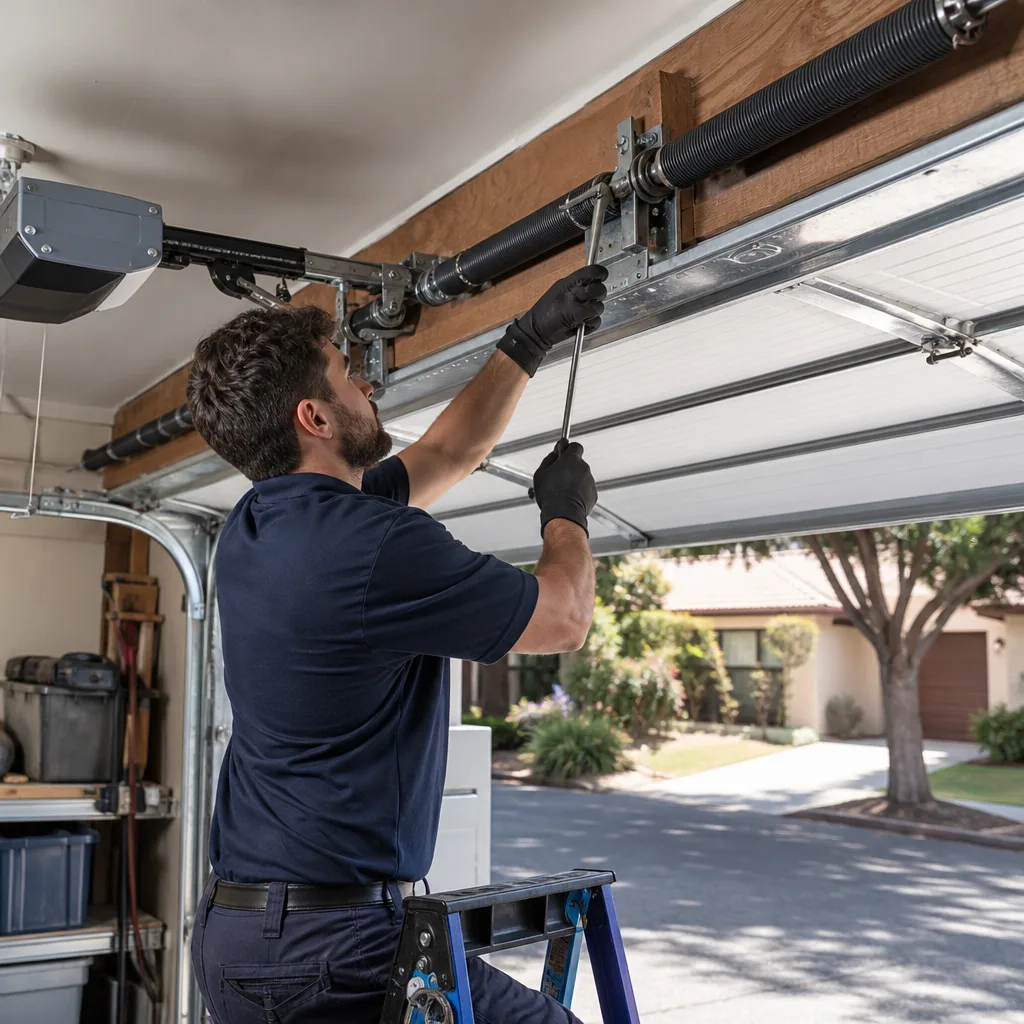 After
After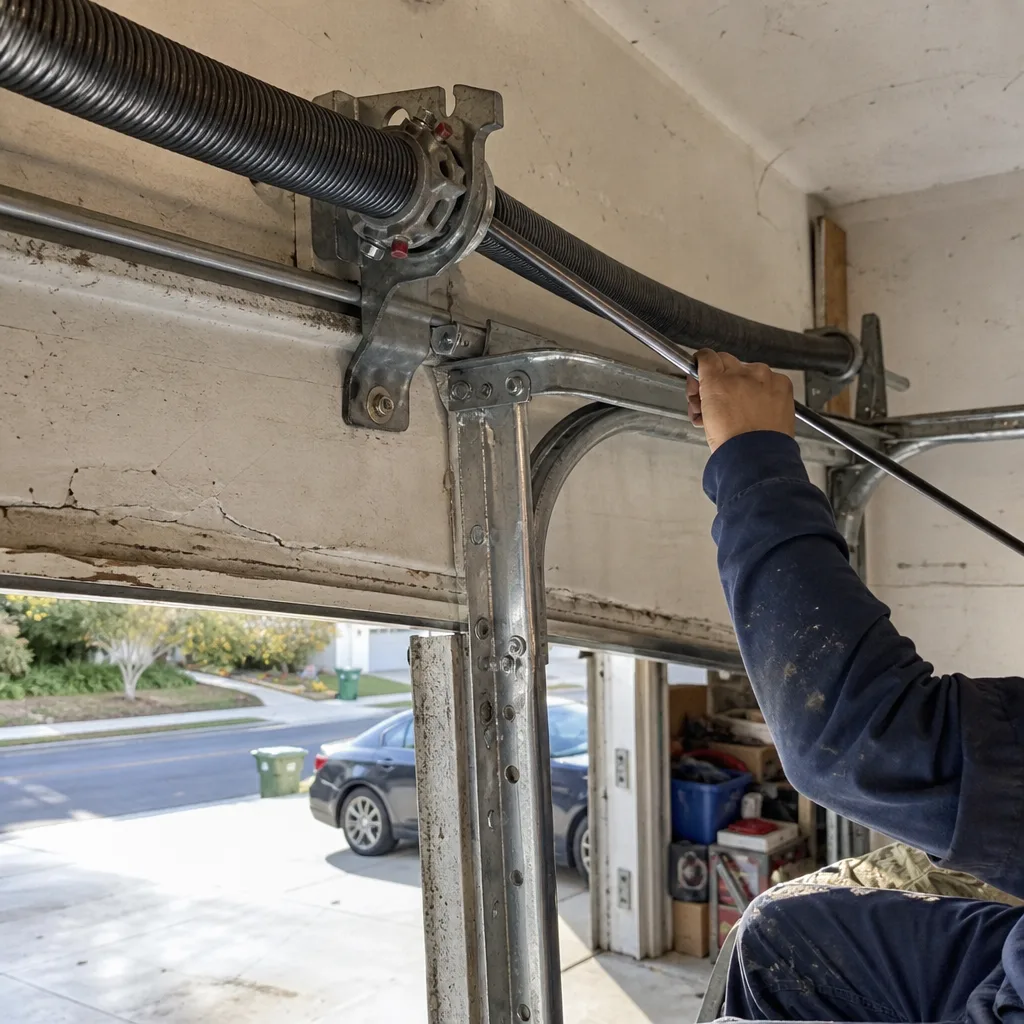 Before
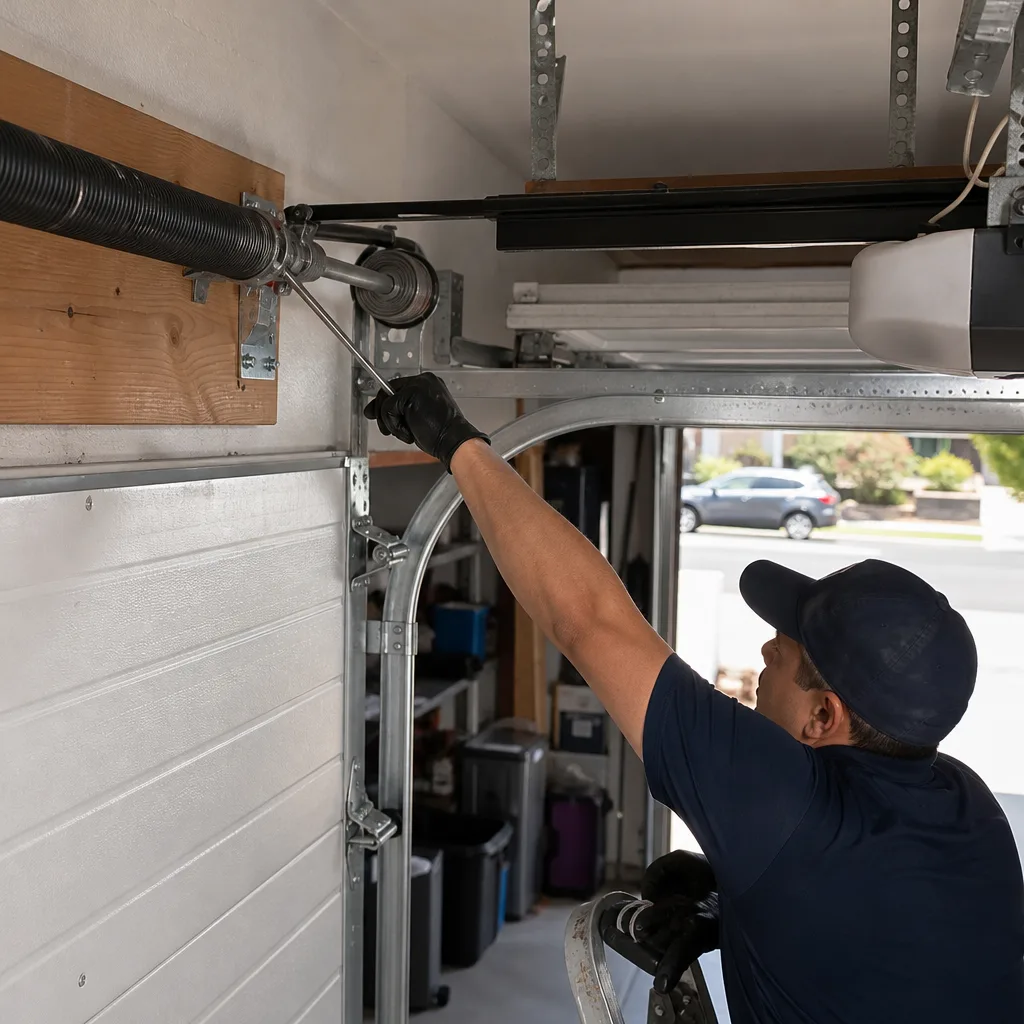 After
After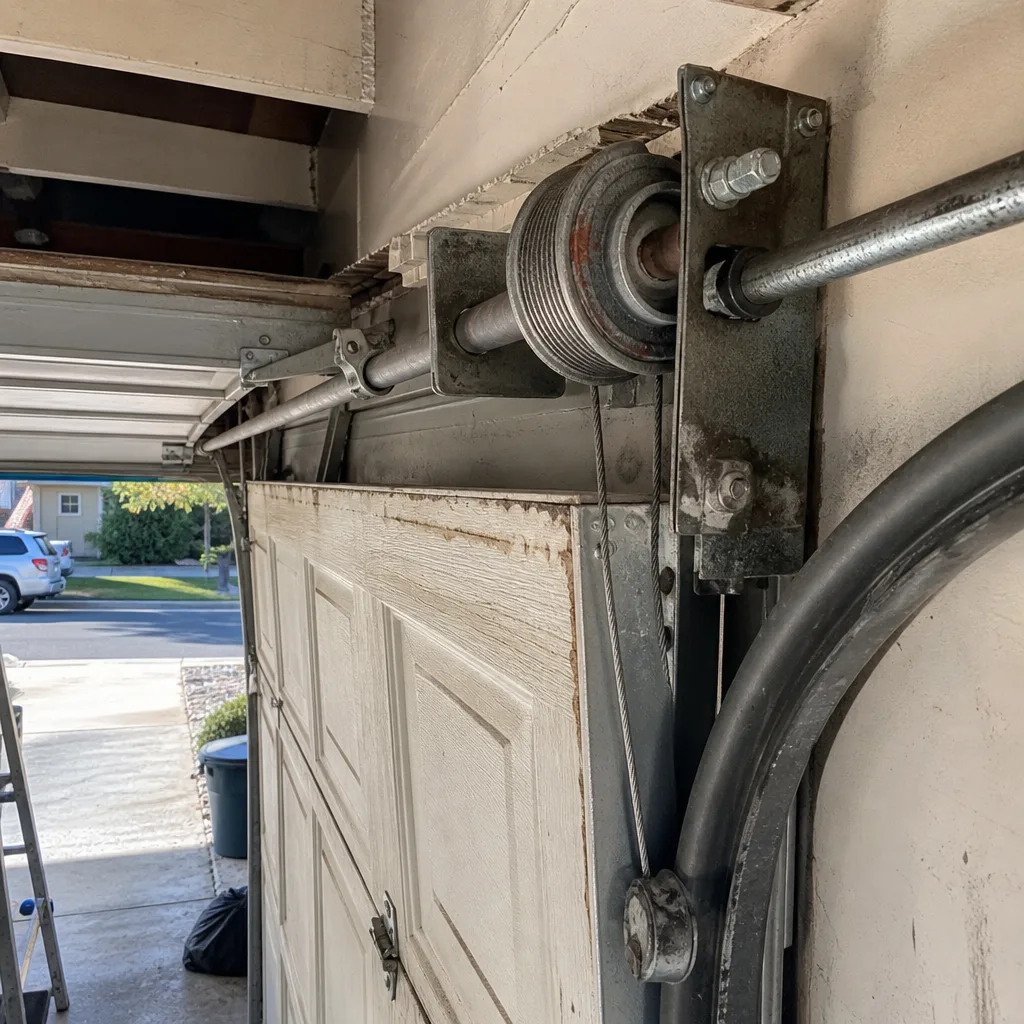 Before
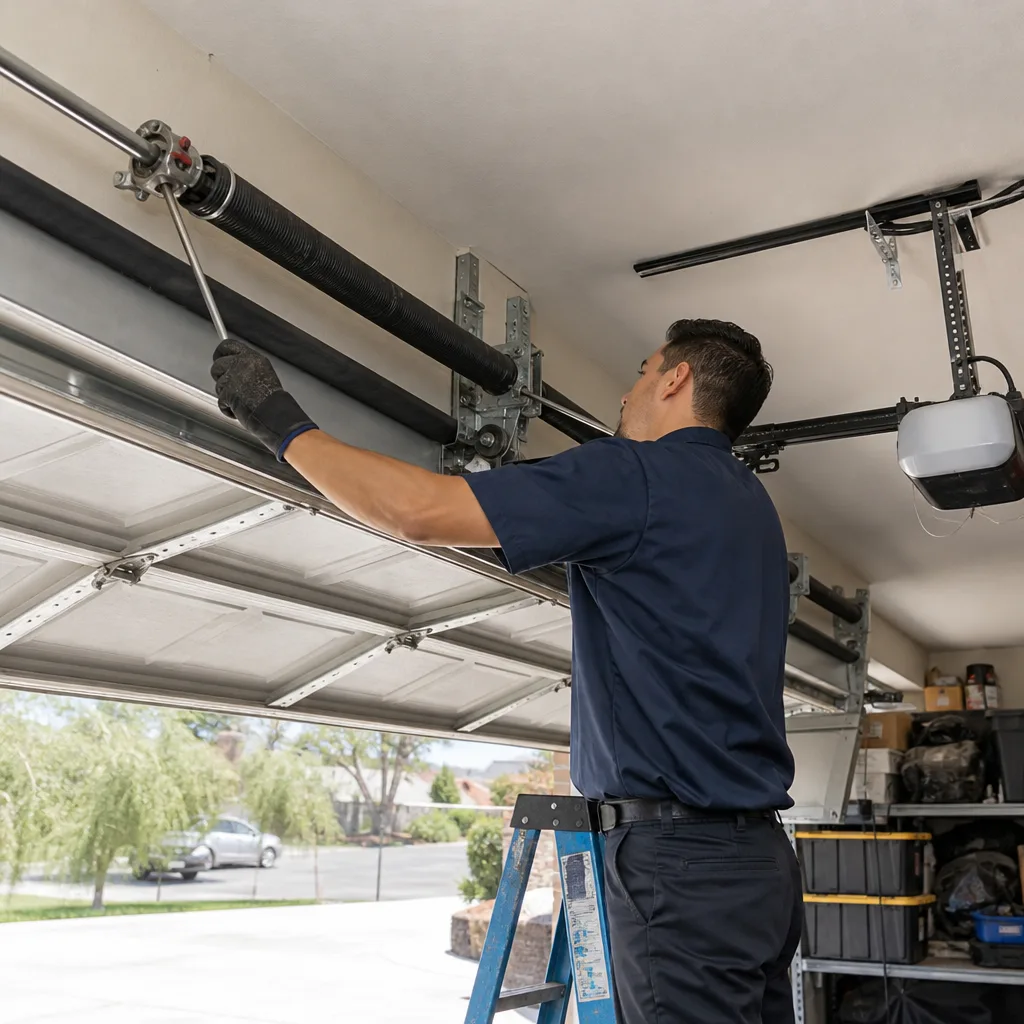 After
AfterGarage Door Cable Repair Troubleshooting: Common Problems and How to Fix Them
The door sitting crooked in the frame is not a track problem in most cases. It’s a cable problem that moved the door off the track. Fix the track and you’ve fixed nothing. Homeowners across Los Angeles call us every week convinced they need new tracks, a new spring, or an entirely new opener, when the actual culprit is a pair of steel cables that cost a fraction of what they were prepared to spend. This guide teaches you to read the physical evidence on your garage door before you spend a dollar on the wrong repair. You’ll learn how cables fail, what those failures look like from inside your garage, which symptoms get misdiagnosed, and exactly when to stop looking and start calling.
Quick Answer
Garage Door Cable Repair troubleshooting starts with identifying whether the cable snapped, slipped, or frayed. A snapped cable makes a loud bang and leaves the door hanging unevenly with visible slack. A slipped cable creates a slow-developing gap on one side that many people mistake for a track or spring problem. Most cable issues require a professional because the torsion spring assembly holds dangerous stored tension, but a safe visual inspection can confirm the problem before you call.
Table of Contents
- Why Garage Door Cables Fail
- Snapped Cable vs. Slipped Cable: Reading the Difference
- Five Common Misdiagnoses That Cost Homeowners Money
- The Safe Visual Inspection: What to Check Without Touching Anything
- Why One Broken Cable Usually Means Replacing Both
- What Cable Repair Costs in Los Angeles
- When to Stop Troubleshooting and Call a Technician
Why Garage Door Cables Fail
Garage door cables are not a lifetime part. On a door that cycles twice a day, the cables bend, flex, and carry load through every single open and close. In Los Angeles, the combination of coastal moisture in neighborhoods like Playa del Rey and Santa Monica, plus the dry heat of the Valley, accelerates the two failure modes we see most: corrosion at the bottom bracket and fatigue at the point where the cable wraps the drum.
Cables fail for four reasons, and three of them are predictable:
- Age and cycle fatigue. A cable that has been in service for 7 to 10 years has undergone thousands of load-unload cycles. The individual steel strands begin to separate, especially near the crimped end where the cable attaches to the bottom bracket. This is not a defect. It is the end of the cable’s service life.
- Rust and corrosion. Garage door cables are galvanized, but galvanization thins over time. In Los Angeles neighborhoods within a few miles of the coast, salt air works on that coating year-round. A rusted cable is a weaker cable, and the break almost always happens at the bottom bracket where water pools after the door washes down in rain.
- Drum or pulley damage. The cable drum mounted on the torsion tube above the door keeps the cable winding evenly. A groove worn into that drum, or a seized roller, causes the cable to bunch up on one side. That uneven spooling puts a kink in the cable, and a kinked cable is a broken cable waiting for a cycle.
- Spring failure shock load. When a torsion spring breaks, the cable on that side goes from carrying its share of the door weight to absorbing the full shock of the spring’s release. The cable can survive, but it often frays at the drum in those few violent seconds. If your spring broke, the cable on that side deserves a hard look even if it looks intact.
We’ve answered enough calls in Los Angeles to know the pattern: the cable does not fail quietly. It gives warnings for weeks, sometimes months. Fraying near the bottom bracket, a door that shudders as it opens, a visible gap at one corner when the door is closed. Homeowners who catch those signals early pay for a cable replacement. Homeowners who don’t pay for a cable replacement plus whatever the flailing cable damaged on its way out.
Snapped Cable vs. Slipped Cable: Reading the Difference
This is the single most important diagnostic distinction in garage door cable troubleshooting, and it is the one most homeowners get wrong. A snapped cable and a slipped cable present almost nothing alike, and the repair approach is different for each.
A Snapped Cable Is Loud and Obvious
When a cable breaks under tension, you know it. The sound is a sharp crack or a loud bang, like a heavy rope snapping against the garage wall. What happens next is predictable because physics doesn’t offer options: the door loses support on one side, the remaining cable and spring assembly pulls the door upward on the intact side, and the door hangs crooked in the opening. The broken cable end often whips back, leaving a visible length of loose steel hanging from the drum or lying across the top of the door.
The signs are immediate. The door will not open smoothly, if it opens at all. The track on the broken side takes stress it was never designed to take. If you try to raise the door with the opener, you’ll usually hear grinding and the door will bind. A snapped cable is not a subtle diagnosis.
A Slipped Cable Is Quiet and Gradual
A slipped cable is different. The cable does not break; it comes off the drum. This happens when the door hits something on the way down, when the spring loses tension over time, or when the cable develops slack because the drum was never re-tensioned after a previous repair. The cable unwinds off the drum and lies loosely across the top of the door or dangles inside the track channel.
The symptom that follows confuses people: the door closes unevenly. One side touches the ground while the other side hovers an inch or two above. Or the door opens partway and then binds, because the side with the loose cable has nothing pulling it up evenly. The door often still moves, which is why slipped cables get misread as a track issue, a bent rail, or a failing opener. The door moves, so the homeowner assumes the cables must be fine. The opposite is true.
In our experience across Los Angeles garages, slipped cables are more common than snapped cables, and they’re the cause of most “my door is off track” calls. The cable comes off the drum quietly, and the homeowner adjusts for weeks, manually pushing the door down the last two inches on one side. Then the cable, now loose and unspooled, gets caught in the track roller or the hinges, and suddenly the quiet problem becomes a loud one.
Five Common Misdiagnoses That Cost Homeowners Money
Before you call anyone about your garage door, run through these five scenarios. Each one is a misdiagnosis we have seen repeatedly in Los Angeles homes, and each one leads to money spent on a repair that does not fix the actual problem.
- “My door is off track.” The door is not off track because the track bent. The door is off track because a cable slipped or snapped, and the unbalanced door pulled itself out of the track rollers. Hire someone to “fix the track” and the door will bind again the next time the cable slips. You fix the cable, then you straighten the track if it actually bent.
- “My spring is broken.” Torsion springs do break, and when they do, the door will not open. But a door that opens partway, or opens unevenly, usually has a spring that is tired but not broken, paired with a cable that has slipped. We see this constantly: a homeowner points at the spring, and the actual issue is a cable that unwound because the spring lost a few pounds of tension. The spring may need adjustment, but the cable is the part that failed.
- “The opener is burning out.” A garage door opener that labors, strains, or trips its internal breaker is often blamed for a problem it did not create. When one cable slips, the door becomes heavy and unbalanced, and the opener is forced to pull unevenly. The motor works harder, the gear heats up, and the opener gets replaced at retail cost. The door still binds after the new opener goes in. Check the cables before you replace the opener.
- “I just need a quick cable splice.” You cannot splice a garage door cable. The cable operates under high tension and any splice is a failure point. Cable repair means cable replacement, and we say that in writing before any work starts. A spliced cable is a cable that will break, and usually at the worst moment.
- “One side is sagging, so I need a new door.” A sagging door with a gap at one corner is often a cable that has stretched or slipped, not a door that has structurally failed. Replacing the door without diagnosing the cable means paying thousands for a new panel when a $175 cable replacement would have solved it. Always check the cable run on the sagging side before you conclude the door itself is done.
The Safe Visual Inspection: What to Check Without Touching Anything
You can diagnose most cable problems from a standing position with the door closed. Do not touch the spring system, do not remove the cable retainers, and do not attempt to re-seat a cable by hand. The torsion spring above the door stores enough energy to cause serious injury if it releases. Your job in this inspection is to look, not to touch.
- Look at the door from inside the garage with it closed. Is there a gap between the floor and the bottom edge of the door on either side? A gap means one side is not being pulled down evenly, which points to a slipped or stretched cable.
- Look at the bottom brackets. These are the metal brackets at the lower corners of the door where the cable ends attach. Look for fraying, rust, or broken strands at the point where the cable enters the crimp. This is the most common failure point we see on Los Angeles doors, especially within a few miles of the coast.
- Look at the cable drums. The drums are the spool-like fittings at each end of the torsion tube above the door. The cable should be wound evenly in the drum groove. If you see gaps, overlapping cable, or a cable hanging loose off the drum, you have found the problem. Do not attempt to rewind it.
- Follow the cable run. Trace the cable with your eyes from the bottom bracket up to the drum. Look for kinks, flattened spots, or any place where the cable is not running straight. A kink is a guaranteed future break point.
- Look at the track channel. A cable that has slipped will often lie loose inside the vertical track channel. If you see a steel cable hanging inside the track instead of running straight up to the drum, that’s your answer.
If everything looks intact but the door still operates badly, the issue may be spring tension rather than the cable itself. That distinction matters because the repair is different. A cable replacement addresses the cable. A spring adjustment addresses the balance. A technician who does the wrong one leaves you with a door that still doesn’t work.
Why One Broken Cable Usually Means Replacing Both
When one cable snaps or slips, the natural instinct is to replace just that one. On the surface, that seems reasonable. The other cable looks fine. So why pay for two?
Here’s the standard practice in this trade, and we follow it on every Los Angeles job: both cables are installed at the same time, have carried the same load for the same number of cycles, and have been exposed to the same garage environment for the same number of years. If one cable reached the end of its service life, the other cable is at the end of its service life too. It just hasn’t failed yet. Replacing one cable leaves you with a door supported by one new cable and one cable that is months, weeks, or days from failing. You’ll be back in the same position soon, paying for another service call.
The cost difference between replacing one cable and replacing both is small relative to the cost of a second service visit. Most companies, including ours, price cable replacement per cable but discount the pair because the labor overlaps. A single cable replacement in Los Angeles typically runs $150 to $275 depending on cable type and drum condition. Replacing the pair usually adds $75 to $125 in cable cost, not double the job. That’s not upselling. That’s standard practice to restore the door to balanced service.
We also check the drums during every cable replacement. A worn drum groove will destroy a new cable within months, and we will not install a new cable on a drum that will eat it. If the drum needs replacement, we tell you before we start, with the price in writing. Same for the bottom brackets. A rusted bottom bracket with a corroded cable attach point is a failure waiting to happen, and the cable replacement is the right moment to address it.
What Cable Repair Costs in Los Angeles
Garage door cable repair pricing in Los Angeles varies by cable type, drum condition, and whether the spring system requires adjustment as part of the job; for broader context, see our Garage Door Cost Breakdown: The Los Angeles Homeowner’s Reference for 2026. Here are the ranges we operate within, based on the equipment we service from Amarr, Wayne Dalton, Craftsman, and Raynor, among others:
- Single cable replacement: $150 to $275. The lower end applies to standard 7-foot doors with clean drums. The higher end covers heavier doors, drums that need cleaning or minor re-grooving, and doors where the spring requires re-tensioning after the cable install.
- Both cables replaced: $225 to $350. This is the standard recommendation when one cable has failed, for the reasons above.
- Cable plus bottom bracket replacement: Add $45 to $85 per bracket. Bottom brackets corrode at the cable attach point, and on older doors in coastal Los Angeles neighborhoods, they’re usually the root cause of the cable failure.
- Cable plus drum replacement: Add $65 to $120 per drum. Worn drum grooves cause uneven spooling and premature cable wear.
Every price we quote is handed over in writing before a single bolt turns. The number you approve is the number on the invoice. That’s not a policy we advertise loosely. It’s how we run every job under The Garrison Standard, and it applies to every cable repair we do in Los Angeles.
When to Stop Troubleshooting and Call a Technician
There is a clear line between inspecting and repairing, and that line is the torsion spring assembly above the door. The moment your diagnosis involves winding or unwinding a cable on a drum that is under spring tension, you have crossed from homeowner troubleshooting into work that requires training and the right tools. A garage door torsion spring holds hundreds of pounds of stored tension, and a cable that snaps under that tension becomes a projectile. We do not give step-by-step instructions for this part of the repair, and no responsible garage door company will.
Stop troubleshooting and call a professional when:
- The cable has snapped and the door is hanging unevenly or will not move.
- The cable has slipped off the drum and the drum shows visible damage or the spring appears to have lost tension.
- You see fraying, kinking, or broken strands anywhere on the cable.
- The door binds when opening or closing, and the cable is bunched at the drum.
- You hear grinding or see the cable rubbing against the track channel.
- The bottom bracket is rusted, bent, or pulling away from the door.
These are not repairs you can complete safely with a socket set and a YouTube tutorial. They require winding bars, proper cable tensioning, and an understanding of how spring balance affects cable load. A technician who works on garage doors full time brings all three, plus the experience to spot secondary damage that a visual inspection will miss.
Common Mistakes to Avoid
- Re-using a kinked or frayed cable. A cable that has developed a kink has already deformed its internal strands. Installing it on a new drum just moves the problem to a different part of the door. Replace the cable, always.
- Lubricating a fraying cable. Lubricant on a cable is not a repair and it will not extend the cable’s life. It also attracts dust and grit that accelerate wear. A fraying cable needs replacement, not spray grease.
- Running the opener on a door with a slipped cable. Every cycle with a slipped cable bends the track, strains the opener gear, and roughs up the drum groove. The more you run it, the more expensive the eventual repair.
- Releasing the spring tension without training. The torsion spring kills or maims people who try to work on it without winding bars and experience. This is not a warning we water down. Do not touch the spring.
- Ignoring a door that’s making new noises. A door that suddenly grinds, pops, or shudders is telling you something changed. Waiting until the cable snaps just means the part that was $175 to replace now requires a $400 repair with track work.
- Replacing only one cable when both are the same age. Covered above, but worth repeating: you’re paying for the second cable whether you buy it now or buy it later after it fails. The only question is whether you pay for a second service visit too.
When to Call a Professional
If your cable is snapped, slipped, frayed, or kinked, or if you’ve done the visual inspection above and found damage at the drum, bottom bracket, or cable run, that’s the moment to stop troubleshooting. The repair involves high-tension spring systems, and the risk of injury is real. Brock Garage Door Repair offers free estimates in Los Angeles. Our technicians arrive in uniform, hand you a written price before any work starts, and back every cable repair in writing for 365 days. Call (254) 602-5116.
Frequently Asked Questions
You’ll see a visible break in the cable, hear a loud bang when it snaps, or notice the door hanging crooked with one side higher than the other. A slipped cable looks different: the door closes with a gap on one side or binds partway down, and the loose cable hangs inside the track channel.
No, because the cable operates under torsion spring tension that can cause serious injury if released incorrectly. You can safely inspect the cable by looking at it, but replacing it requires winding bars and proper training. This is one repair where the risk is not worth it.
Most cable repairs in Los Angeles run $150 to $275 for a single cable, or $225 to $350 for both cables, depending on cable type and drum condition. Brackets and drums add to the job if they’re worn. Brock Garage Door Repair gives you a written price before any work starts. Call (254) 602-5116 for a free estimate.
The cable comes off the drum when the door hits something, when the spring loses tension, or when the drum groove is worn and can’t hold the cable. It’s a quiet failure that often gets misread as a track problem.
Yes. Both cables were installed together, carried the same load for the same years, and are at the same point in their service life. Replacing one cable saves money today and costs more later when the second one fails. Replacing both is standard practice, not upselling.
Every cable repair from Brock Garage Door Repair includes a written 365-day guarantee called the Done Right Promise. If the repair fails within that year, we return and correct it at no charge. That guarantee is in writing, not verbal. Call (254) 602-5116 to schedule.
The Bottom Line
Garage door cable problems are usually visible long before they become emergencies. The fraying at the bottom bracket, the gap at one corner, the grinding as the door binds. The skill is in reading those signs correctly instead of chasing track problems, opener problems, or phantom spring issues, and you can find more guides & resources on our blog to help with that. In Los Angeles, where garage doors cycle year-round and coastal air works on the steel, cable failures are a matter of when, not if. Catch the warning signs and you’re paying for a cable. Miss them and you’re paying for a cable, a track, and maybe an opener. The repair is not complicated for a trained technician, but it is dangerous for anyone else. If your inspection found damage, call (254) 602-5116 and get a written price from Brock Garage Door Repair before you spend another dollar guessing.
Written by Wade Mercer, Owner at Brock Garage Door Repair, serving Los Angeles since 2001.