
Last updated October 9, 2026
Full 25-point door and opener safety check with every visit - springs, cables, rollers, tracks, and your LiftMaster or Chamberlain opener included
You get a price before we start. It does not change when the truck arrives.
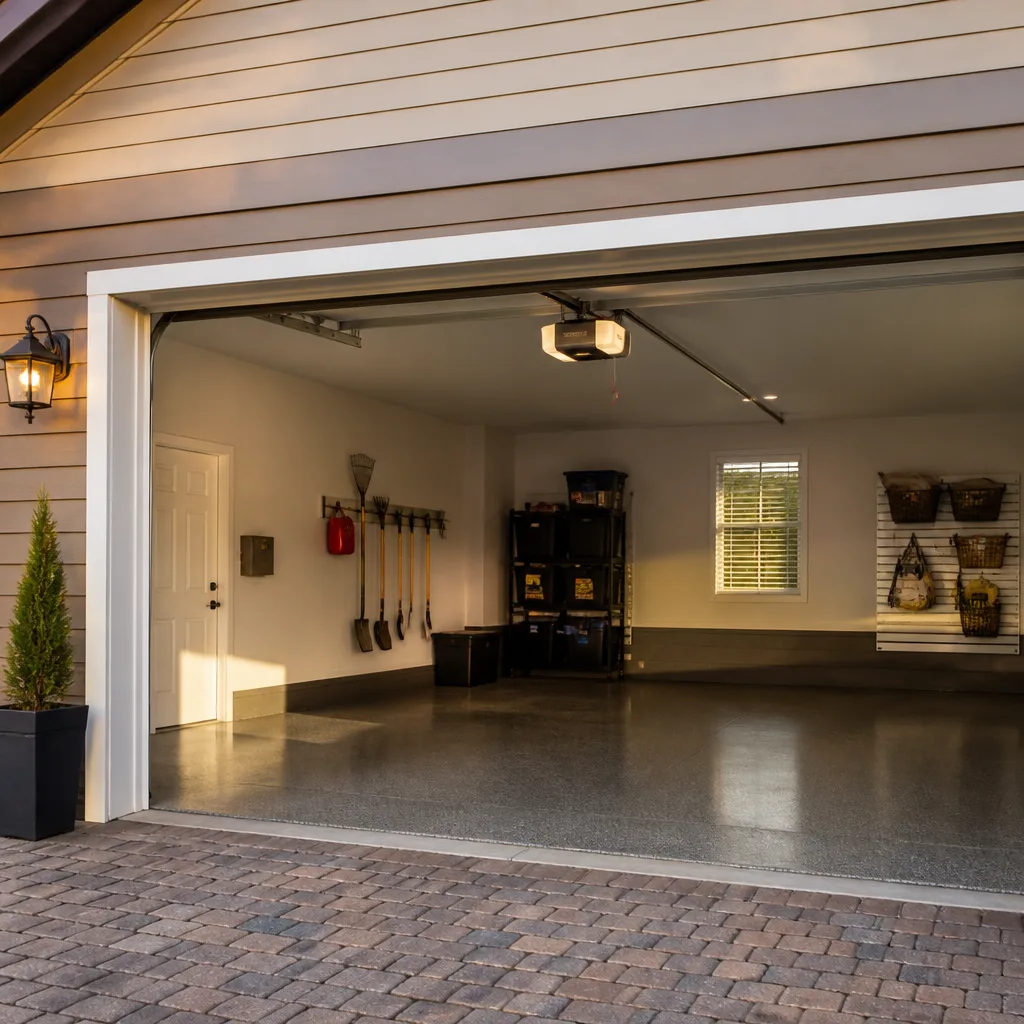
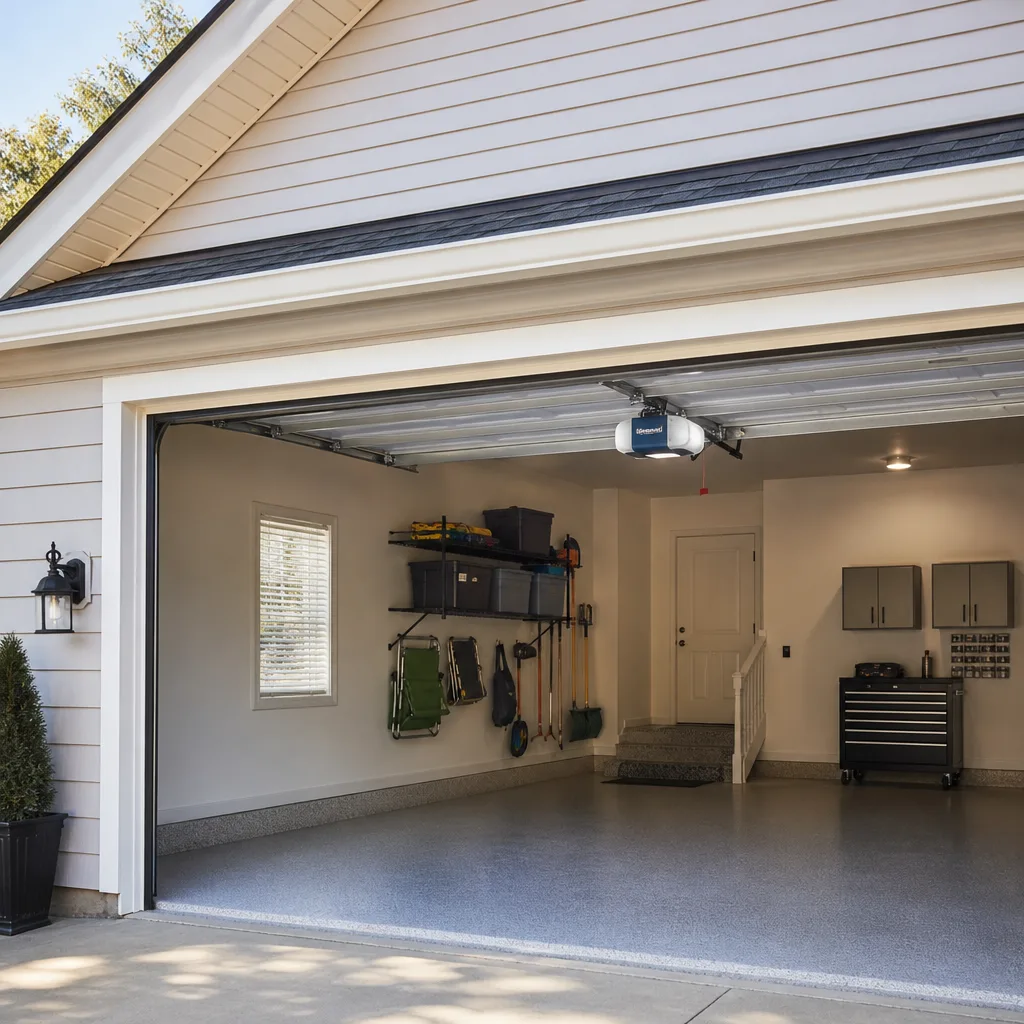
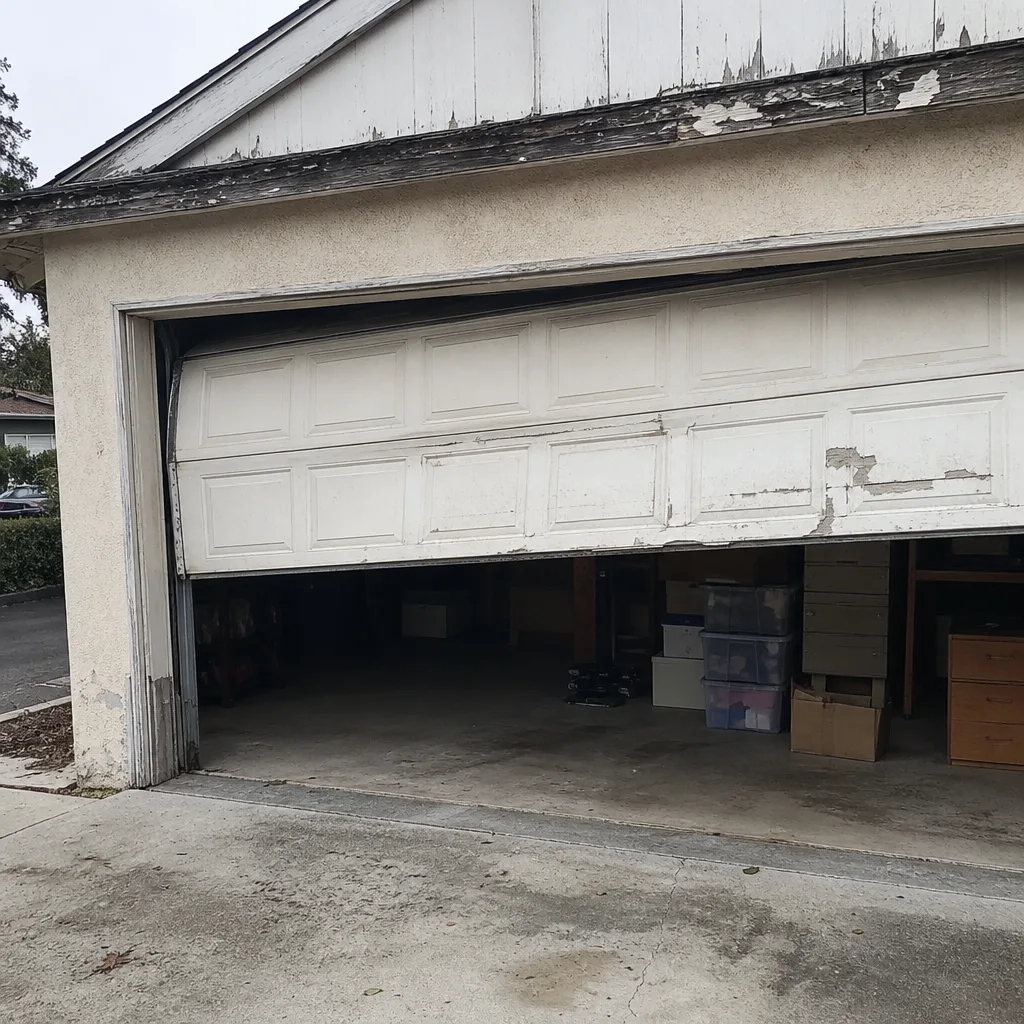 Before
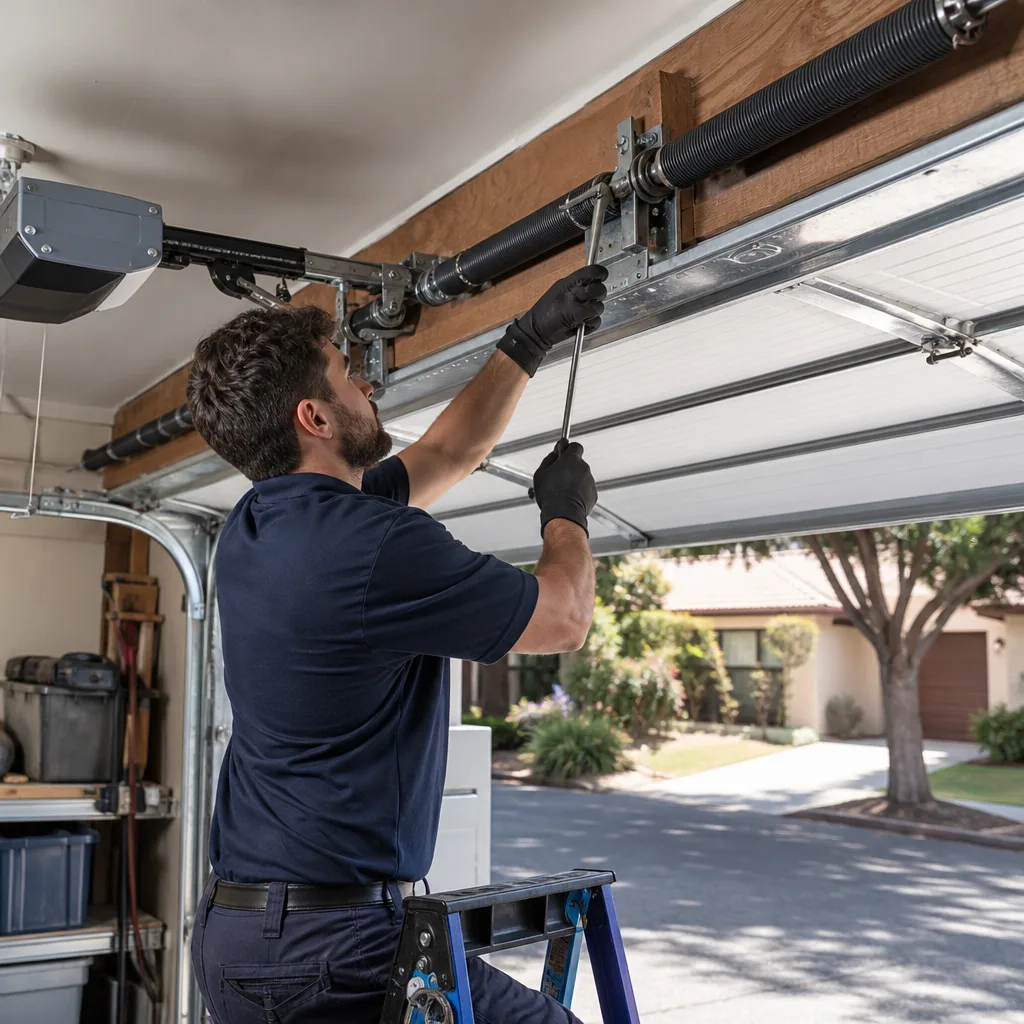 After
After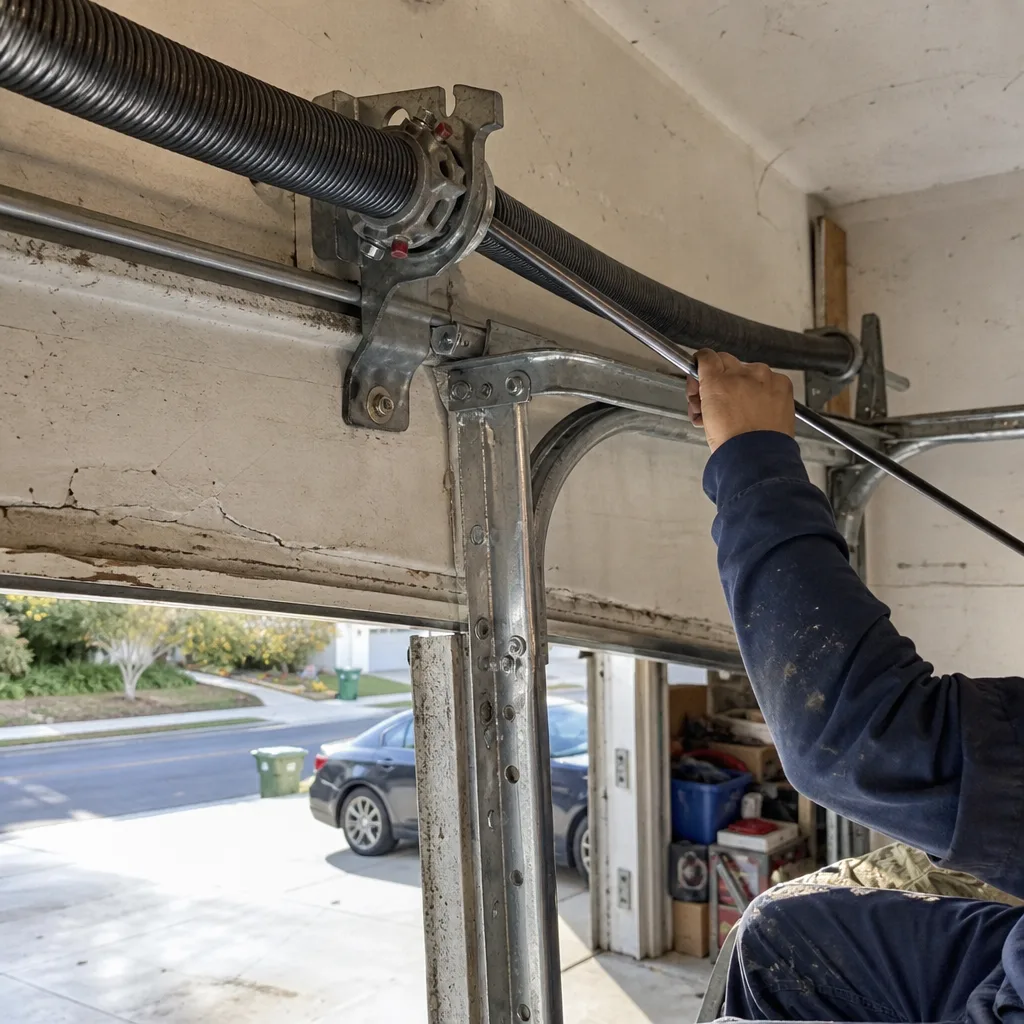 Before
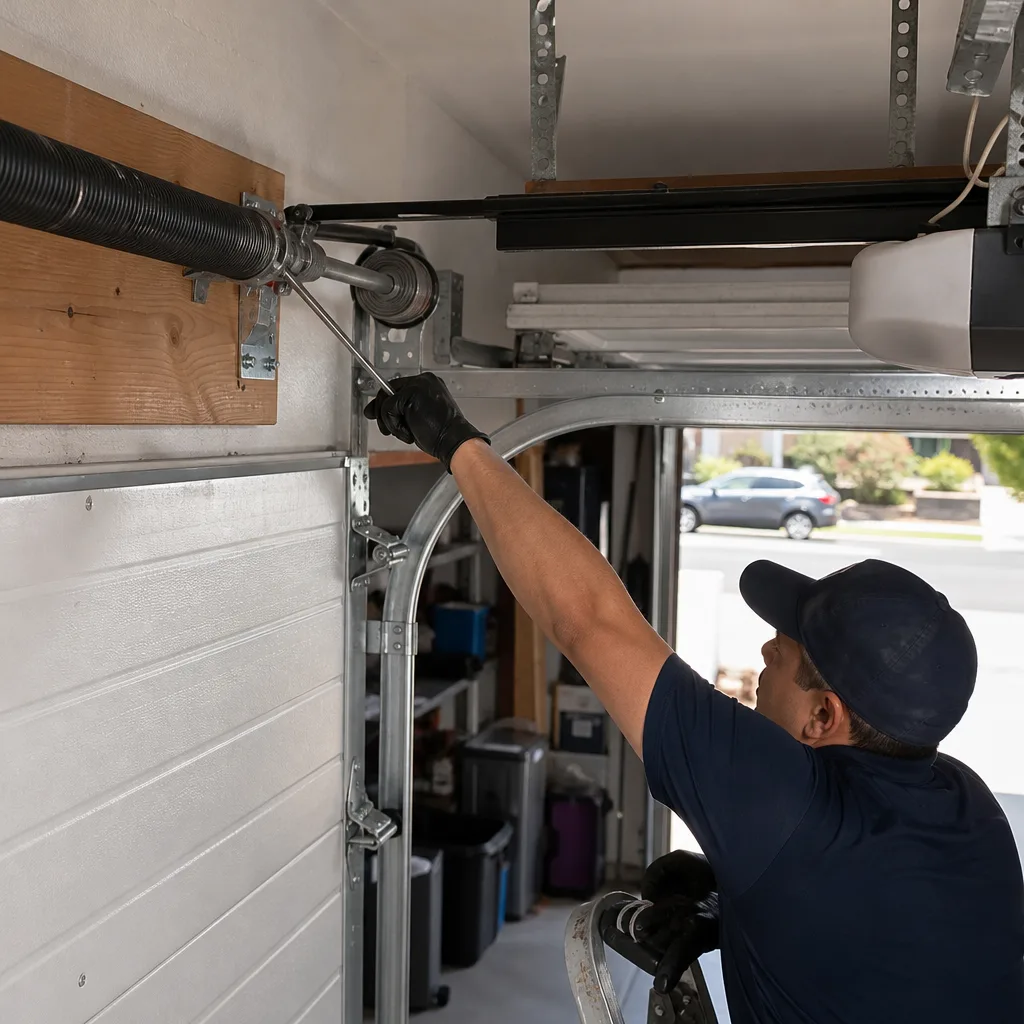 After
After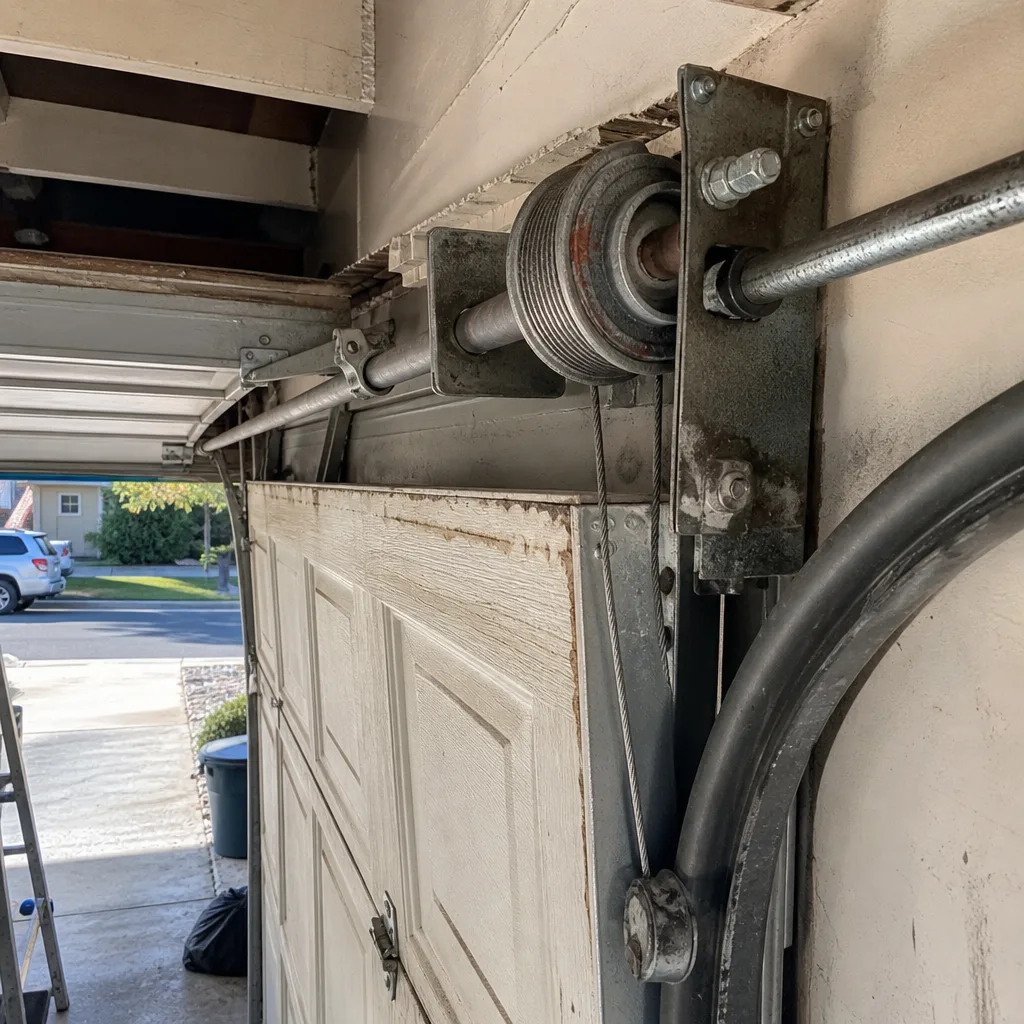 Before
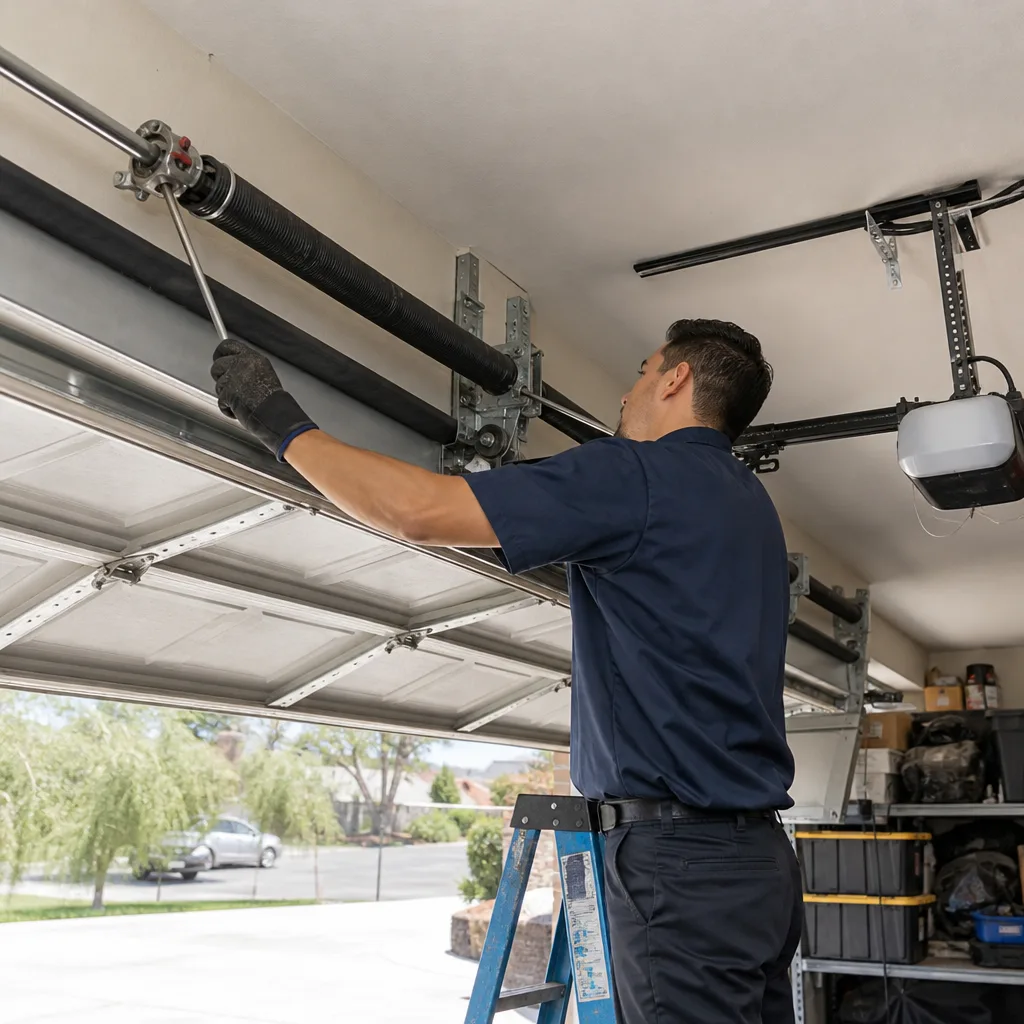 After
AfterGarage Door Emergency Preparedness Guide for Los Angeles Homes
During the July 2019 Ridgecrest earthquakes, fire stations and police departments across Los Angeles County fielded a wave of calls from residents who could not get their cars out of their garages. The problem wasn’t collapsed doors in most cases. It was opener motors that lost power, tracks that shifted a half-inch out of square, and homeowners who had never once pulled the red emergency release cord. We’ve repaired the aftermath of that week, and the lesson stuck: in Los Angeles, a garage door isn’t just a convenience. It’s an exit route, and it deserves the same preparation you give smoke detectors or earthquake kits.
Quick Answer
Garage door emergency preparedness in Los Angeles means three things: knowing how to switch your door to manual operation within 30 seconds, having a power solution for outages during heat waves or after quakes, and keeping your door safe to operate when tracks shift or egress becomes urgent. The core skill is the manual release procedure, which takes practice and requires a balanced door before you test it.
Table of Contents
- The Manual Release Procedure: Your Primary Emergency Skill
- Earthquake Damage Checklist: Is Your Door Safe to Operate?
- Battery Backup Openers: What Actually Works in LA
- Wildfire Egress: Pre-Programming Your Door for Fast Exit
- Power Outage Protocol: Operating Without Electricity
- Preventive Maintenance That Reduces Emergency Risk
- Building a Household Garage Emergency Plan
- Common Mistakes to Avoid
The Manual Release Procedure: Your Primary Emergency Skill
Every automatic garage door opener has a manual release mechanism, and in an emergency, it is the difference between walking out your front door and driving out of your garage. The release is a red rope or cord hanging from the opener rail near the motor. Pulling it disengages the opener carriage from the door, allowing you to lift or lower the door by hand.
What most Los Angeles homeowners don’t realize is that the release only works smoothly when the door is in the closed or fully open position. If the door is mid-travel when power fails, the release may bind, and the door may slam under its own weight if the springs are broken or unbalanced. That’s why we recommend testing the procedure before you need it.
Here is the step-by-step method we train our customers on:
- Close the door first if possible. If the door is open and balanced, closing it manually first makes lifting easier later.
- Locate the red release cord. It hangs from a trolley on the opener rail, usually within arm’s reach above your car.
- Pull the cord straight down and toward the garage door. You will hear a click as the trolley disengages from the carriage.
- Switch the opener to manual mode. Some models have a lock switch on the wall control. If yours does, slide it to the unlocked position.
- Lift the door by hand using the bottom handle or the bottom rail. Grip with both hands, keep your back straight, and lift smoothly. A balanced door should feel manageable, roughly 20 to 40 pounds of effort.
- Raise the door to the fully open position. If the door stops halfway or feels heavy, the springs may be failing. Stop and call a professional rather than forcing it.
Re-engaging the opener after power returns is equally important. Pull the release cord again toward the motor, then press the wall button or remote once. The trolley should reconnect and begin moving the door normally. If the door jerks or the opener strains, disengage again and call a technician.
In our experience serving Los Angeles, the single most common emergency repair call after an earthquake or property crime is a door that’s pinned shut because someone pulled the release while the door was under tension. Practice the procedure once a quarter, and label the release cord with a bright tag so anyone in the household can find it in the dark with a phone flashlight.
Earthquake Damage Checklist: Is Your Door Safe to Operate?
After a tremor, your garage door may look fine from the outside and still be hazardous to operate. The track system, springs, cables, and opener all endure lateral movement during seismic events. Los Angeles sits in a high-seismicity zone, and even a 4.0 quake can shift a door enough to cause a cable to jump a pulley or a track to pull away from the wall.
Before you press the opener button or attempt to lift the door by hand after any quake you clearly felt, walk through this checklist:
- Look at the vertical tracks. Stand inside the garage and check both sides. The tracks should be plumb, straight, and securely fastened to the wall. If a track is bowed more than a quarter-inch or pulled away from its bracket, do not operate the door.
- Inspect the horizontal tracks. The upper tracks that carry the door into the ceiling should be level and parallel. Misalignment here causes rollers to bind and cables to derail.
- Check the cables. The two steel cables attached to the bottom corners of the door should be taut, not slack or kinked. A slack cable means the door is off-balance, and operating it risks a cable snap or a spring loaded against the wrong component.
- Examine the springs. For torsion springs mounted above the door, look for gaps in the coil. For extension springs along the side rails, both sides should be intact with safety cables running through the center. A broken spring means the door’s full weight is now unmanageable by hand.
- Listen for unusual sounds. If you choose to test the door, run it only a foot or two. Grinding, popping, or scraping means something structural shifted and needs professional inspection before full travel.
If your door passes this checklist, you can operate it manually and use your vehicle. If anything looks off, or if the door behaves strangely during a short test run, this is a case for a trained technician. A door that fails during an aftershock could fall, and a falling garage door causes serious injury. The Garage Door Repair in Los Angeles work we perform after seismic events almost always involves realigning tracks and re-tensioning springs, and those are jobs that require proper tools and spring winding experience.
Battery Backup Openers: What Actually Works in LA
Southern California’s most common emergency power loss comes from two sources: rolling blackouts during extreme heat events and infrastructure damage after earthquakes. Either way, a standard garage door opener becomes a dead weight the moment power drops, and if your car is inside, you are locked in unless you use the manual release.
A battery backup opener solves this by supplying DC power to the motor for a limited number of cycles after the grid goes down. But not all backup systems are created equal, and Los Angeles homeowners should know what they are buying before they spend $400 to $700 on a new unit.
Battery backup is most commonly available on belt-drive and chain-drive openers from LiftMaster, the dominant brand in LA garage door installations. These units contain a sealed lead-acid or lithium-ion battery that charges when the opener has AC power and switches over automatically during an outage. Realistic runtimes vary by model and battery age, but here is what we tell our customers:
- Newer lithium-ion backup units can operate the door 20 to 50 cycles on a full charge, depending on door weight and travel distance.
- Older lead-acid backup batteries may only deliver 5 to 10 cycles after a year or two of Southern California heat exposure in an uninsulated garage.
- Battery lifespan in LA’s inland valleys, where garage temperatures routinely exceed 110°F in summer, is shorter than the manufacturer’s stated rating. We recommend testing the backup function every season.
- Replacement batteries for most LiftMaster and Chamberlain backup openers cost $75 to $160 and are a homeowner-accessible job in most cases.
For homes with Wayne Dalton or Raynor doors, compatibility depends on the opener brand, not the door brand. The door itself doesn’t care what moves it. If you have an older Craftsman opener without backup capability, your options are to upgrade the opener or add an uninterruptible power supply (UPS) designed for motor loads, though a dedicated opener battery is more reliable long-term.
During the August 2020 heat wave rolling outages, we heard from homeowners who assumed their old opener would work because the remote operated. The remote was battery-powered. The opener was not. Test your system by unplugging the opener from the wall and pressing the wall button. If the door moves, the backup battery is functioning. If nothing happens, replace the battery before the next outage.
Wildfire Egress: Pre-Programming Your Door for Fast Exit
Los Angeles County fire seasons have reshaped how homeowners think about evacuation. In the Woolsey Fire and more recent events, residents had minutes, not hours, to get vehicles out and leave. A garage door that opens slowly, binds, or requires multiple remote presses costs time no family can afford during a mandatory evacuation.
The smart-opener features that matter during wildfire egress are remote operation and pre-set positions. LiftMaster’s MyQ platform, integrated into many of its newer models, allows you to open or close the garage door from a smartphone anywhere you have a cellular or Wi-Fi connection. If you’ve already evacuated or are sheltering indoors, you can trigger the door to open without standing in front of it.
Some smart openers support scheduling and position automation. For wildfire preparedness, we recommend this setup:
- Keep the opener’s “door up” timer disabled. The feature that automatically closes the door after a set interval is convenient for security, but dangerous during an evacuation. You want full manual control.
- Program a one-touch open command on the wall console and app. Make sure every licensed driver in the household has the app installed and logged in on their phone.
- Set the opener to close only on command. If you park in the driveway after evacuating, the door should stay open until you close it. Automatic closing while a vehicle is moving can cause a door strike.
- Confirm remote access works from outside your home Wi-Fi. Test the app on cellular data at least once. Some setups require a bridge or hub to relay Wi-Fi signals to the opener.
For homes in Los Angeles brush-adjacent zones like the foothills and canyon areas, remote egress is not a gadget feature; it’s a safety protocol. If your current opener is not smart-enabled, MyQ retrofit kits for LiftMaster and Chamberlain openers run $40 to $80 and install in under an hour. For older Wayne Dalton or Raynor systems, the compatibility check is quick, but the retrofit itself is straightforward.
Power Outage Protocol: Operating Without Electricity
When the power fails in Los Angeles for any reason, the first question is whether the door is closed and your car is inside, or the door is open and you want to secure it. The answer changes what you should do. If the power fails while the door is closed, lifting it by hand is the fastest route to your vehicle. If the power fails while the door is open, your concern is securing the garage against intrusion or weather.
For a closed door during a power outage, the manual release procedure described above is your primary method. Lift the door open, move your car out, and then decide whether to leave the door open or close it manually. Be aware that closing a door manually still requires the springs to carry the weight. If the springs are healthy, the door will close slowly and softly. If the door drops quickly or feels heavy, the springs need replacement, and you should not attempt to force the door down.
For an open door during a power outage, you can pull the release cord and lower the door by hand. This works best with two people, one on each side of the door, guiding it down smoothly. The door should lower at a controlled rate if balanced. If it crashes down, stop and call for Garage Door Opener Repair in Los Angeles, as the problem is likely a spring out of adjustment.
One LA-specific consideration is your garage door’s role in home access during an outage that follows a quake. Many homes have the electrical panel inside the garage. If you can’t open the garage door, you can’t reach your electrical panel, your water heater, or your circuit breakers. This is exactly why every household should practice the manual release at least twice a year, ideally in the spring and again in the fall.
Preventive Maintenance That Reduces Emergency Risk
Most garage door emergencies in Los Angeles are not seismic or weather-related. They are the result of deferred maintenance. A door that hasn’t been serviced in five years is a door that fails when you need it most. The spring that breaks at 7 a.m. on a Monday was giving Garage Door Opener Repair Warning Signs Every Homeowner Should Know for months: a slight squeal, a visible gap, a door that felt heavier than usual.
Here is the Garage Door Opener Repair Maintenance Schedule: What to Do and When we recommend for Los Angeles homes, where heat and dust accelerate wear:
- Lubricate rollers, hinges, and springs every 6 months. Use a dedicated garage door lubricant, not WD-40. In LA’s dry, dusty air, lack of lubrication causes metal-on-metal wear that trips opener force settings.
- Check roller condition annually. Nylon rollers with sealed bearings last longest in local conditions. If your rollers are metal with exposed bearings or visibly cracked, plan to replace them.
- Test the safety reverse system monthly. Place a 2×4 flat on the ground under the door and close it. The door should reverse within two seconds of contact. This is the single most important safety feature on any opener.
- Inspect balance twice a year. Disengage the opener, lift the door halfway, and let go. A balanced door stays in place. A door that drops or shoots up needs spring adjustment.
- Clean the photo-eye sensors monthly. Dust from LA streets and canyon winds coats the lenses, causing the opener to refuse to close.
- Watch for rust on cables and springs. Coastal areas like Pacific Palisades and the Westside put salt in the air. Rusted cables lose tensile strength and snap without warning.
For the components that carry load, the springs and cables, inspection and replacement are not DIY jobs. Torsion springs are under tension that can kill or seriously injure an untrained person. If your door has a broken spring or a frayed cable, call for Garage Door Cable Repair in Los Angeles and leave the door as is until a technician arrives.
Building a Household Garage Emergency Plan
Preparedness systems only work when everyone in the household knows them. We’ve walked through the mechanical steps above. Now put them into a simple household plan that works under stress. In a real emergency, fine motor skills and abstract problem-solving degrade. Your plan should be trivial to execute.
- Label the release cord. Tie a bright red or orange ribbon to the emergency release cord so it is visible and identifiable in dim conditions.
- Place a battery-powered LED flashlight on a hook near the garage door. Power outages and earthquakes both knock out lights. A flashlight with fresh batteries that lives in one spot saves scrambling.
- Post the manual release steps on the wall by the opener. Print them in large type. Under stress, people don’t read small text.
- Assign roles. In a two-adult household, one person handles the door while the other gathers children, pets, and go-bags. Rehearse the division so it becomes automatic.
- Test the backup battery seasonally. Set a calendar reminder. Unplug the opener and run the door three full cycles. If it struggles, replace the battery.
- Keep the garage interior clear. Emergency egress means getting to the door, opening it, and driving out. If you have to move a bicycle, a storage bin, and a box of holiday decorations between you and the car, you’ve lost critical minutes.
In Los Angeles, earthquakes, heat-triggered outages, and wildfire evacuations all create the same requirement: a garage door that opens on command, manually or automatically, within seconds. The household plan ties the mechanical prep to the human systems that use it.
Common Mistakes to Avoid
- Pulling the release cord while the door is under load. If the door is mid-travel or the springs are broken, the release can cause the door to slam down. Always close the door fully first, then pull the cord.
- Assuming a battery backup opener means unlimited operation. Backup batteries run a finite number of cycles. After a prolonged outage, the battery may be depleted, and the opener will stop responding.
- Testing the manual release on an unbalanced door. A door with failing springs can drop under full weight when disengaged. If the door feels heavy during a normal cycle, get the springs inspected before practicing the release.
- Leaving the opener locked after pulling the manual release. The wall lock switch, present on many LiftMaster and Craftsman models, prevents the opener from reconnecting. If you forget to unlock it, the garage door opener seems broken when it’s just locked out.
- Neglecting the photo-eye sensors during wildfire season. Ash and soot from fires coat the safety sensor lenses, causing the door to refuse to close. Clean the lenses during fire season even if you haven’t evacuated.
- Using the garage as overflow storage around the door tracks. Items stacked near the tracks get knocked into the path of the door, scratching panels and jamming rollers. Keep the track path clear at all times.
- DIY spring and cable work after an earthquake. The temptation to “just realign it” is strong when a track looks slightly off. The stored energy in a torsion spring can kill. Leave spring, cable, and track repair to a pro.
When to Call a Professional
A professional is needed whenever the door shows signs of structural compromise or load-bearing components fail. Broken springs, frayed Cables, bent tracks, and openers that won’t re-engage after a manual release are all beyond safe DIY scope. If your door slams when closing, if the opener grinds instead of moving, or if the door is visibly off-level, stop using it and call a technician. The assessment takes minutes and tells you whether the door is safe to operate or needs repair before your next emergency. Brock Garage Door Repair offers free estimates in Los Angeles. Call (254) 602-5116.
Frequently Asked Questions
First, ensure the door is fully closed, then pull the red release cord hanging from the opener rail to disengage the opener from the door. Lift the door by hand using the bottom handle. If the door is balanced and the springs are healthy, it will lift smoothly. A door that feels heavy or drops suddenly when released needs professional attention before further manual operation. Call (254) 602-5116 for an assessment.
It may, but only if the tracks, cables, and springs are still aligned. After a tremor you felt, inspect the vertical tracks for bowing or separation from the wall, check the cables for slack, and listen for grinding or popping during a short test run. If anything looks or sounds wrong, do not operate the door. A professional can assess the damage and restore safe operation.
A new belt-drive opener with built-in battery backup from LiftMaster or Chamberlain typically runs $450 to $750 installed in the Los Angeles market, depending on the model and your existing opener’s compatibility. Retrofit backup units for compatible openers cost $75 to $180. Prices vary by door weight and installation complexity, so call (254) 602-5116 for a written quote specific to your system.
Yes, if your opener is connected to a smart platform like MyQ and you have a cellular or Wi-Fi signal, you can open or close your garage door from anywhere using your phone. However, this only works if the opener has power or a functioning backup battery. Test remote access on cellular data before fire season so you know it works when you need it.
Test the manual release procedure twice a year, in the spring and fall. Disengage the opener, lift the door by hand, lower it, and re-engage the opener. If the door doesn’t lift smoothly or the opener struggles to reconnect, call for service before an actual emergency.
Check that the opener is plugged in and the circuit breaker hasn’t tripped. If the opener has a battery backup, test it by pressing the wall button with the opener unplugged. If the door still won’t move, pull the manual release cord and try lifting by hand. If the door is heavy or won’t budge, the springs have likely failed. Call (254) 602-5116 for emergency service in Los Angeles.
The Bottom Line
Garage door emergency preparedness in Los Angeles comes down to three skills: operating the manual release without hesitation, recognizing when a door is unsafe to operate after seismic activity, and having a reliable power backup for outages during heat waves or fires. Each takes less than an afternoon to master and costs far less than the alternative of being stranded or injured. Test your release mechanism seasonally, keep a flashlight and the printed steps near the door, and replace tired springs, cables, or openers before they fail at the worst possible moment. For more guides & resources, visit our blog. Preparedness is not about buying the most expensive gear. It’s about practicing the basics until they become automatic.
Written by Wade Mercer, Owner at Brock Garage Door Repair, serving Los Angeles since 2001.