
Last updated October 9, 2026
Full 25-point door and opener safety check with every visit - springs, cables, rollers, tracks, and your LiftMaster or Chamberlain opener included
You get a price before we start. It does not change when the truck arrives.
 Before
 After
After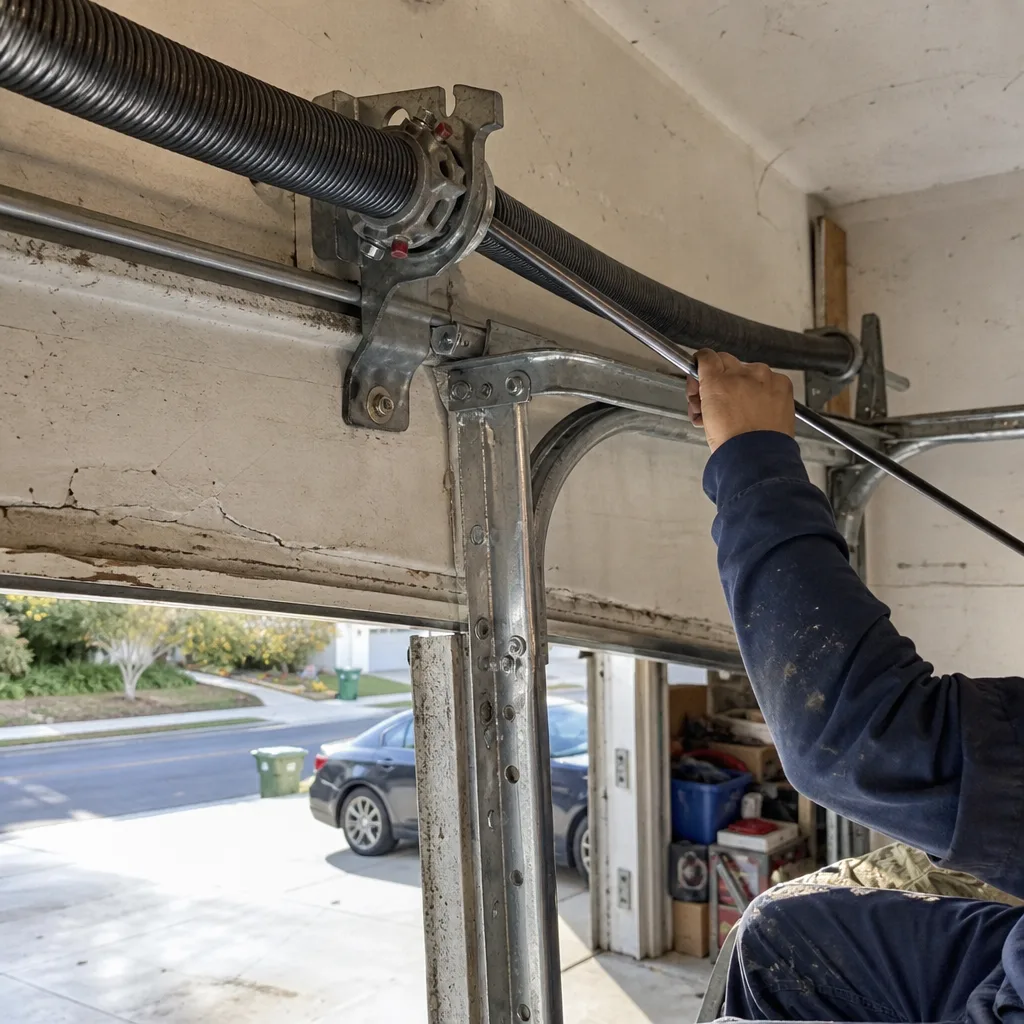 Before
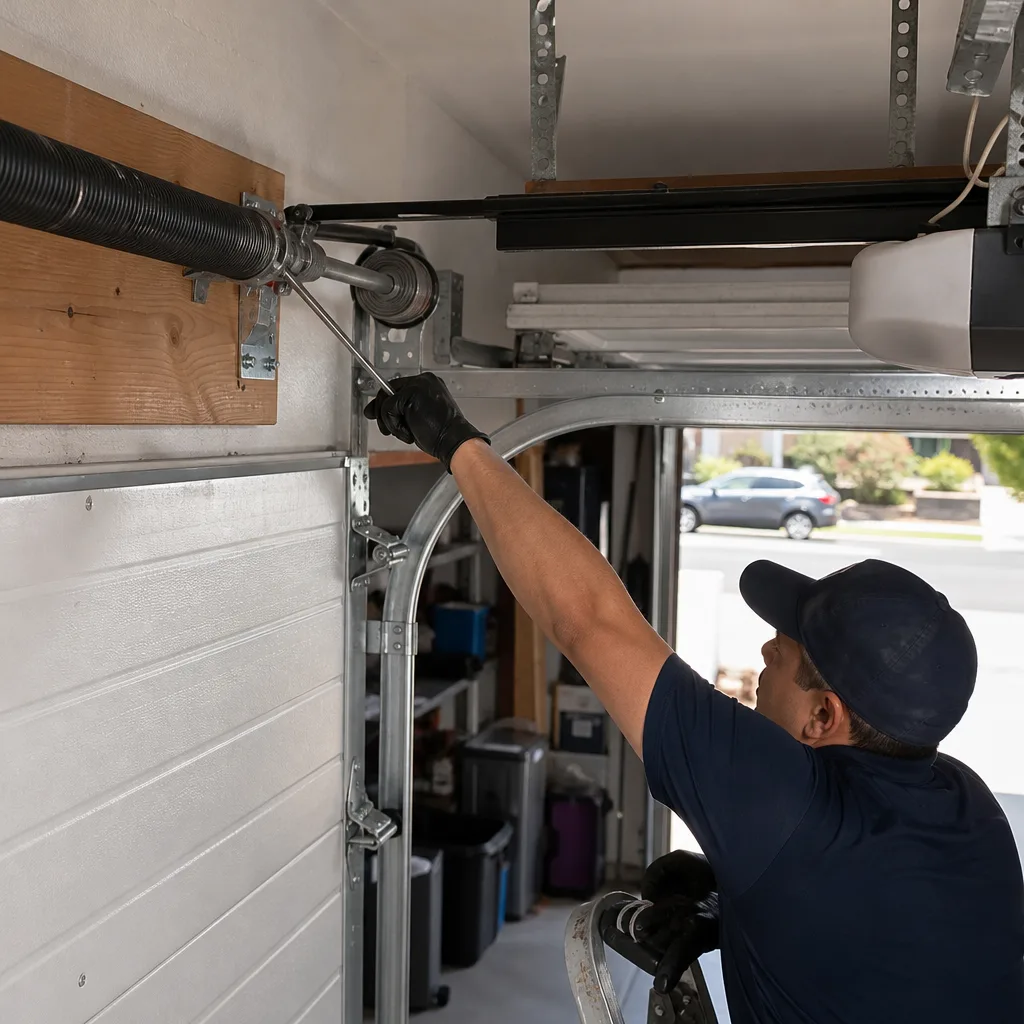 After
After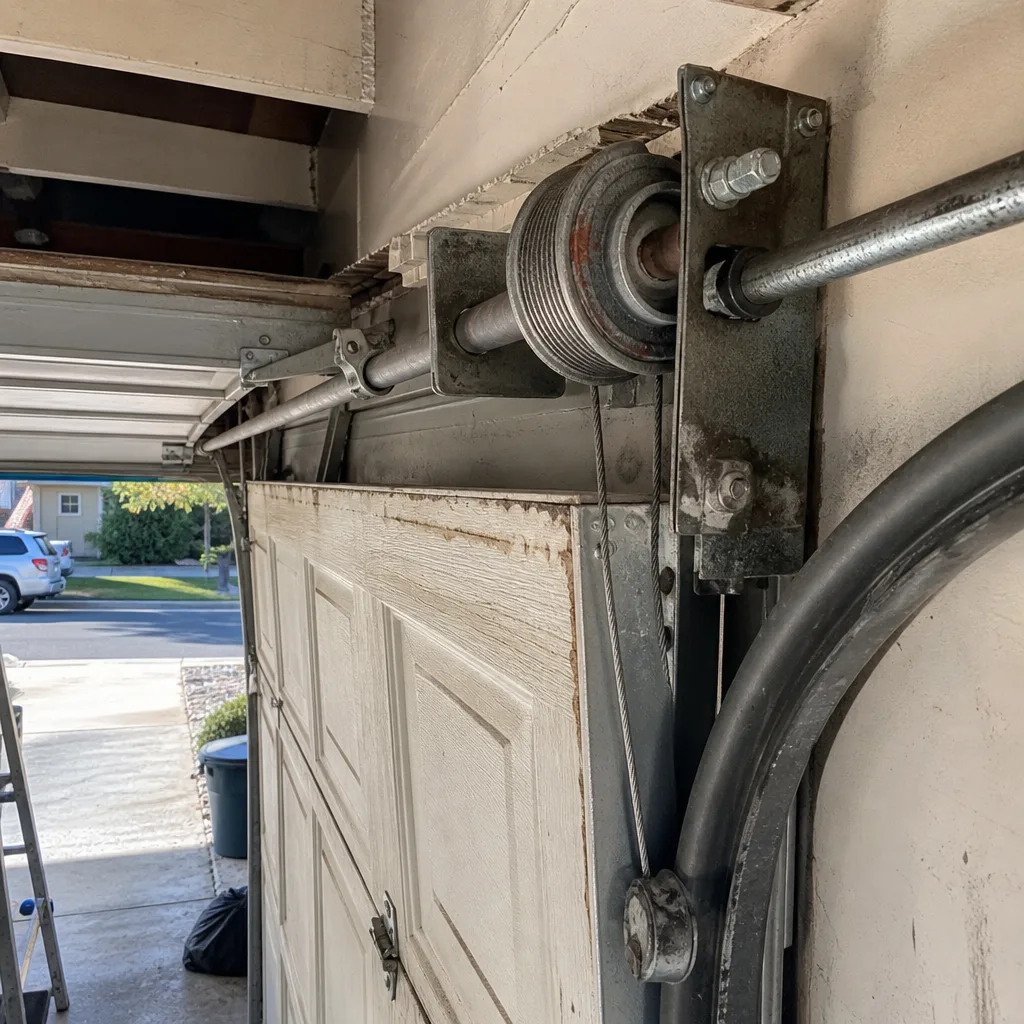 Before
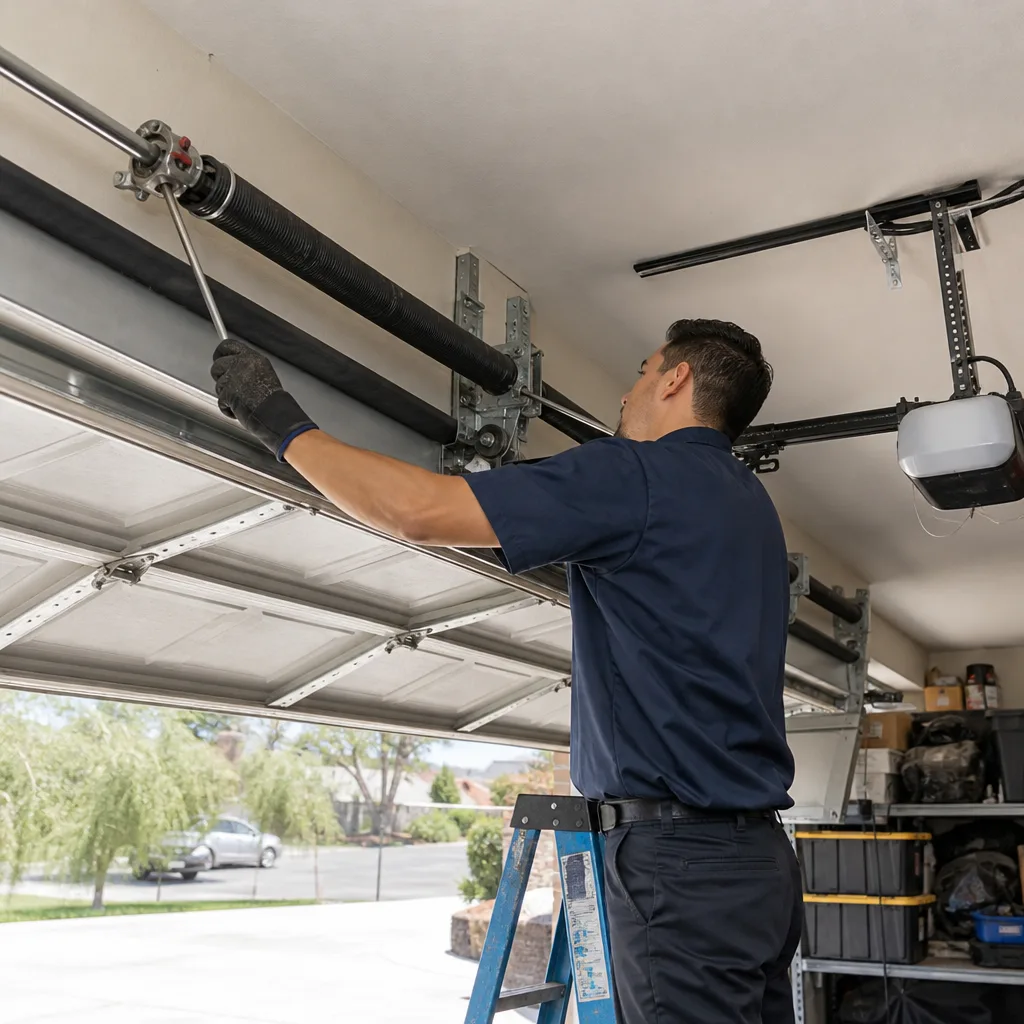 After
AfterGarage Door Cost Breakdown: The Los Angeles Homeowner’s Reference for 2026
Here’s a number most national cost guides won’t tell you: garage door repair in Los Angeles runs 20 – 35% above the national average, and the gap is not going away in 2026. The reasons are specific – labor rates, parts logistics, service-area density, and the fact that LA homes skew older with door setups that national pricing charts never account for. This guide gives you real Los Angeles numbers, line by line, so you can read a quote the way a contractor does and spot the low-ball before it becomes a surprise invoice.
Quick Answer
Most garage door repairs in Los Angeles cost between $150 and $550 in 2026, with spring replacement at $200 – $350, cable work at $150 – $275, and opener replacement at $350 – $700 installed. A full door replacement runs $900 – $4,500 depending on size, material, and hardware. The price you’re quoted should be in writing, itemized, and locked before work starts.
Table of Contents
- The Five Most Common Los Angeles Repairs, Priced
- Why LA Labor Rates Run 20 – 35% Above National Averages
- The Anatomy of a Low-Ball Quote
- Full Door Replacement Costs by Type
- What a Written Quote Must Itemize
- Los Angeles-Specific Cost Factors You Won’t Find in National Guides
- Common Mistakes to Avoid
- When to Call a Professional
The Five Most Common Los Angeles Repairs, Priced
Every door that fails in Los Angeles fails in one of five ways. Here is what each repair actually costs in this market as of 2026, with the low, mid, and high ends reflecting what we see across neighborhoods from the Valley to the Westside.
| Repair | Low | Mid | High | What Drives the Spread |
|---|---|---|---|---|
| Torsion spring replacement | $200 | $275 | $350 | Spring cycle rating (10k vs 20k+ cycles), door weight, double vs single spring setup |
| Cable replacement (pair) | $150 | $200 | $275 | Cable length, drum condition, whether the door came off track when the cable snapped |
| Roller replacement (full set) | $120 | $175 | $250 | Nylon vs steel rollers, 10 vs 12+ rollers on taller doors, hinge condition |
| Panel replacement (single section) | $250 | $400 | $700 | Panel size, insulation, color match, whether it’s a discontinued style that needs custom fabrication |
| Opener replacement (unit + labor) | $350 | $500 | $700 | Horsepower, chain vs belt drive, smart features, wall button and sensor replacement |
These ranges come from service calls our crews run every week across Los Angeles. If a quote falls below the low end, read the next two sections before you accept it. On the other side, if you’re seeing numbers well above the high end, the quote should explain exactly why – thicker door weight, a rusted drum set, or a discontinued Clopay panel color that has to be custom ordered.
Spring replacement is the repair we see most often, and the price difference between a 10,000-cycle spring and a 20,000-cycle spring matters. The higher-cycle spring costs more in parts but lasts roughly twice as long, which means in Los Angeles, where doors open and close more frequently than the national average, the math usually favors the upgrade. A LiftMaster opener paired with undersized springs fails faster than the opener does.
Why LA Labor Rates Run 20 – 35% Above National Averages
The national cost guides that show up in a Google search are built on averages from hundreds of metro areas, including places where a technician’s labor hour costs $55. Los Angeles is not that market. A short drive through the service area explains the difference faster than any spreadsheet.
Labor rates for skilled door work in Los Angeles in 2026 typically run between $90 and $140 per hour, compared with a national band of $60 – $100. Three things push the number up here, and none of them are padding.
- Service-area logistics. A door tech running calls from Santa Monica to Silver Lake to Glendale can spend 90 minutes in the truck between jobs. That is not billable wrench time, but it is real cost, and it has to be covered in the trip or the labor rate. National averages assume ten-minute hops between suburban calls, which is not how a Los Angeles route ever works.
- The cost of doing business. Commercial insurance, vehicle registration, fuel, and the overhead of running a company in California all run measurably above states where the national cost guides pull their data. A company that quotes national-average rates to a Los Angeles homeowner is either losing money on every job or planning to make it back somewhere else.
- Skill scarcity. Garage door work, especially torsion spring replacement and cable work under tension, is not a task anyone with a wrench can be trained to do safely in a week. The technicians who can do it correctly and safely command higher wages in a market where the cost of living is high. Those wages are part of what you pay for.
Here is the part most guides skip: a quote 30% below the Los Angeles market rate is not a discount. It is a warning sign. The money comes back somewhere – a service fee attached at the door, a part marked up three times wholesale, or a replacement you were told you needed but didn’t. This guide explains exactly how that works in the next section.
The Anatomy of a Low-Ball Quote
The most common way Los Angeles homeowners get burned is not by a bad repair. It is by a quote that was priced to win the call and re-priced once the truck was in the driveway. This pattern is so predictable it has a structure, and once you know the structure, you can read any quote in thirty seconds.
Here is how a $149 garage door spring replacement quote typically rebuilds itself into a $500 invoice by the time the work is done:
- Step one: the hook price. The initial quote covers a spring. Just the spring. It may be a 10,000-cycle economy spring, which is the cheapest unit that technically fits the door. No labor. No service call. No warranty language. Just enough to look like a deal.
- Step two: the service fee at the door. The technician arrives and says the trip charge, which was never mentioned on the phone, will be $79 – $99. This is now part of the bill.
- Step three: the parts are suddenly insufficient. Your door is heavier than the “standard” the quote assumed. Your drums are too worn to reuse. The safety cables need to be replaced alongside the springs. Each item is real and sometimes true – but the price for each is now marked up because you’re committed.
- Step four: the labor becomes line items. Spring installation labor. Drum replacement labor. “Tuning and balancing.” By the end, the $149 quote is $480, and none of it was in writing.
The defense is simple and it costs you nothing: insist on a written quote that itemizes parts and labor before you agree to the work. At Brock Garage Door Repair home, the price you get in writing is the price on the invoice, because the quote is built from the actual door, the actual springs, and the actual labor – not a phone estimate designed to be renegotiated later.
Full Door Replacement Costs by Type
When repair stops making sense and replacement is the right call, Los Angeles architecture shapes the price more than any national chart does. The doors on a 1950s ranch in the San Fernando Valley, a Spanish-style home in Pasadena, and a modern build in Culver City are not the same products, and the price bands reflect that.
Single-car door (8×7 or 9×7, steel, non-insulated)
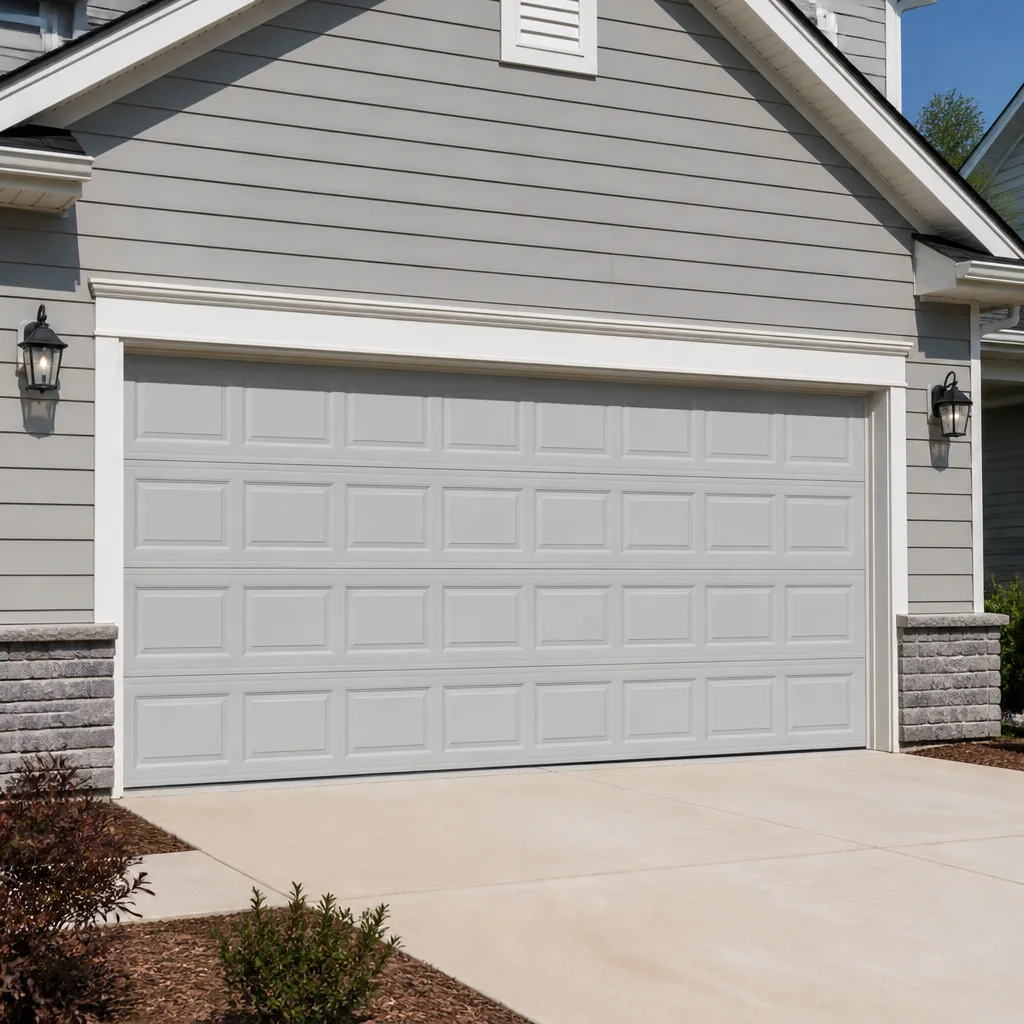
$900 – $1,800 installed. This is the workhorse door on mid-century homes across Los Angeles. The spread comes down to steel gauge, panel stamping, and whether you’re keeping the existing track. A basic non-insulated steel door with standard hardware lands at the bottom of the range. A heavier-gauge panel with better paint and a quieter hinge system runs toward the top.
Double-car door (16×7, steel, insulated)
$1,600 – $2,800 installed. Most two-car garages in Los Angeles use a 16-foot door, and the price difference over a single door is more than just width. A double door needs heavier springs, longer tracks, and often a reinforcement strut across the top panel. Insulation, which matters more in the Valley than in the basin, adds $200 – $400 depending on R-value.
Carriage-style or designer door
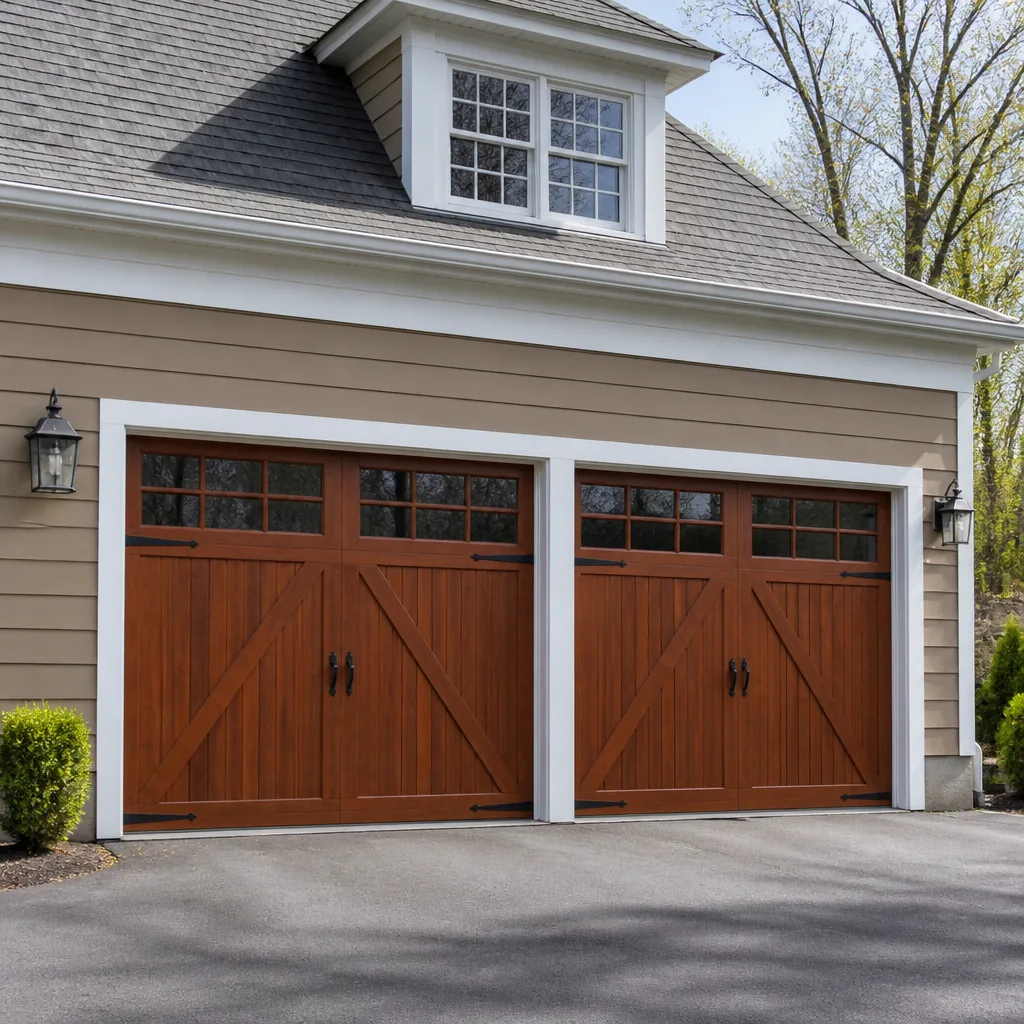
$2,800 – $4,500 installed. This is where Los Angeles architecture shows up in the bid. A Spanish Colonial or Craftsman home in Los Angeles demands a door that looks the part – wood-grain steel, overlay panels, decorative hinges, sometimes real glass. These doors are heavier, slower to fabricate, and more expensive to hang correctly. The same style door in quarter-sawn wood or walnut runs higher still.
Custom wood door
$3,500 – $8,000+ installed. Real wood doors in Los Angeles are a statement, and the price reflects the material, the finish, and the fact that wood moves with the coastal air and inland heat. A custom Amarr or Clopay wood door is built to order, takes two to six weeks, and needs a frame and spring setup matched to its exact weight. Budget for this as a project, not a swap.
Replacement work, unlike repair, is not a same-day job in most cases. When we replace a door in Los Angeles, the door is measured, the panels are ordered or fabricated, and installation is scheduled once everything for the specific opening has arrived. The right price for replacement work is a free measure and a written quote, not a phone number thrown out on a call.
What a Written Quote Must Itemize
Every quote you get for garage door work in Los Angeles should break down the same way, and a quote that will not itemize is a quote you should not accept. Here is what a legitimate written estimate contains:
- Parts, by name and quantity. “Two torsion springs, 0.225×2×27, 20,000 cycle” – not “springs.” A real quote names the part because the part’s spec determines whether the repair lasts.
- Labor, separated from parts. The labor line tells you what the technician’s time costs and lets you compare one company’s hourly rate against another’s without the parts markup hiding the difference.
- Service call or trip fee, if any. If a company charges a trip fee, it should be stated before the truck rolls. Many reputable Los Angeles door companies waive the trip fee when you approve the repair.
- Disposal or haul-away. Old springs, cables, or a full door being removed and hauled off – this should be a line item or explicitly marked “included.”
- Warranty scope, in writing. What is covered, for how long, and what the company will do if the repair fails. A verbal “we stand behind our work” is not warranty language. A written 365-day guarantee is.
This is the standard we hold ourselves to on every Garage Door Repair in Los Angeles job: the written price is handed over before any work starts, and the guarantee that covers it is written on the same sheet. If another company’s quote will not match that format, the comparison is impossible, and that is usually the point.
Los Angeles-Specific Cost Factors You Won’t Find in National Guides
National cost data treats a garage door as a garage door. In Los Angeles, there are at least four local factors that show up on invoices and never appear in the generic guides.
1. Salt air and coastal corrosion
Homes within a few miles of the coast in Venice, Marina del Rey, and Santa Monica deal with salt air that corrodes springs, cables, and bottom brackets faster than inland neighborhoods. A spring that would last seven years in Echo Park may last four near the beach. When you get a quote in a coastal Los Angeles neighborhood and it includes cable or bracket replacement alongside the springs, that is not an upsell – it is the reality of the location.
2. Temperature swings in the Valley and inland basin
The San Fernando Valley swings from overnight lows in the 40s to summer highs above 100. Metal expands and contracts, springs lose cycle life faster, and lubricants break down. Doors in Woodland Hills and Reseda simply work harder than doors in coastal Los Angeles neighborhoods with narrower temperature bands. The cycle life of a spring is measured in open-close cycles, but heat stress eats into that life in ways a national chart never models.
3. Older housing stock and non-standard openings
A large share of Los Angeles homes were built between 1920 and 1970, and many of those garages have door openings that are no longer standard. A 7-foot-6-inch opening, a door that has shifted out of square, an aging wood frame that must be shimmed – each of these adds labor that has no line in a national pricing guide. When we quote work on an older Los Angeles home, the price reflects the actual opening, not the assumption of a perfect 8×7.
4. Permit and code considerations where HOA or historic status applies
Most garage door repairs in Los Angeles do not require a permit. Some replacement work in historic districts or HOA-governed neighborhoods does require approval, and the approval process can add weeks, not dollars, to the project. If your home is in a designated historic area, check that before you order a door. No contractor can quote around an HOA architectural review that hasn’t happened yet.
We work on all eight major brands – including Wayne Dalton, Raynor, and LiftMaster – and the brand of your existing door matters to the price. A discontinued Wayne Dalton panel is harder to source than a current-model Clopay, and that fact shows up in the parts line of the quote.
Common Mistakes to Avoid
- Accepting a phone quote as final. A number given over the phone before anyone has seen the door is an estimate, not a quote. In Los Angeles, where door weights and mounting styles vary widely, the phone number is almost never the final price – unless the company is disciplined about putting it in writing once they see the door.
- Choosing the lowest bid without reading the line items. A low bid that does not itemize parts and labor is a bid designed to become a high invoice. Compare quotes line by line, and if a line is missing, ask for it in writing.
- Ignoring the spring cycle rating. Replacing a broken spring with a 10,000-cycle economy spring when your door opens four times a day means you will replace it again in roughly seven years. A 20,000-cycle spring costs more up front and is usually the better long-term buy in Los Angeles, where doors cycle more than the national average.
- Not asking what the warranty covers. “One-year warranty” can mean parts only, labor only, or both, and it can have exclusions the company won’t mention until you’re making a claim. Get the guarantee in writing and read what it says about repeat visits.
- DIY on torsion springs. Torsion springs are under enough tension to cause serious injury or death. This is not garage-door-company fearmongering; it’s the mechanical reality of a component wound to 10 – 15 full turns of stored energy. If your spring has snapped, call a professional.
- Waiting until the door fails completely. A grinding roller, a slowly sagging spring, or a cable that’s starting to fray is a cheaper fix than a door that has dropped off its track at 11 p.m. on a Sunday. Addressing wear early is the single best way to keep a Los Angeles garage door bill low.
When to Call a Professional
A snapped torsion spring, a door that has come off its track, a cable that has frayed through, or a door that will not stay up when opened – all of these are professional calls, and most are urgent the moment they happen. Our Garage Door Opener Repair Troubleshooting: Common Problems and How to Fix Them can help you diagnose issues before calling. A door with broken springs or cables is holding weight it was never designed to hold, and trying to open or close it manually risks the door dropping without warning.
There are also quieter signs that warrant a call before they become emergencies: grinding or squealing during operation, a door that opens slower on one side, visible rust at cable attachment points, or an opener that runs but doesn’t move the door. These are early-failure signatures, and they’re usually cheaper to address at this stage. Garage Door Opener Repair in Los Angeles and Garage Door Cable Repair in Los Angeles both fall squarely in this category – the earlier you call, the smaller the bill.
Brock Garage Door Repair offers free estimates across Los Angeles. Call (254) 602-5116 and a live person will answer – not a voicemail tree, 24 hours a day, seven days a week.
Frequently Asked Questions
Most repairs in Los Angeles run between $150 and $550 in 2026, with spring replacement at $200 – $350, cable work at $150 – $275, roller replacement at $120 – $250, and panel replacement at $250 – $700. Call (254) 602-5116 for a written quote based on your door, not a national chart.
Los Angeles labor rates run 20 – 35% above national averages because of service-area drive times, higher business overhead in California, and the scarcity of experienced door technicians. A quote significantly below the local market rate is usually a hook price that gets rebuilt once the technician is at your door.
Expect $200 – $350 for a professional torsion spring replacement in Los Angeles, depending on spring cycle rating, door weight, and whether you have a single or double spring system. Any quote below $200 for spring work in this market should be read carefully – the difference typically reappears as service fees or part markups.
A single-car steel door runs $900 – $1,800 installed, a double-car insulated door $1,600 – $2,800, a carriage-style or designer door $2,800 – $4,500, and a custom wood door $3,500 – $8,000 or more. Replacement work is measured and scheduled – not same-day – so expect a free measure and a written price before any order is placed.
It should not, at a reputable company. The price you approve before work starts should be the price on the invoice. At Brock Garage Door Repair, the written quote is built from the actual door and handed over before any work begins, so there is no renegotiation once the truck is in your driveway.
Some do. The key is that the trip fee, if any, must be disclosed before the technician arrives. Many companies waive the trip fee when you approve the repair. If a company won’t tell you on the phone whether a service fee applies, treat that as a red flag and get the number in writing before they dispatch.
The Bottom Line
Garage door repair in Los Angeles costs more than the national average because Los Angeles labor, logistics, and housing stock are not average. A written, itemized quote is the only number that matters, and a quote that won’t be written down was never meant to be honored. Whether you’re replacing springs, cables, rollers, or the whole door, the discipline of a written price and a written guarantee is what separates a repair you pay for once from a repair you pay for twice.
Call (254) 602-5116 for a free estimate. A live person answers, and the price you get in writing is the price you pay.
Written by Wade Mercer, Owner at Brock Garage Door Repair, serving Los Angeles since 2001.