
Last updated October 9, 2026
Full 25-point door and opener safety check with every visit - springs, cables, rollers, tracks, and your LiftMaster or Chamberlain opener included
You get a price before we start. It does not change when the truck arrives.
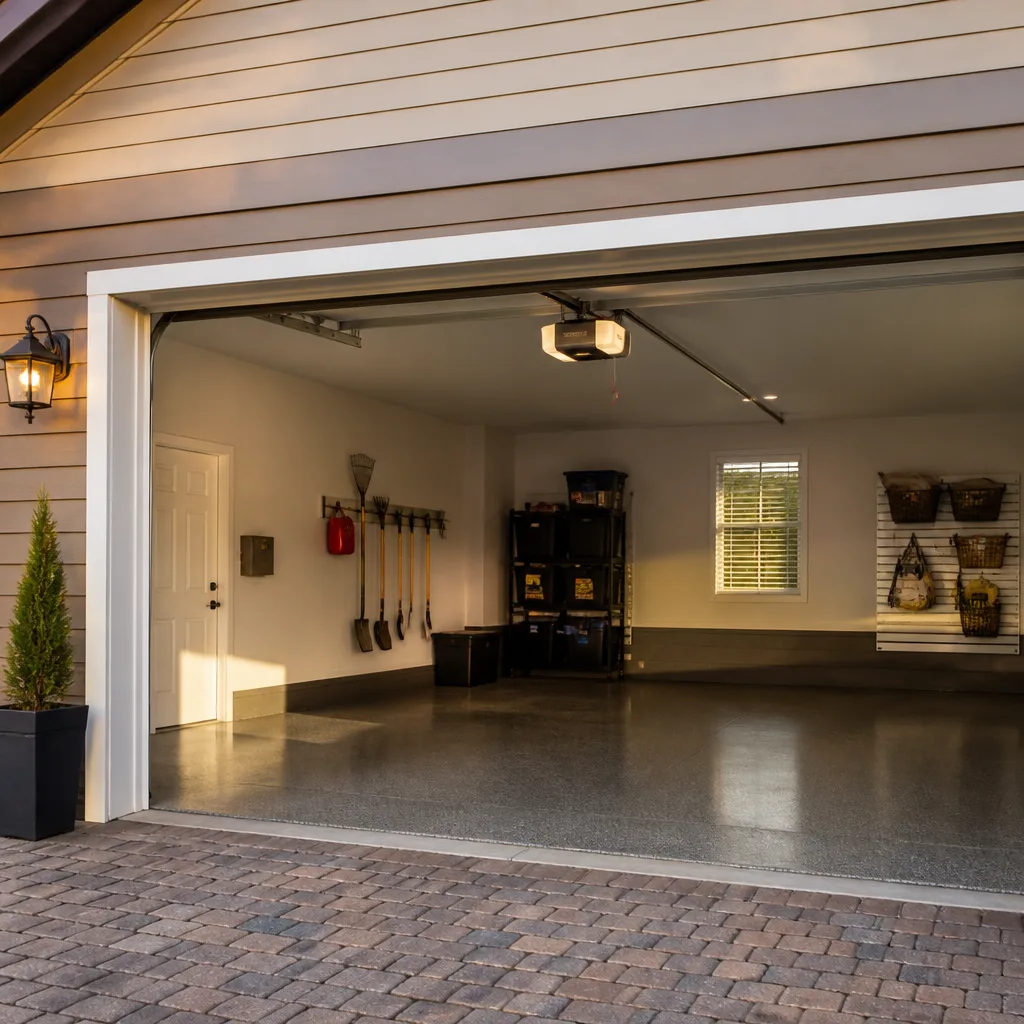
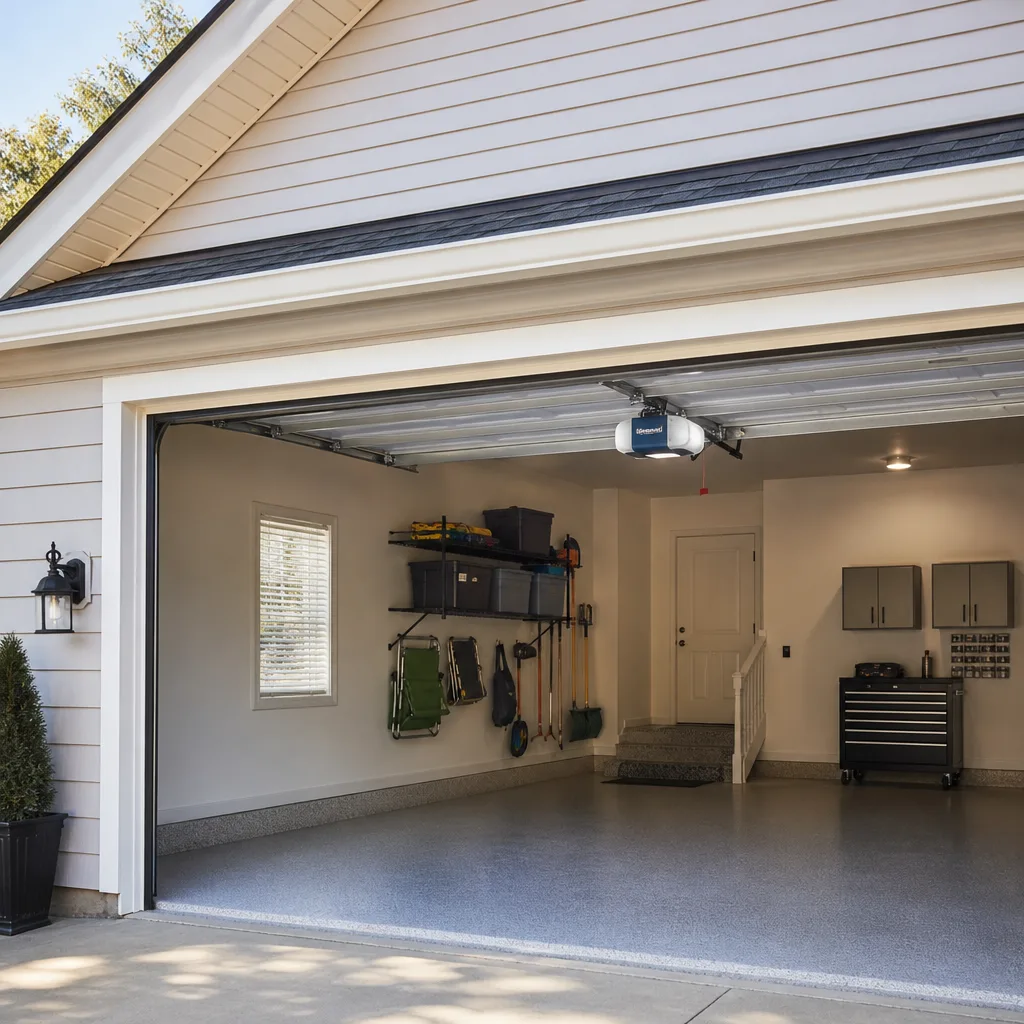
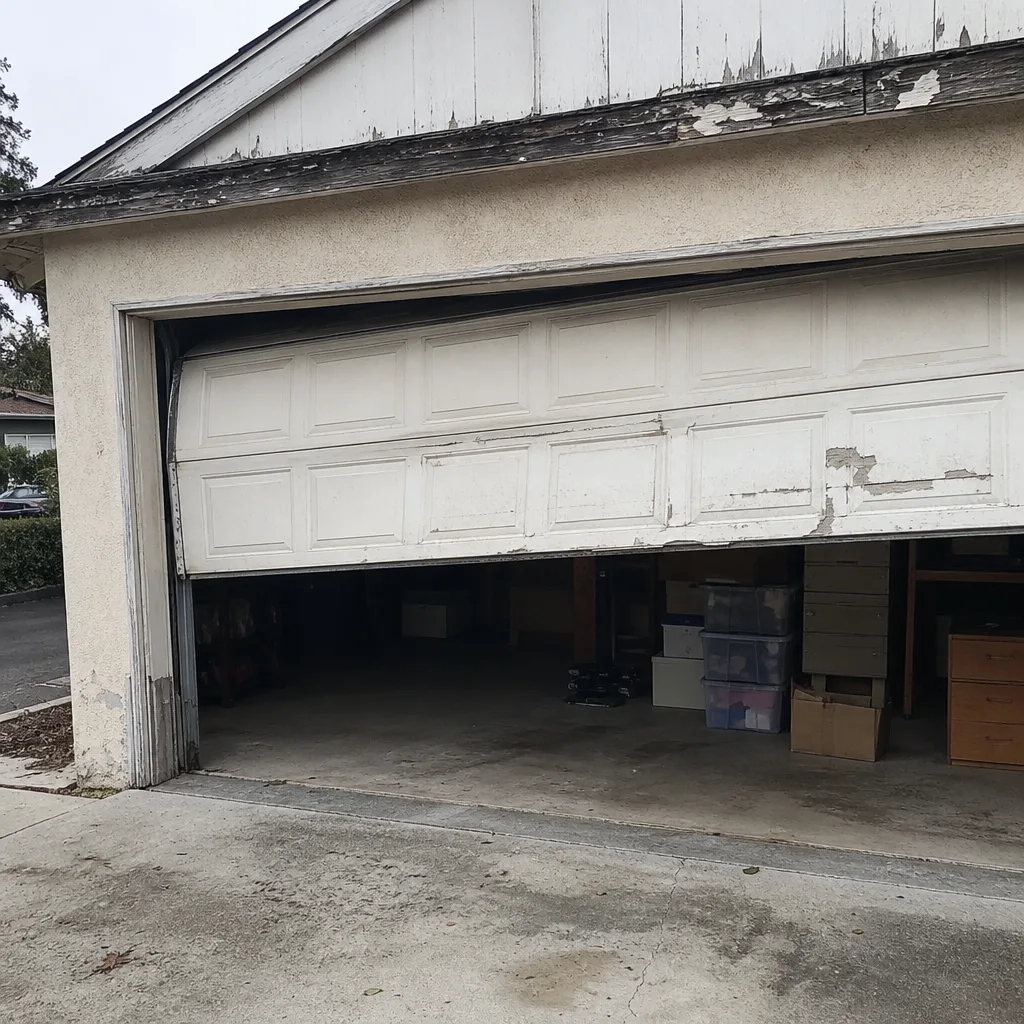 Before
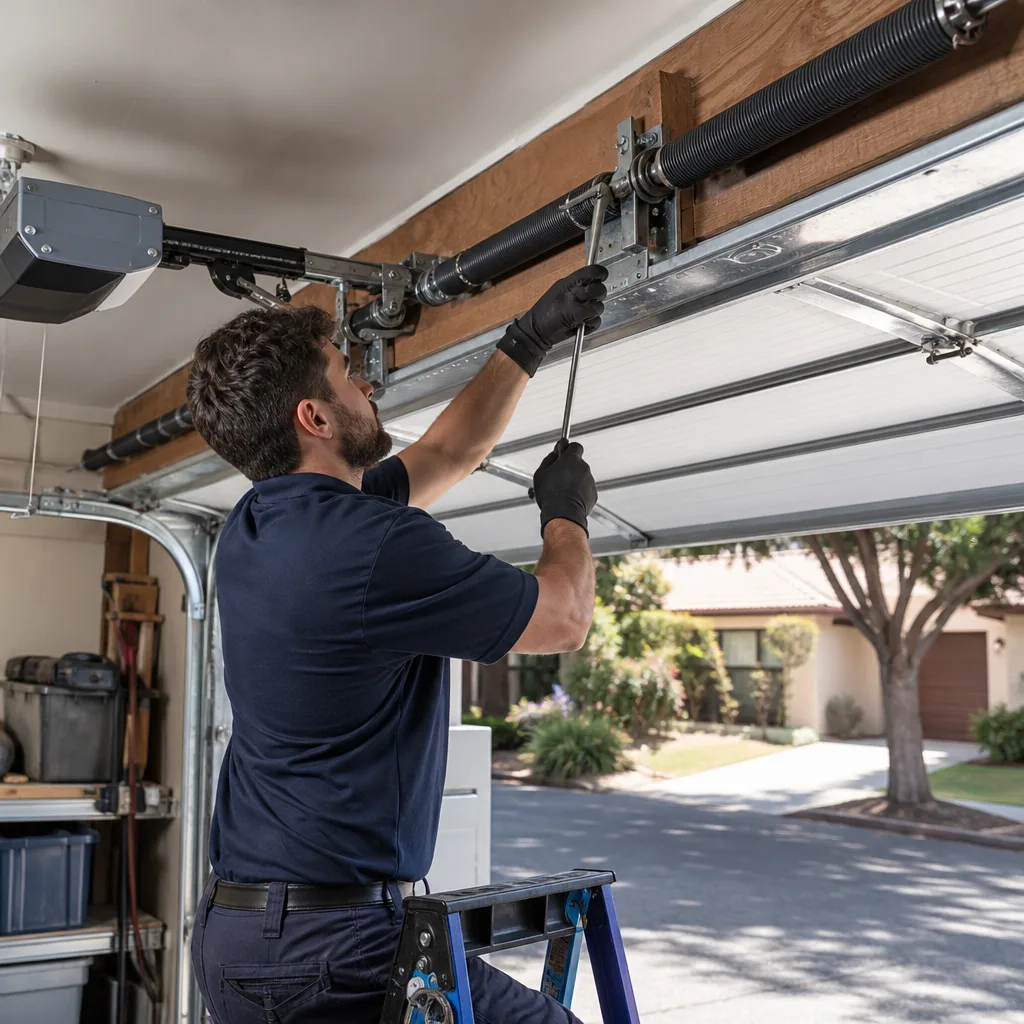 After
After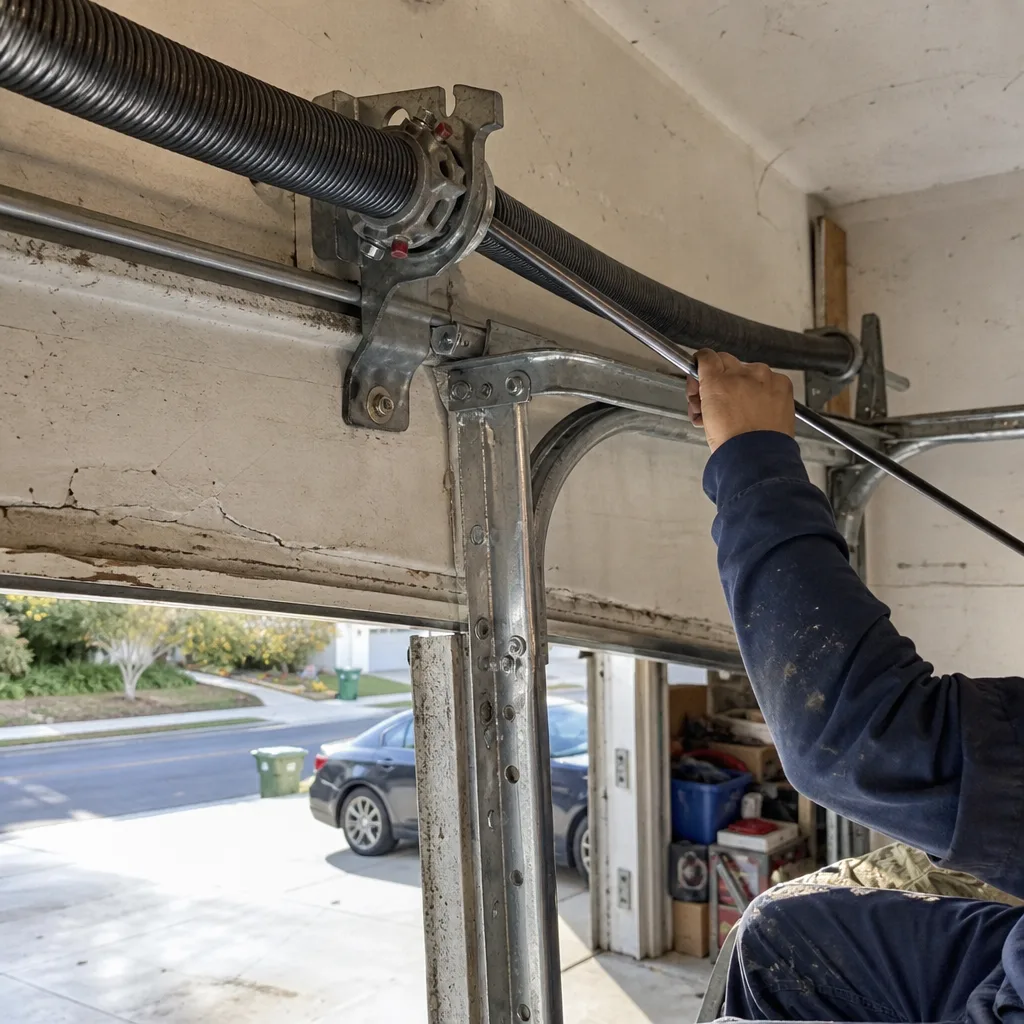 Before
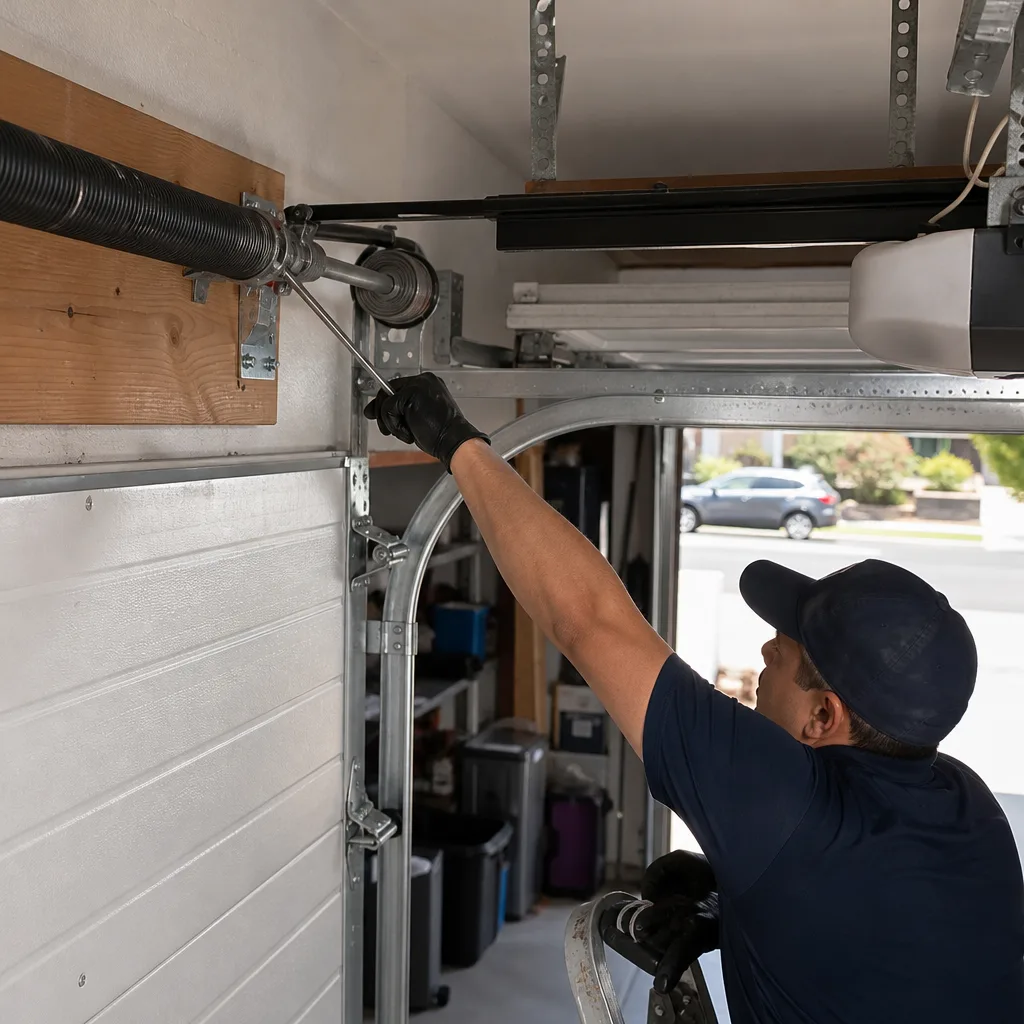 After
After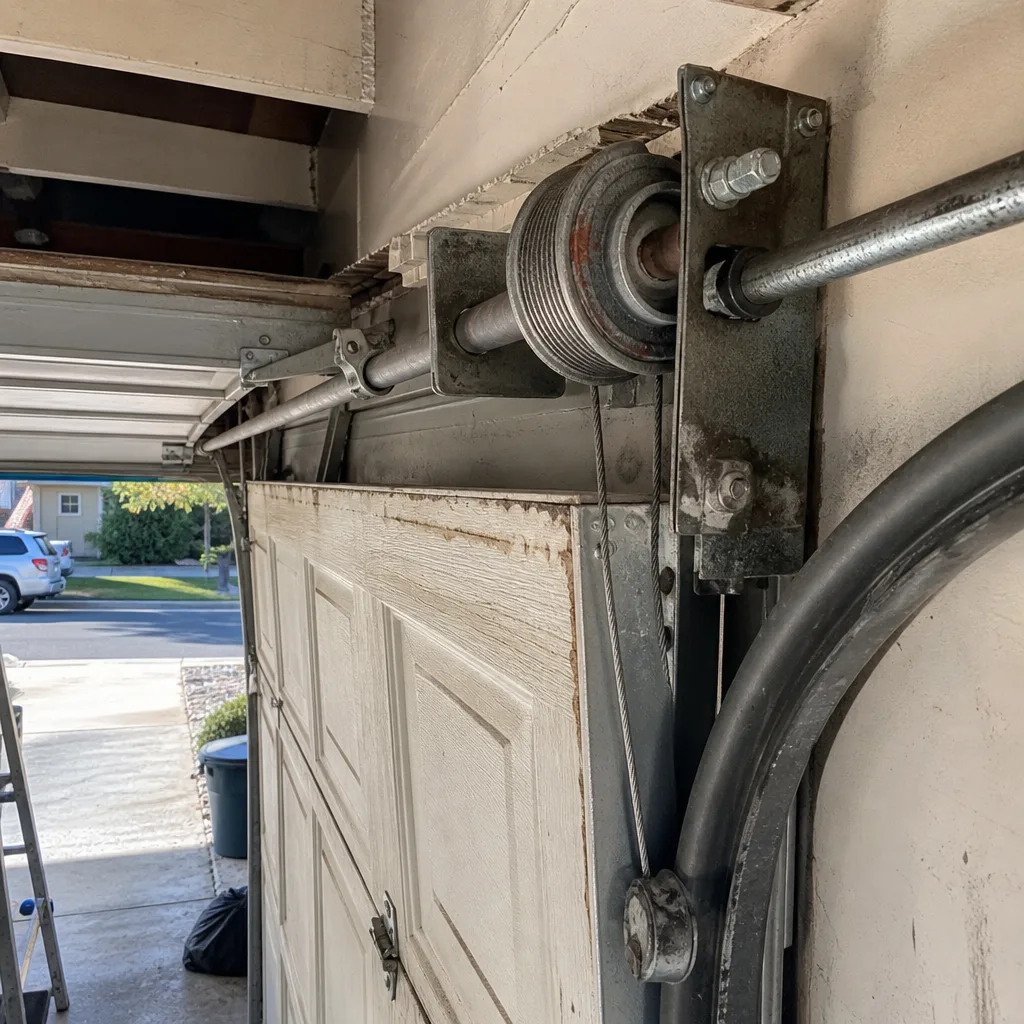 Before
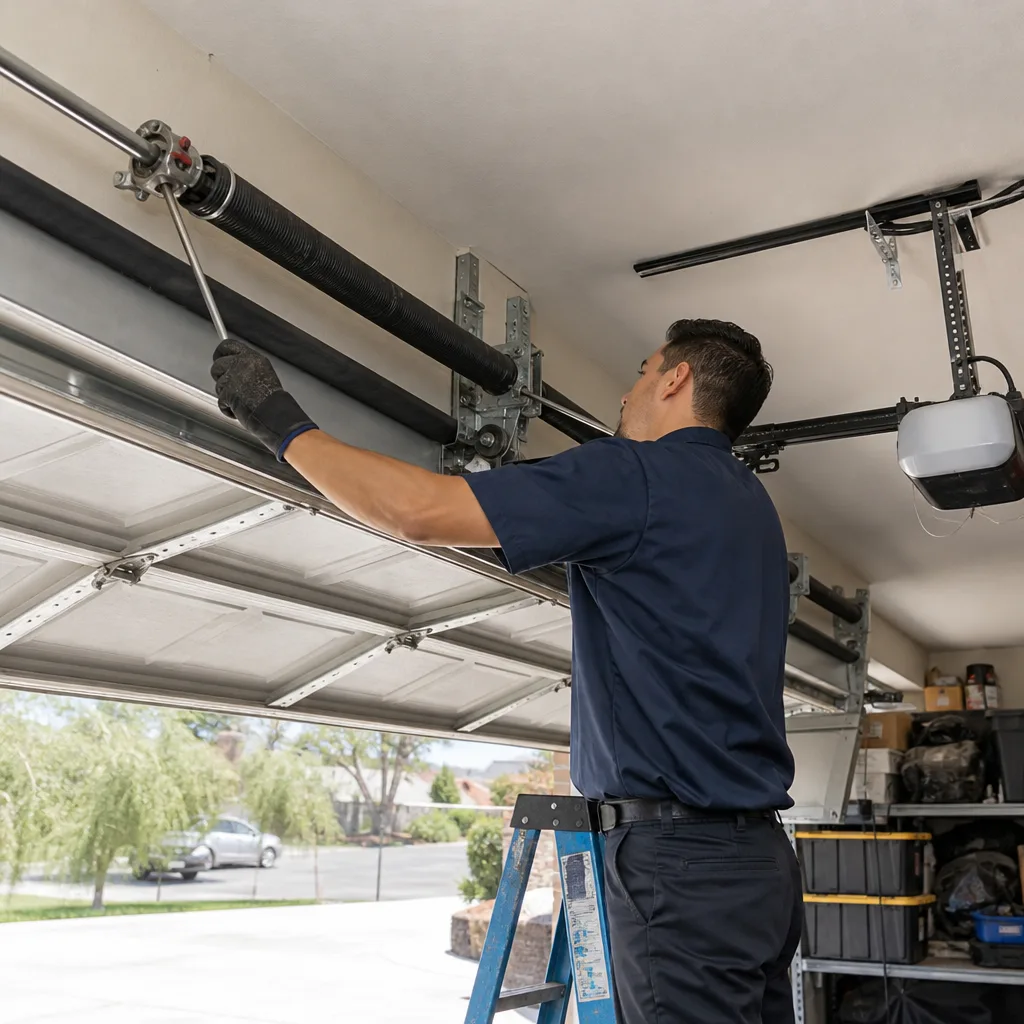 After
AfterSeasonal Garage Door Care for Los Angeles: Year-Round Homeowner’s Guide
Los Angeles gets about 35 days of rain a year, but those days arrive in concentrated deluges that overwhelm threshold seals and bottom weatherstripping that sat dry and brittle for nine months. One wet season is enough to rot a wood panel from the bottom up. Most homeowners in Los Angeles don’t think about their garage door until it stops moving, and that’s precisely why so many doors here fail in predictable, seasonal patterns. This guide walks you through the four real stress periods your garage door faces in Southern California, what to check during each one, and when to leave the work to a pro.
Quick Answer
Seasonal garage door maintenance in Los Angeles means preparing for four distinct stress periods: the October rainy season, the October-to-March Santa Ana winds, the May-to-September UV and heat stretch, and the May-to-June marine layer in coastal ZIP codes. The core tasks are checking bottom weatherstripping before the rains, lubricating and inspecting springs after wind season, monitoring panel surfaces during summer, and wiping down coastal hardware during June Gloom. A homeowner can handle visual checks and basic lubrication; spring work, cable replacement, and track realignment should go to a licensed technician.
Table of Contents
- Why LA’s Climate Is Harder on Garage Doors Than You Think
- Pre-Rainy-Season Prep: October Is Your Deadline
- Santa Ana Wind Season: The Spring Fatigue Nobody Talks About
- Summer UV Stress: May Through September
- June Gloom and the Marine Layer: Coastal Corrosion in Disguise
- Post-Earthquake Protocol: A Defined Check Sequence
- Common Mistakes to Avoid
- When to Call a Professional
- Frequently Asked Questions
- The Bottom Line
Why LA’s Climate Is Harder on Garage Doors Than You Think
People assume a garage door in Los Angeles has an easy life. No snow, no ice, no subzero temperatures. And on the surface, that’s true. But the failure pattern we see in LA garages isn’t weather in the traditional sense. It’s cycles of expansion and contraction, salt moisture, wind fatigue, and UV degradation. The materials on a garage door expand when the temperature climbs past 90°F in the San Fernando Valley and contract when it drops to 45°F overnight in the winter. That movement, repeated thousands of times, is what loosens hardware, cracks weather seals, and shortens the life of springs rated for 10,000 cycles.
A torsion spring, the thick coiled spring mounted above the door that bears most of the lifting load, is engineered for a specific number of open-and-close cycles. In Los Angeles, doors get used heavily. Homeowners park in the garage, use it as a workshop, send kids through it to get bikes, and cycle the door four to eight times a day. That’s 1,500 to 3,000 cycles a year, which means a standard 10,000-cycle spring can wear out in as little as three to four years. Add in the temperature swings and the result is a door that underperforms sooner than you’d expect.
“Because the weather is always nice” is not a maintenance plan. It’s a deferral strategy that costs more later. The good news is that the seasonal care routine for a Los Angeles garage door is straightforward once you know what the actual stress events are.
Pre-Rainy-Season Prep: October Is Your Deadline
Los Angeles receives nearly all of its annual rainfall between November and March, and the first significant storm often arrives with little warning. The problem isn’t the rain itself. It’s that the bottom weatherstripping on most garage doors has been baking in dry heat for eight months by the time the first storm hits. Rubber loses elasticity under UV exposure, and when elastomeric seals dry out, they develop hairline cracks that are invisible until water pushes through them.
The threshold seal, the rubber strip that runs along the concrete where the door meets the ground, is the first line of defense. Here’s what a homeowner should do in October, before the first storm:
- Inspect the bottom rubber strip. Run your hand along the underside of the door and the threshold seal. If the rubber feels stiff, crumbly, or shows visible cracks, it needs replacement. A new bottom seal typically runs $75 to $150 installed in Los Angeles.
- Check the panel base coat. Wood doors in Los Angeles homes, especially older ones in neighborhoods like Hancock Park or Pasadena, are vulnerable to water wicking up from the bottom edge. If you see bare wood or flaking paint within the bottom 6 inches of a panel, that’s a wicking point. Repaint or reseal before the rainy season.
- Test drainage away from the garage. Walk outside during the next rain (or spray a hose) and watch where water pools. If water stands against the garage door, it will find a way in. A quick fix is clearing debris from any channel or drain near the door.
- Lubricate the track and rollers. Rain brings humidity, and humidity surface-rusts exposed metal. A silicone-based lubricant on the track hinges and rollers in October reduces moisture friction through the wet months.
The cost of replacing a rotted wood panel bottom section in Los Angeles runs $300 to $600. The cost of replacing a bottom seal before it fails is a fraction of that. If you’re not comfortable getting on a ladder to check the seals, a garage door repair in Los Angeles technician can do a seasonal inspection in under an hour.
Santa Ana Wind Season: The Spring Fatigue Nobody Talks About
Santa Ana winds blow from October through March, with the strongest gusts arriving in December and January. These offshore winds hit 40 to 60 mph regularly in foothill communities like Altadena, La Crescenta, and parts of the San Gabriel Valley. Most homeowners think of Santa Anas as a fire risk, and rightly so. But for a garage door, the wind is a mechanical stressor that accumulates in the springs and hardware.
Here’s the mechanics: a standard sectional garage door has a large surface area. A 16-foot-wide door presents roughly 112 square feet of sail area. When a 50 mph gust hits that surface, the door flexes, the track absorbs the lateral load, and the torsion spring experiences a sudden tension spike. That spike is not a cycle, but it’s a fatigue event. Each wind season adds hundreds of micro-stress events to the spring, shortening its usable life.
What you can do during and after Santa Ana season:
- Listen for balance loss. Disconnect the opener (most have a red release cord) and manually lift the door halfway. It should stay put. If it drifts up or down, the spring tension is off. This is a sign wind stress has taken a toll.
- Check the track brackets. Wind pushes the door sideways, which can loosen the bolts securing the vertical track to the wall framing. Grab the track near the bottom and shake it. Movement means it needs re-securing.
- Inspect the spring for separation. A torsion spring under fatigue will often show a visible gap in the coil. If you see a gap or the spring looks asymmetrical, do not attempt to adjust it. Torsion springs are under extreme tension and require a trained technician with proper winding bars.
- Lubricate after wind events. Dust and debris blown by Santa Anas settle into the track and roller bearings. A post-wind cleaning prevents the grinding that accelerates wear.
Spring replacement in Los Angeles typically costs $180 to $340 for a single spring and $300 to $500 for a pair, depending on the door weight and cycle rating. At Brock Garage Door Repair, we recommend upgrading to high-cycle springs (rated for 20,000 to 30,000 cycles) when you replace, because the standard spring simply doesn’t hold up to LA’s heavy usage patterns. If you’re in a wind-exposed foothill area, it’s worth specifying a high-cycle option. The price difference is modest, and the durability difference is meaningful.
Summer UV Stress: May Through September
Los Angeles averages over 280 days of sunshine a year, and the UV index regularly hits 10 or 11 in the summer months. UV radiation is the slow killer of garage door exteriors. It fades color, breaks down the chemical bonds in vinyl weather stripping, and causes metal panels to retain heat to the point where the surface becomes too hot to touch.
The most common summer failures we see in Los Angeles garages:
- Weather seal shrinkage. The vinyl seals along the door’s edges and between panels shrink and pull away from the frame in high heat. By August, a seal that was flush in April may have a visible gap the width of a pencil. That gap lets in dust, pests, and hot air.
- Panel surface checking on wood doors. West- and south-facing doors, common in neighborhoods like Sherman Oaks and Pacific Palisades, get brutal afternoon sun. The clear coat on a wood panel can start checking, which is a cracking pattern that leads to bare wood and rot.
- Opener thermal cutoff. Most modern openers from brands like LiftMaster, Chamberlain, and Genie have a thermal protection circuit that shuts the opener off if the motor gets too hot. In an uninsulated Los Angeles garage that reaches 110°F in August, openers can trip mid-cycle. The unit isn’t broken; it’s doing its job. But it’s a sign the motor is running too hot, which shortens its life.
What to do during summer:
- Inspect edge seals monthly. Run a finger along the perimeter seals. Any gap means replacement. Edge seal replacement runs $5 to $8 per foot, and most doors need 30 to 50 feet, so budget $150 to $400 for a full re-seal in Los Angeles.
- Keep the door in the shade where possible. If you’re replacing a door, a light color like white, almond, or sandstone reflects more heat than dark bronze or black. For existing doors, a UV-protectant clear coat applied every two years slows panel degradation.
- Check the opener’s operating temperature. If the opener trips during peak heat and works fine in the evening, that’s thermal cutoff. It’s not an emergency, but it’s a warning sign. Consider improving garage ventilation or adding insulation to the ceiling above the door.
- Listen for increased operation noise. Heat causes metal to expand, which increases track friction. A door that’s quiet in June and grinding in August likely needs lubrication and possibly track adjustment.
If you have an older opener and it’s tripping repeatedly through summer, it may be time to consider a replacement or a garage door opener repair in Los Angeles. A technician can tell you quickly whether the issue is thermal, electrical, or mechanical.
June Gloom and the Marine Layer: Coastal Corrosion in Disguise
Between May and June, coastal Los Angeles sits under a marine layer that keeps temperatures cool and humidity high. In beach-adjacent neighborhoods like Venice, Marina del Rey, Playa del Rey, and San Pedro, morning fog rolls in and doesn’t burn off until afternoon. That fog is not fresh water; it’s salt-laden moisture carried inland from the Pacific. And salt moisture on steel is a corrosion accelerator.
What this means for your garage door:
- Spring corrosion. Torsion and extension springs develop surface rust faster in coastal ZIP codes than inland. Rust on a spring isn’t just cosmetic. It creates micro-pitting that becomes a stress concentrator, and that’s where springs eventually snap.
- Track and roller pitting. Galvanized steel track resists corrosion reasonably well, but the rollers, hinges, and fasteners are often mild steel. Salt moisture attacks these components and leads to rough operation within a few years.
- Hinge seizure. The small metal hinges that connect door panels are particularly vulnerable. Once they rust, they bind, which forces the opener to work harder and accelerates spring wear.
The simple countermeasure for coastal homeowners is a wipe-down and lubrication routine during May and June. A rag with a light machine oil wiped over exposed metal parts takes ten minutes and removes salt residue before it can do damage. Follow with a silicone spray on rollers and hinges. If you see flaking rust on a spring, call a professional. A rust-weakened spring is a failure waiting to happen, and all spring work should be done by a technician with the correct tools and training.
Some homeowners in coastal Los Angeles also choose to upgrade to nylon-coated rollers and powder-coated hardware when replacing parts, which resists salt corrosion better than standard steel. It’s a modest upgrade that makes sense within a mile or two of the coast.
Post-Earthquake Protocol: A Defined Check Sequence
Los Angeles sits in a seismically active zone, and small earthquakes are frequent. After a quake of magnitude 4.0 or higher, homeowners should run a quick inspection sequence on their garage door. The goal is not to determine whether the door “looks fine,” but to verify that the major components are still correctly aligned and tensioned. A garage door that operates after a quake but has shifted track alignment will fail gradually and then suddenly.
Here is the sequence we recommend after any noticeable earthquake:
- Visual track check. Stand inside the garage and look along both vertical tracks. They should be plumb, which means perfectly vertical. If a track leans in or out from the wall, the quake shifted it. Do not run the door until the track is re-secured.
- Manual lift test. Pull the red release cord and lift the door manually. It should move smoothly from fully closed to fully open without binding. Any point of resistance indicates a misalignment introduced by the shaking.
- Balance test at the halfway point. Lift the door to the midpoint and let go. A balanced door stays. A door that falls or rises has spring tension issues, which can appear suddenly after a quake as the spring’s mounting hardware shifts.
- Check the floor-to-door gap. Look at the gap between the bottom of the door and the concrete. If one side is noticeably tighter than the other, the door frame or the track has shifted. Again, do not run the opener.
- Run a half cycle only. After passing the manual checks, use the opener to open the door about two feet and stop. Watch for hesitation, grinding, or lateral movement. If anything looks or sounds off, stop and call a professional.
If the door passes all these checks, it’s safe to resume normal use. If it fails any of them, do not attempt to force the door. A garage door cable repair in Los Angeles or track realignment is a technician job. Garage door cables are under the same high tension as springs, and a frayed or slipped cable can snap without warning.
Common Mistakes to Avoid
- Waiting for the door to fail before doing anything. In Los Angeles, a garage door that “works fine” can have a spring with 90% of its life used up. The door runs until the spring snaps, and then you’re stuck with an emergency repair that costs more than a planned replacement would have. Pre-rainy-season checks and post-wind inspections catch problems before they escalate.
- Lubricating the wrong parts. Homeowners often lubricate the track itself, but the track only needs to stay clean. The parts that need lubrication are the rollers, hinges, and spring. If you lube the track, dirt and dust stick to it and create a grinding paste, especially in the dry months when Los Angeles is dusty.
- Ignoring small rust spots. In coastal neighborhoods, a small rust spot on a spring or hinge becomes significant corrosion within one June Gloom season. Address surface rust early instead of letting salt air do its work.
- Adjusting spring tension without proper tools. Torsion springs are wound under several hundred pounds of force. Winding bars are a specific tool, not a screwdriver or a pry bar. This is the most common cause of serious garage door injuries, and it’s the reason we never recommend DIY spring work. The safety risk is not worth the repair cost saved.
- Using the opener during a power-outage check incorrectly. After an earthquake or a power surge, some homeowners run the opener repeatedly to “test” it. If the door is binding or misaligned, repeated cycling compounds the damage. Run the manual checks first, then one short opener cycle.
- Replacing a spring without checking the other one. Most Los Angeles garage doors use two torsion springs. When one snaps, the other usually has similar remaining life. Replacing only the broken spring saves money short-term but means you’ll be calling again in months. At Brock, we always inspect the second spring and quote both options.
- Skipping the October seal check because it “didn’t rain last year.” Los Angeles weather is variable. One dry winter doesn’t mean the next one will be dry, and the seals dry out regardless of whether rain comes. The check takes ten minutes.
When to Call a Professional
There are jobs a homeowner should never attempt: spring replacement, cable repair, track realignment after a quake or impact, and any repair involving the high-tension components of a garage door. If your spring has snapped, if the cable is frayed, if the door is off-track, or if it’s binding and the manual checks haven’t found the issue, stop and call a technician. The danger is real. Torsion springs release stored energy suddenly when mishandled, and that energy is enough to cause severe injury. If you’re unsure whether a problem is DIY-safe, treat it as a professional job. Brock Garage Door Repair offers free estimates in Los Angeles, and a live person answers the phone 24/7. Call (254) 602-5116 and describe what you’re seeing. If it can wait, we’ll tell you. If it can’t, we’ll get someone out.
Frequently Asked Questions
Plan for a professional inspection once a year, ideally in October before the rainy season. During the inspection, a technician checks spring condition, cable wear, track alignment, roller condition, seal integrity, and opener function. In between annual checks, homeowners should do a visual inspection and lubrication every three to four months, plus after any significant storm or earthquake. In Los Angeles, the October timing matters because it gets the door ready for both the rain and the Santa Ana winds that follow.
A seasonal inspection and tune-up in Los Angeles typically runs $75 to $150, depending on the components serviced. Replacing bottom weatherstripping adds $75 to $150. Replacing edge seals runs $150 to $400 for a full door. Spring replacement is $180 to $340 per spring, and cable replacement runs $150 to $275, depending on cable type and drum condition. All prices at Brock Garage Door Repair are quoted in writing before any work begins, so the number on the invoice matches the number you approved.
Yes, bottom seal replacement is a DIY-accessible job for many homeowners. The old rubber slides out of the retainer channel, and the new strip slides in. It’s typically a 20-minute job with no special tools. The key is buying the right profile for your door brand; a Genie or Clopay door may use a different rubber profile than a LiftMaster or Chamberlain model. If you’re not sure what to order, take a photo of the existing seal’s cross-section and match it. Edge seals, the ones on the frame sides and top, are also straightforward. If the job involves a ladder and you’re not comfortable on one, hire it out. The failure risk from a poorly installed seal is water in the garage and rot on the panel bottom edge.
Most modern openers are designed to operate up to about 110°F, but an uninsulated garage in the San Fernando Valley or the Inland Empire can exceed that surface temperature in July and August. When the motor’s thermal protection trips, the opener shuts down mid-cycle and won’t restart until it cools. If that happens repeatedly, the first step is improving garage ventilation, which can be as simple as adding a vent or leaving the garage door cracked when possible. If the opener is older than ten to twelve years, the thermal trips are a sign of a failing motor, and replacement is the more cost-effective path.
Yes. Salt in the marine layer accelerates corrosion on springs, rollers, hinges, and fasteners. A spring that lasts ten years in the Valley may last seven or eight in a coastal ZIP code without regular cleaning. The countermeasure is simple: wipe down exposed metal with a light oil during May and June, and re-lubricate rollers and hinges with silicone. If you’re replacing parts on a coastal door, consider nylon-coated rollers and powder-coated hardware, which resist salt corrosion better than standard steel.
Do not attempt to open the door manually, and do not try to re-tension or replace the spring yourself. A broken torsion spring leaves the door’s full weight unbalanced, and the remaining spring, if there is one, is under unpredictable tension. Pull the red release cord only if you need to get a car out and the door is already stuck in the open position, and even then, get help. A broken spring is the most common garage door emergency in Los Angeles, and it’s exactly the kind of repair where you want a trained technician. A Brock technician arrives with the spring in the truck in most cases, writes the price before work starts, and the repair carries a written 365-day guarantee.
The Bottom Line
Seasonal garage door care in Los Angeles isn’t about fighting winter snow or summer storms. It’s about recognizing the four stress events unique to this region: concentrated fall rain, fall-to-spring Santa Ana winds, summer UV and heat, and the salt-laden marine layer along the coast. A homeowner who spends 30 minutes per season on inspection and lubrication will extend the life of the door, the opener, and the springs by years. A homeowner who ignores the door until it fails will face emergency repair bills, damaged panels, and sometimes a door that won’t open when a car is trapped inside. The schedule is simple: October for rain prep, December through March for wind checks, May through September for UV and heat, May and June for coastal corrosion. Do the visual checks, leave the spring and cable work to a professional, and the door will do its job for a long time. For more guides & resources, visit our blog.
Written by Wade Mercer, Owner at Brock Garage Door Repair, serving Los Angeles since 2001.