
Last updated October 8, 2026
Full 25-point door and opener safety check with every visit - springs, cables, rollers, tracks, and your LiftMaster or Chamberlain opener included
You get a price before we start. It does not change when the truck arrives.
 Before
 After
After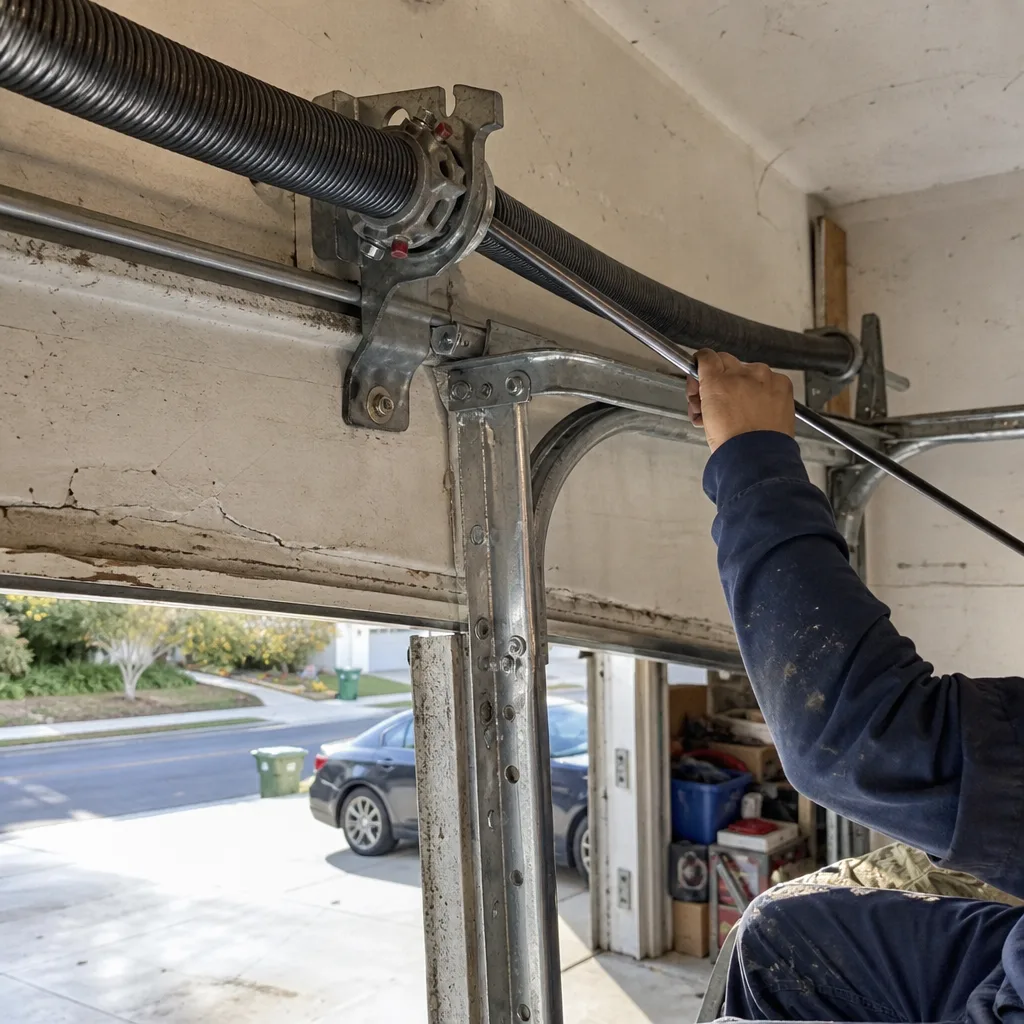 Before
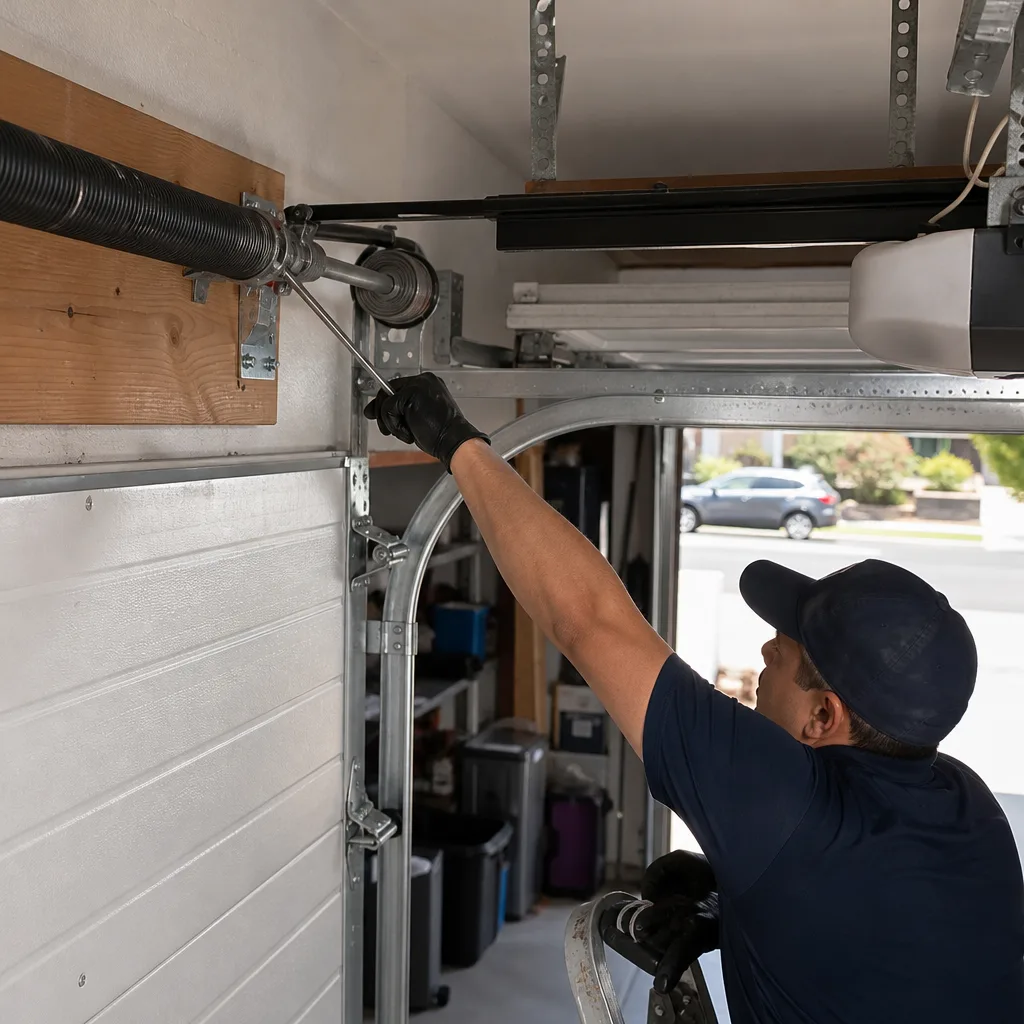 After
After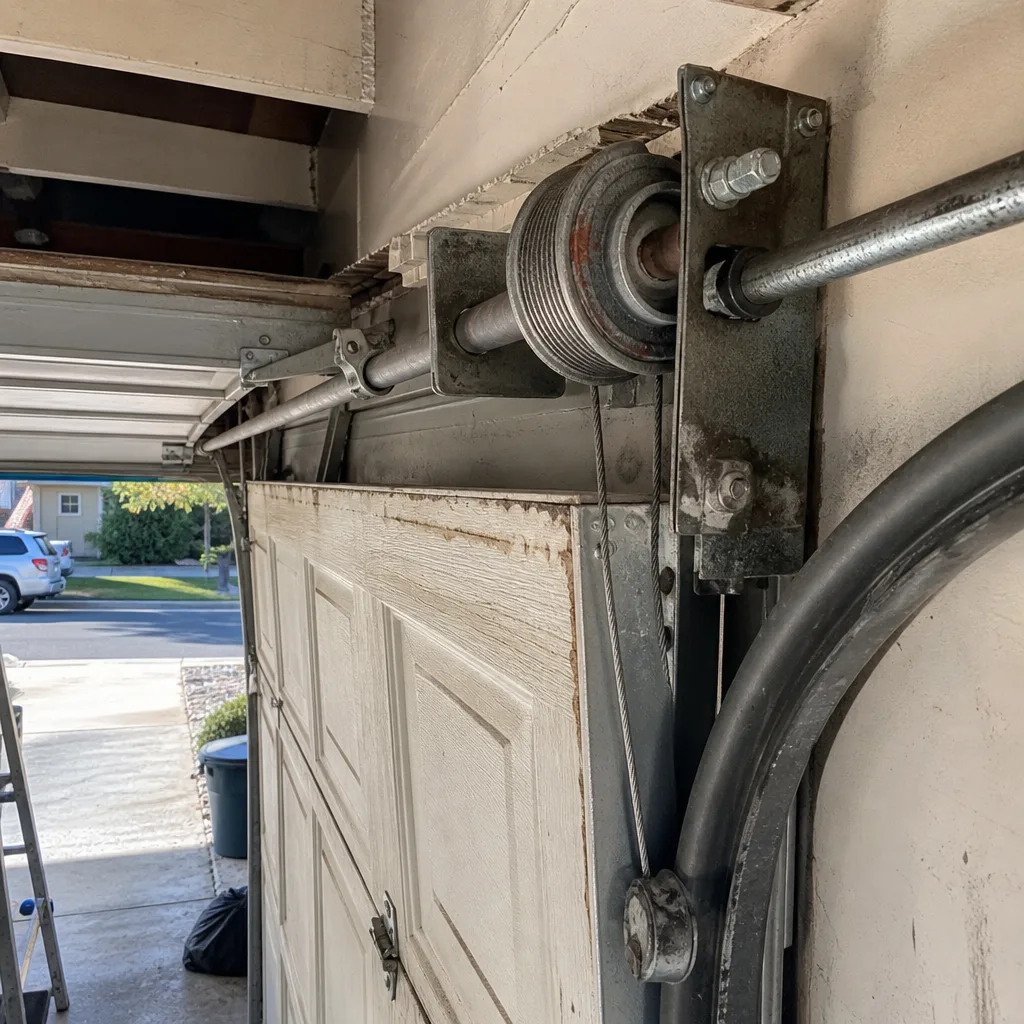 Before
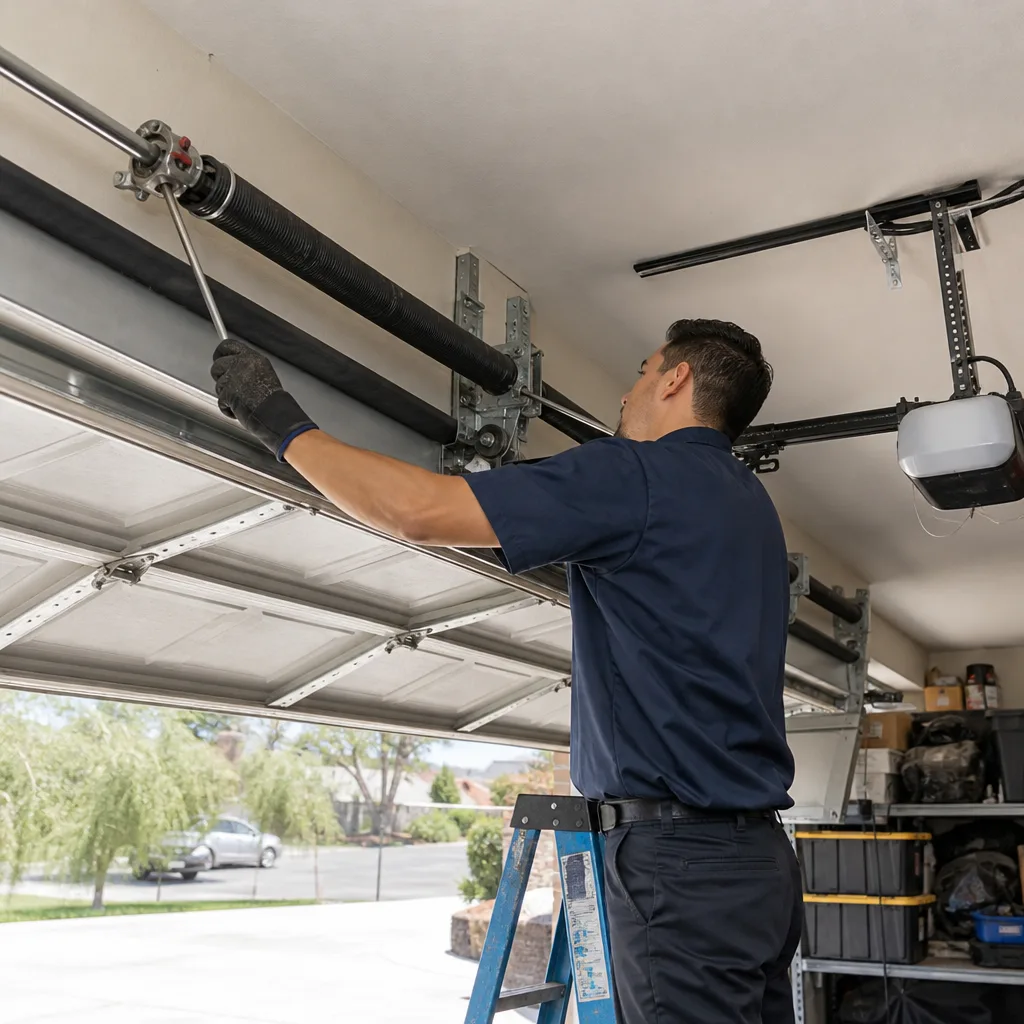 After
AfterThe Complete Garage Door Repair Guide for Los Angeles Homeowners
A garage door that worked fine in Phoenix will start showing stress fractures at the bracket mounts within two years of being installed in a coastal Los Angeles zip code. The salt air gets there before the warranty does. Most national repair guides treat a garage door like it lives in a climate-controlled test lab, which is exactly why so many Los Angeles homeowners get repairs that don’t hold. This guide covers what actually happens to garage doors in Los Angeles: the marine layer corrosion west of the 405, the seismic track damage that goes back to Northridge, the permit rules specific to the city, and how to get a repair done once, correctly, with a price that doesn’t move.
Quick Answer
Garage door repair in Los Angeles typically costs $150 to $400 for most common repairs like spring replacement, cable work, and track realignment, with emergency service running higher. The key to a lasting repair in LA is addressing environmental damage (salt corrosion, seismic shifts, temperature swings) rather than just swapping a broken part. Before hiring anyone, verify the contractor’s CSLB license, get a written price that matches the final invoice, and confirm the repair carries a written warranty of at least one year.
Table of Contents
- How the LA Environment Damages Garage Doors Faster Than Anywhere Else
- Coastal Corrosion: What the Marine Layer Does to Hardware West of the 405
- Seismic Track Damage: The Northridge Legacy Still Showing Up in LA Garages
- Los Angeles Permit Rules for Garage Door Repair vs. Replacement
- California Contractor Law: What Your Written Estimate Must Include
- How to Verify a Garage Door Contractor’s CSLB License
- Common Mistakes to Avoid
- When to Call a Professional
- Frequently Asked Questions
- The Bottom Line
How the LA Environment Damages Garage Doors Faster Than Anywhere Else
Los Angeles doesn’t have one climate. It has three stacked on top of each other, and each one attacks a different part of your garage door. The result is a wear pattern you won’t find in a national repair manual.
First, there’s the marine layer. It rolls in most mornings from late spring through early fall, carrying salt moisture inland. Homes west of the 405 get the brunt of it, but the layer reaches as far east as the 710 on heavy days. Salt moisture settles on exposed metal: hinges, roller brackets, spring coils, cable strands, and the bottom weather seal track.
Second, there’s the temperature swing. A garage door in Sherman Oaks can see a 40-degree difference between 6 a.m. and 2 p.m. in the summer. Steel expands and contracts with every cycle. Over thousands of cycles, that movement loosens bolts, fatigues brackets, and makes a panel that once sat flush start to bow. We’ve replaced doors that looked fine at a glance but had hairline stress cracks radiating from every hinge point.
Third, there’s seismic movement. Los Angeles sits near more than 100 active faults. Even small quakes shift the ground a few millimeters. A garage door track anchored to a settling foundation doesn’t move with the house. It binds. Rollers wear unevenly. Springs lose calibrated tension.
In our experience, a Los Angeles garage door that receives no preventive maintenance will show meaningful wear within 18 to 24 months of installation. The same door in Phoenix or Las Vegas might run five years before needing anything beyond lubrication. That’s not marketing. That’s what the salt air, thermal cycling, and seismic activity do.
For a deeper dive on how we handle these LA-specific failures, see our Garage Door Repair in Los Angeles page.
Coastal Corrosion: What the Marine Layer Does to Hardware West of the 405
If your home is in Santa Monica, Venice, Mar Vista, Playa del Rey, Westchester, or any zip code west of the 405, your garage door hardware is corroding faster than the same door installed 10 miles inland. The marine layer isn’t just fog. It’s a suspension of microscopic salt particles that settle on metal surfaces and stay there.
Here’s the order in which we see failures on coastal Los Angeles doors:
- Bottom brackets and cables. The bottom bracket sits inches from the ground where salt moisture pools. Cable strands rust, fray, and snap. This is the most common coastal failure we repair.
- Hinge plates and roller stems. Galvanized hinges last longer, but after three to five years of salt exposure, the protective coating wears through at pivot points. Rollers seize and wear flat spots.
- Torsion spring coils. Springs are oil-tempered steel. Salt accelerates surface rust, which creates micro-pits. A pitted spring coil is a stress concentration point. It snaps earlier, sometimes violently.
- Track fasteners. The bolts and lag screws holding the vertical and horizontal track to the frame corrode at the head. They loosen. Track shifts. The door starts binding.
What to inspect first if you live west of the 405: pull the emergency release and run the door manually. Listen for grinding. Look at the bottom brackets with a flashlight. If you see orange-brown staining, flaking, or frayed cable strands, don’t wait. A frayed cable on a coastal LA door fails within weeks, not months.
Preventive work helps. We recommend having coastal hardware inspected every 18 months, even if the door is operating fine. Replacing corroded bottom brackets and cables before they fail costs between $150 and $275. Replacing them after a cable snap under load usually means a bent track, a damaged panel, or a door that won’t close at all.
Seismic Track Damage: The Northridge Legacy Still Showing Up in LA Garages
The 1994 Northridge earthquake is nearly 30 years in the rearview, but we still see its fingerprints on garage doors across the San Fernando Valley and west Los Angeles. The quake and its aftershocks shifted foundations, settled slabs, and tweaked framing. Homes that were never fully re-leveled now have garage door tracks that don’t match the door’s original geometry.
Seismic track damage looks different from normal wear. Here’s how to tell the difference:
- Normal wear appears as even roller wear, consistent gaps, and gradual loosening at hinge points.
- Seismic damage shows up as a track that’s visibly out of parallel with the door edge, gaps that vary by several inches from top to bottom, and fasteners that have pulled out of the wall or ceiling at an angle.
- Seismic stress often creates a diagonal crack in the drywall where the horizontal track mounts to the ceiling. That crack is a sign the track mount has been moving since the quake.
Older LA homes, especially those built before 1980 on raised foundations, are the most common candidates for seismic-related track issues. The foundation settles unevenly, the garage door opening goes slightly out of square, and the track fights the door on every cycle.
The fix isn’t always a full track replacement. Sometimes it’s shimming the track, replacing the lag bolts with longer anchors, or installing a bracket that allows a small amount of flex. But it needs a technician who knows what seismic damage looks like. A generic repair that just re-tightens the old bolts will fail again within a year, because the underlying movement hasn’t stopped.
If you suspect your track was knocked out of alignment by seismic activity, see our Garage Door Repair in Los Angeles page for how we diagnose and correct it.
Los Angeles Permit Rules for Garage Door Repair vs. Replacement
This is where a lot of Los Angeles homeowners get bad information. The rules for garage door work in the city of Los Angeles depend on scope, and the difference between “repair” and “replacement” matters for permits.
Under the Los Angeles Department of Building and Safety (LADBS), most garage door repairs do not require a permit. Replacing springs, cables, rollers, hinges, sensors, or an opener is considered maintenance and repair work. No permit needed.
However, replacing an entire garage door may require a permit if the work involves structural changes. The LADBS requires a permit when the replacement alters the opening size, changes the framing, or involves structural elements like the header. A straight swap, same size, same opening, usually doesn’t trigger a permit requirement. But if a homeowner wants to widen the opening or convert a single door to a double, that’s a structural change and the city requires a pulled permit with plan review.
The practical rule for most Los Angeles homeowners:
- Spring, cable, roller, hinge, or sensor repair: no permit. Do it without a second thought.
- Full door replacement, same size: typically no permit, but the installer should confirm the opening is square and the header is sound.
- Opening size change or structural modification: permit required through LADBS. Don’t let anyone tell you otherwise.
A licensed contractor should know this. If a technician insists a permit is always required for every repair, they’re either misinformed or padding the quote. If a contractor tells you a structural change doesn’t need a permit, walk away. The LADBS has a searchable permit database online, and building without a permit can come back on the homeowner at resale.
For opener-specific work, including which brands we service and how opener repair fits into LA homes, see our Garage Door Opener Repair in Los Angeles page.
California Contractor Law: What Your Written Estimate Must Include
California has some of the strongest contractor protection laws in the country, but they only help homeowners who know what to ask for. Under the California Contractors State License Board (CSLB) rules, any home improvement project over $500 must have a written contract. For smaller repairs, a written estimate still protects you far more than a verbal quote.
Here’s what a legitimate written estimate in Los Angeles must include:
- The contractor’s CSLB license number. If it’s not on the estimate, the contractor is violating CSLB rules. Period.
- A line-item breakdown. Parts and labor separated. Not just one lump sum.
- The exact scope of work. What will be replaced, repaired, or adjusted. Specific part names help: “replacement torsion spring, 0.225 wire, 2-inch inside diameter” tells you far more than “spring fix.”
- The total price. The number you approve is the number you pay. If the technician finds additional work needed, they must get your approval in writing for the change before doing it.
- A start and completion date. Or a window if parts need to be ordered.
Verbal quotes give you no recourse. If a technician quotes $200 on the phone and the bill is $450, and you have nothing in writing, the CSLB can’t do much for you. A written price before work starts is the difference between a repair you can verify and a repair you have to take on faith.
Brock Garage Door Repair puts every price in writing before a single bolt turns. The number on the estimate is the number on the invoice. If additional work is discovered, we stop and get approval before proceeding. That’s The Garrison Standard, and it’s how we’ve operated since 2001.
How to Verify a Garage Door Contractor’s CSLB License
This takes five minutes and it’s the most important five minutes of the whole repair process. The CSLB has a license lookup tool online. You enter the contractor’s license number and verify three things:
- The license is active. Suspended or expired licenses are common with unlicensed operators who cycle through business names.
- The name on the license matches the business name on the estimate or contract. If a company operates under a different name than what’s on the CSLB license, that’s a red flag.
- The classification is appropriate. Garage door work falls under the C-61 or D-28 classification (Door and Gate). A contractor with only a general B license can legally do the work, but a door-specific classification means they’ve passed a trade exam specific to garage doors.
Here’s the step-by-step:
- Go to the CSLB website and click “Check a License.”
- Enter the license number. If the contractor won’t provide it before arriving at your home, don’t book the appointment.
- Confirm the status is “Active” and the expiration date is current.
- Check the “Workers’ Compensation” section. Most solo operators are exempt, but any company with employees must carry workers’ comp. If a worker gets injured on your property and the contractor lacks coverage, your homeowner’s insurance could be on the hook.
- Call the phone number listed on the license. It should match the number you’re calling.
We encourage every Los Angeles homeowner to run this check before any repair. It’s a verification of accountability. An operator who passes will welcome the check. An operator who bristles at the question is telling you something useful.
For more on cable-related repairs in the LA market, see our Garage Door Cable Repair in Los Angeles page.
What Garage Door Repair Actually Costs in Los Angeles
Los Angeles pricing runs higher than inland markets, and there’s a reason. Labor, liability insurance, and the cost of operating a licensed business in LA County are all more expensive here than in Bakersfield or Riverside. A reputable company that sends a background-checked technician in a stocked truck with a written price and a one-year guarantee can’t charge the same rate as a guy with a pickup and no insurance.
Here’s what we see in the Los Angeles market for common repairs:
- Torsion spring replacement: $180 to $340, depending on spring size, cycle rating, and whether one or both springs need replacing. Most homes have two springs, and they wear at the same rate.
- Extension spring replacement: $140 to $250. Older doors use extension springs that stretch along the horizontal track.
- Cable replacement: $150 to $275, depending on cable type and drum condition. A frayed cable is a safety issue and should be addressed immediately.
- Track realignment: $125 to $225 for most residential doors. Seismic-related track work may run higher if anchors need replacement.
- Roller replacement: $90 to $180, depending on roller type. Nylon rollers are quieter and wear better in salt air than steel.
- Opener repair: $120 to $280 for most board, gear, or sensor issues. Full opener replacement runs $350 to $700 installed.
Emergency service, nights, weekends, and holidays will add a service fee of $75 to $150 on top of the repair. That’s standard in Los Angeles. A company that answers the phone 24/7 is subsidizing that availability with emergency fees.
Every price we quote in Los Angeles is written before work starts. You approve the number, then we do the work. There’s no “discovered additional work” surprise at the end unless we’ve gotten your written approval for the change. For a full breakdown of what drives repair pricing in LA, see our Garage Door Repair in Los Angeles page.
Los Angeles Garage Door Brands: What You Need to Know
Los Angeles garages run a mix of brands, and each has its own quirks in this climate. We train our technicians on eight major manufacturers, but three brands dominate the LA market and each has specific failure patterns here.
Genie systems are common in older LA homes, especially those built before 2000. The screw-drive openers are durable, but the nylon gears wear faster in the heat of the San Fernando Valley. Spring failures on Genie doors tend to be clean breaks rather than gradual winding failures.
Clopay doors are popular in newer coastal builds. The steel panels hold up reasonably well to salt air, but the bottom weather seal and the hardware mounting points need more frequent attention. We see Clopay doors in Santa Monica and Venice where the panel coating is intact but the bottom brackets are corroded through.
Amarr doors appear frequently in Los Angeles mid-century homes that were updated in the 2000s. The torsion systems are solid, but the older Amarr panel designs don’t flex well in seismic movement. Combine that with a settling foundation, and the result is a door that binds at the top of the cycle.
The brand matters less than the condition of the surrounding hardware. A premium door with corroded cables fails just as hard as a budget door. What matters is that the technician knows the specific parts your brand uses instead of forcing a generic part that doesn’t quite fit.
Common Mistakes to Avoid
- Lubricating the wrong parts. WD-40 is not a garage door lubricant. It removes moisture and breaks down existing grease. Use a silicone or lithium-based lubricant on rollers, hinges, and springs. Using WD-40 on a torsion spring accelerates corrosion on coastal LA doors.
- Ignoring a frayed cable because the door “still works.” A frayed cable on a coastal Los Angeles door fails without warning. When it fails, the door drops unevenly and can bend the track or damage a panel. Replacement after the fact costs two to three times more than the cable replacement would have.
- Replacing one spring on a two-spring door. Both springs have the same cycle count. If one snapped, the other is not far behind. Replacing just one means you’ll pay for a second service call in months, not years.
- Accepting a verbal quote. Under California law, a verbal quote gives you no enforceable contract. If the price moves at the door, you have no recourse. Always get the price in writing before work begins.
- Skipping the CSLB license check. Five minutes on the CSLB website can save you from an unlicensed operator who disappears after the job. If the contractor won’t give you a license number, that’s the end of the conversation.
- Choosing the lowest bid without checking what’s included. A cheap quote often means no warranty, no written estimate, and no accountability. In Los Angeles, the cost of doing the job twice exceeds the cost of doing it once, correctly.
- Tightening track bolts as a DIY fix for seismic misalignment. If the track is out of square because the foundation has settled, tightening the bolts just locks in the misalignment. The door binds worse, and the rollers wear faster.
When to Call a Professional
Garage door springs are under extreme tension. A torsion spring can hold 100 to 150 pounds of stored force, and when it releases suddenly, the results can be catastrophic. Cable work carries the same risk. If your door has a snapped spring, a frayed cable, a track that’s come free from the wall, or an opener that’s failing, call a licensed professional rather than attempting a DIY repair. The injury risk is real, and a mistake in the mechanical system can cause the door to fall with its full weight. This is not a place for YouTube courage.
Brock Garage Door Repair offers free estimates across Los Angeles, with a live person answering calls 24 hours a day, seven days a week. Call (254) 602-5116 to get a written price before any work starts.
Frequently Asked Questions
Most garage door repairs in Los Angeles cost between $150 and $400, depending on the part and the scope of work. Spring replacement runs $180 to $340, cable replacement $150 to $275, and track realignment $125 to $225. Emergency service adds $75 to $150. Call (254) 602-5116 for an exact written quote, free of charge.
Yes, for most repairs we can provide same-day service across Los Angeles, subject to technician availability. We prioritize safety issues like snapped springs and frayed cables. Call (254) 602-5116 and a live person will schedule your service immediately.
No. The written estimate we provide before work begins is the number you pay. If the technician finds additional work that wasn’t in the original scope, we stop and get your written approval before proceeding. The price on the estimate matches the invoice.
Los Angeles garage door springs break more often because of thermal cycling and coastal salt exposure. Springs in a westside Los Angeles garage can see a 40-degree temperature swing daily, and salt moisture from the marine layer creates micro-pitting on the coil surface that accelerates fatigue. Inland springs also cycle more often because Los Angeles homeowners use their garages as primary entrances.
Most garage door replacements in Los Angeles do not require a permit if the opening size and framing remain unchanged. Repairs such as spring, cable, roller, and sensor work never require a permit. However, changing the opening size or altering structural framing requires a permit through LADBS.
Seismic track damage appears as a track that’s visibly out of parallel with the door edge, fasteners that have pulled from the wall at an angle, or a diagonal crack in the drywall where the horizontal track mounts to the ceiling. Normal wear shows gradual loosening and even roller wear. If you see these signs on an older Los Angeles home, have the track inspected by a professional who knows what seismic damage looks like.
The Bottom Line
Los Angeles garage doors fail differently than garage doors anywhere else in the country. The salt air west of the 405 corrodes hardware faster, the thermal swings fatigue metal, and seismic movement knocks tracks out of alignment. A repair that ignores these environmental factors won’t last. Before anyone touches your door, verify the CSLB license, get a written price that matches the invoice, and confirm the repair carries a written warranty. Do those three things and you’ll get a repair that holds up to what Los Angeles throws at it. Skip them, and you’ll be calling someone else in six months to redo the same job.
Written by Wade Mercer, Owner at Brock Garage Door Repair, serving Los Angeles since 2001.