
Last updated October 9, 2026
Full 25-point door and opener safety check with every visit - springs, cables, rollers, tracks, and your LiftMaster or Chamberlain opener included
You get a price before we start. It does not change when the truck arrives.
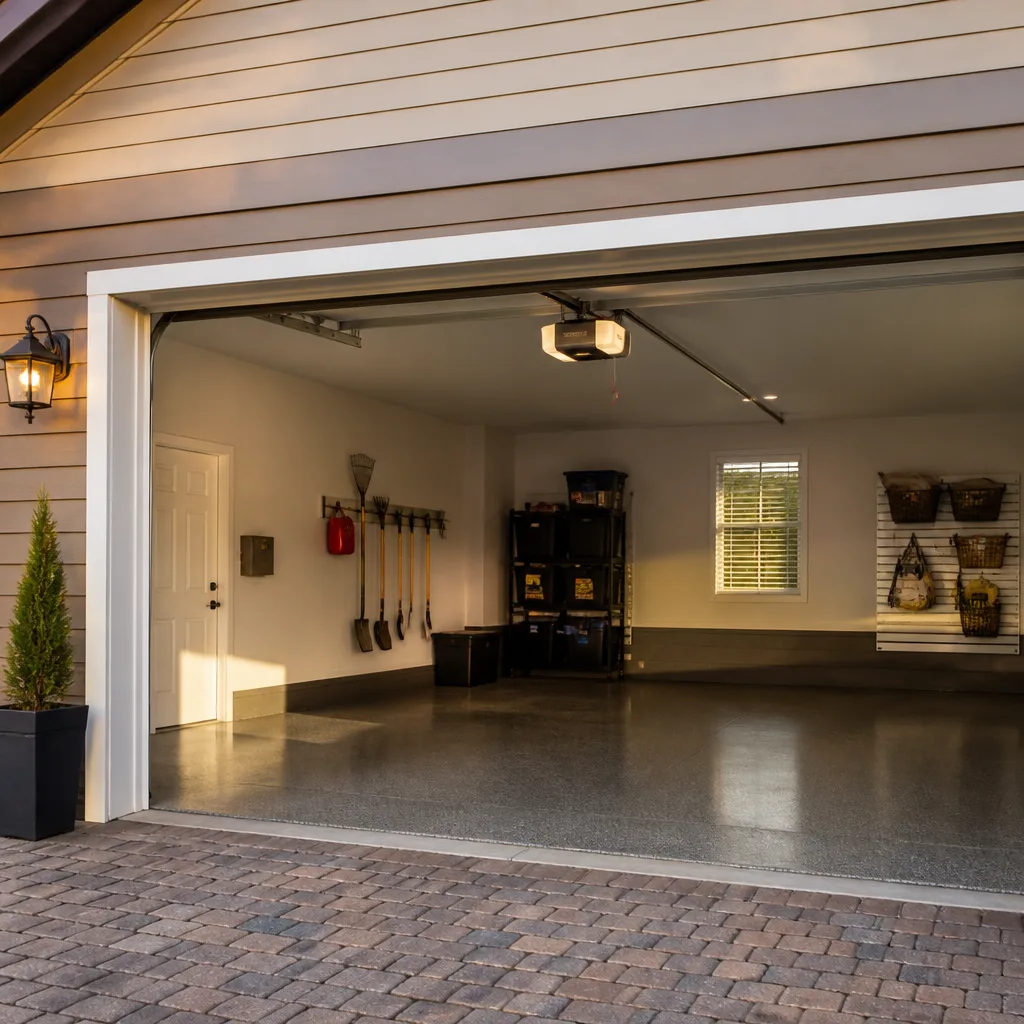
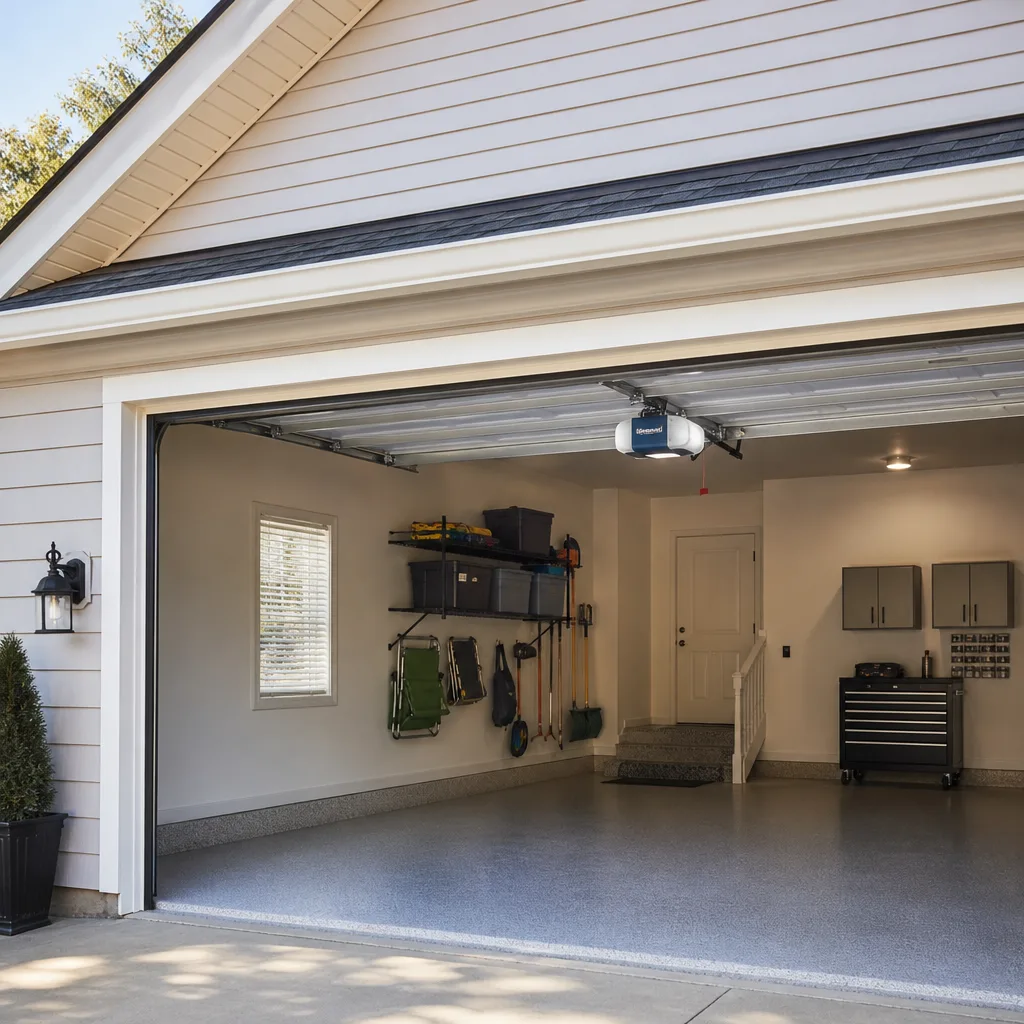
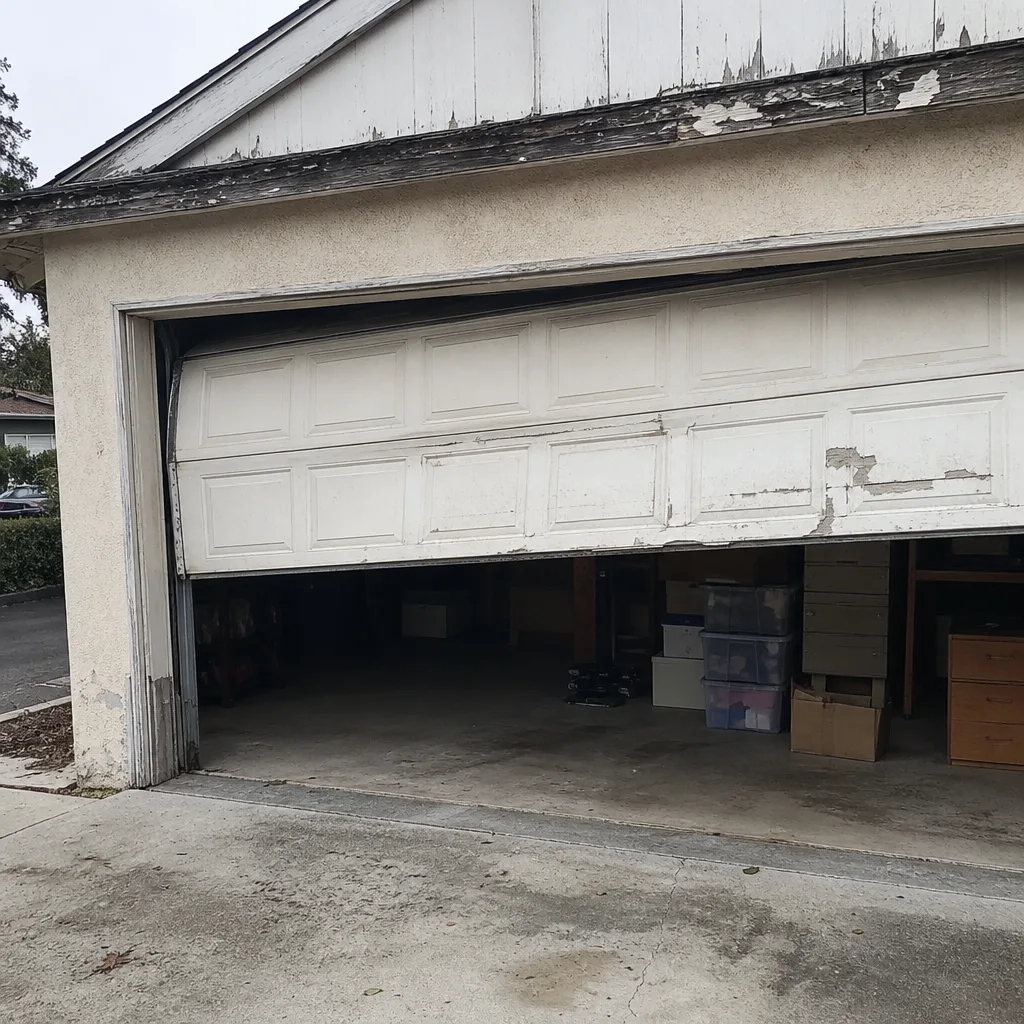 Before
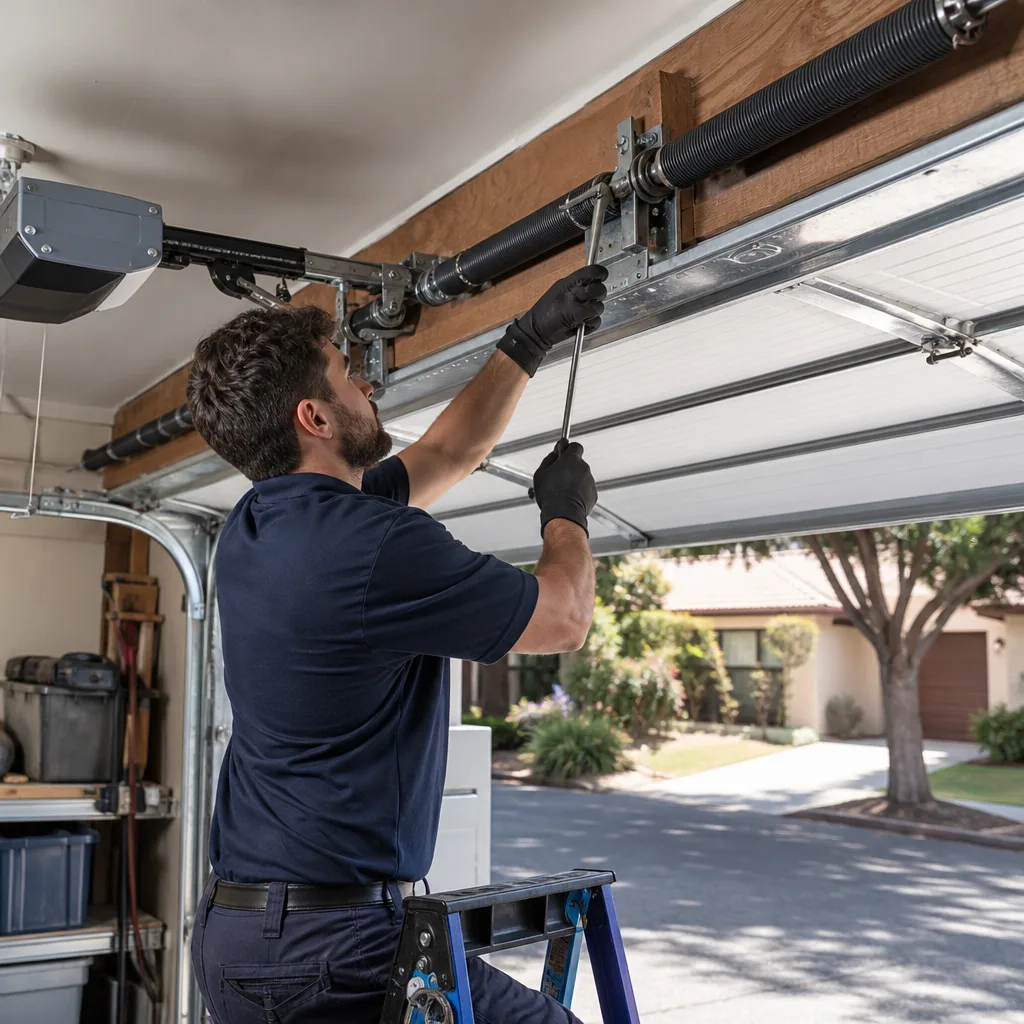 After
After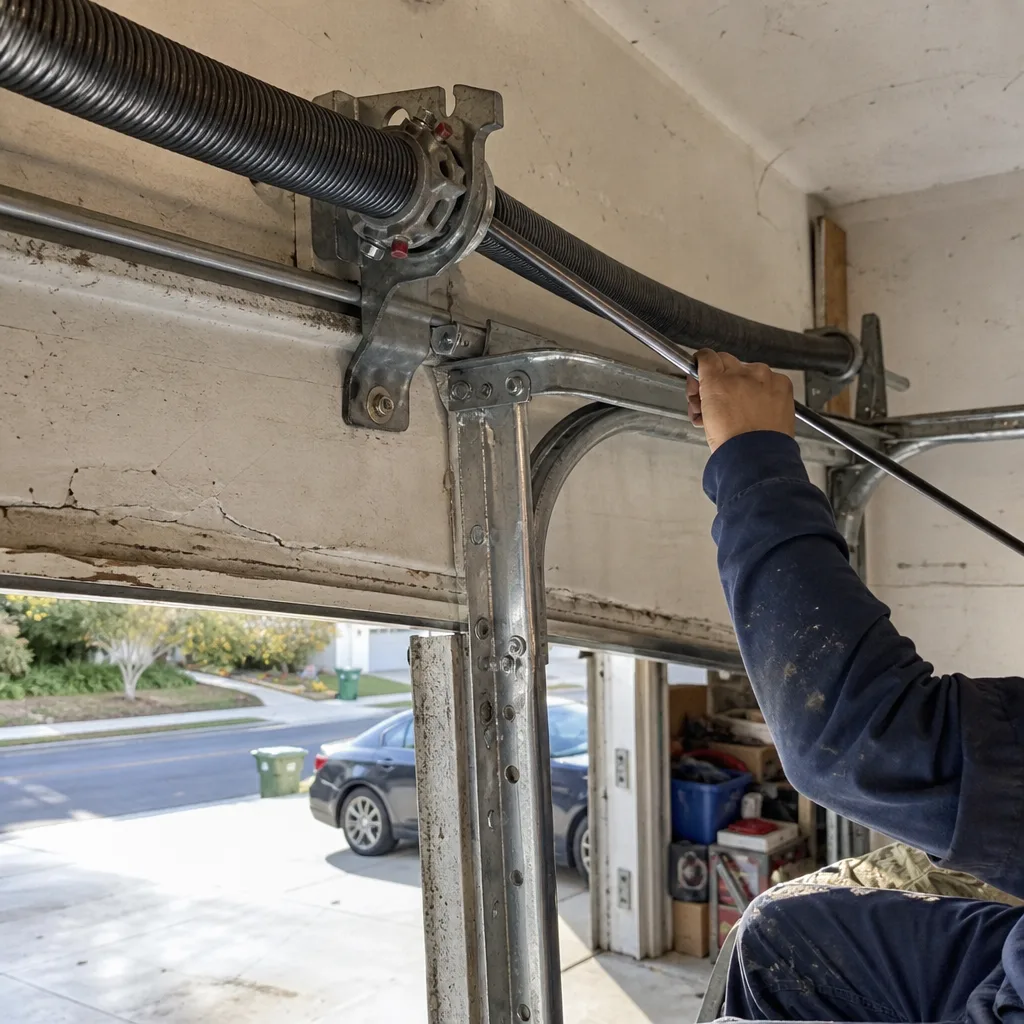 Before
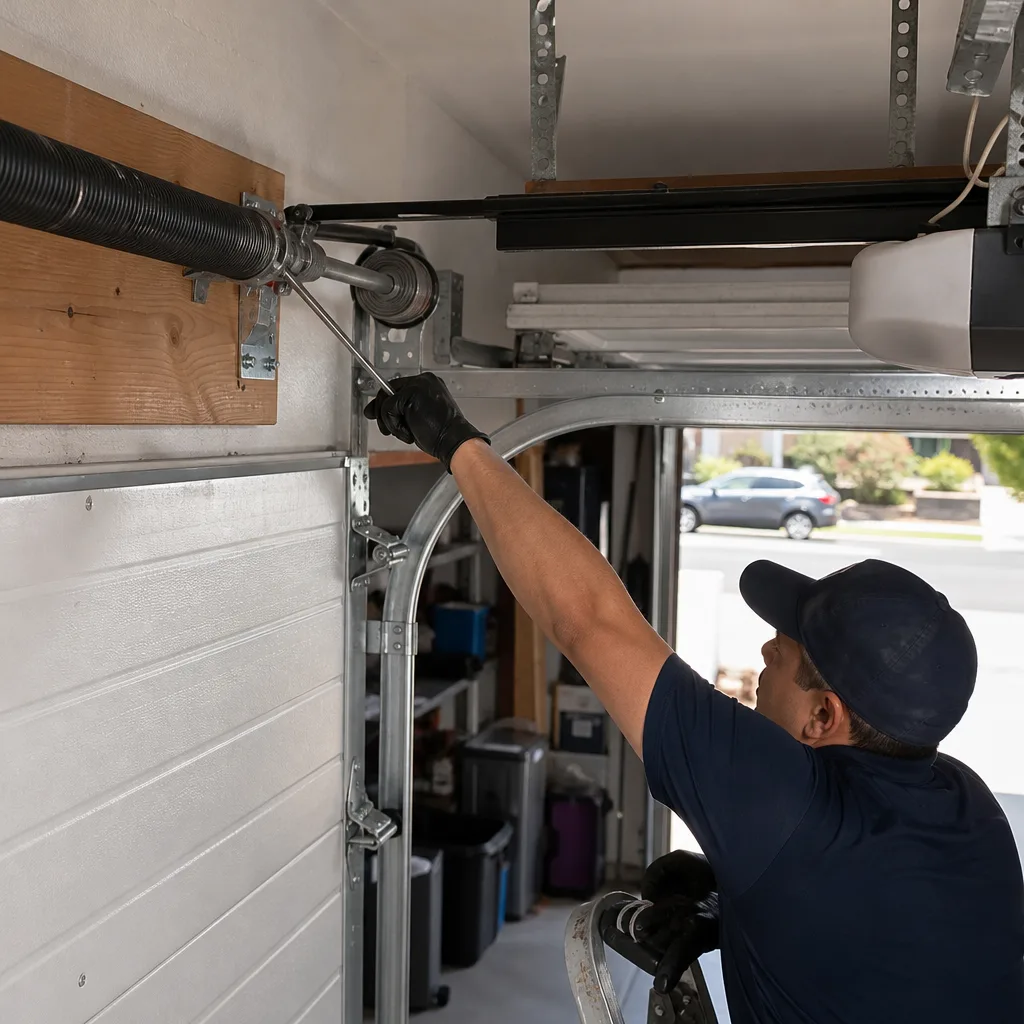 After
After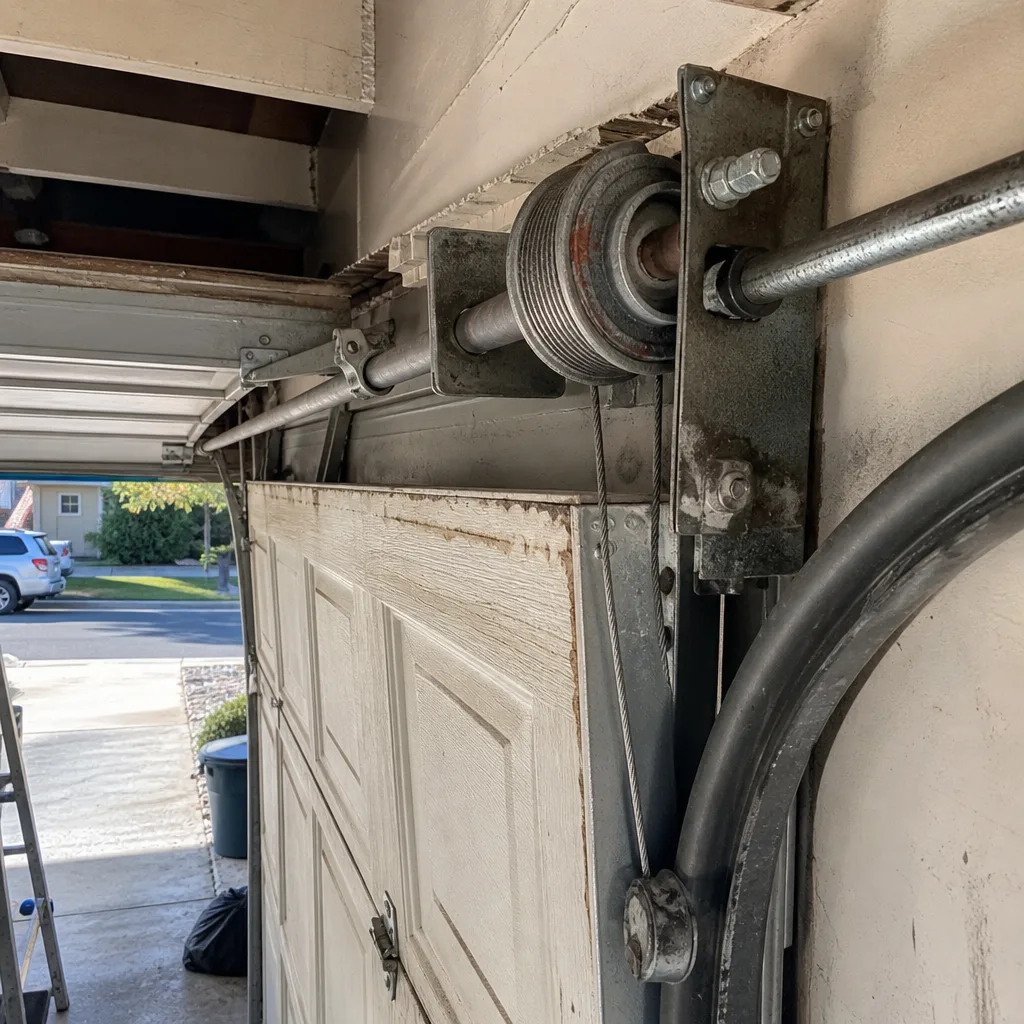 Before
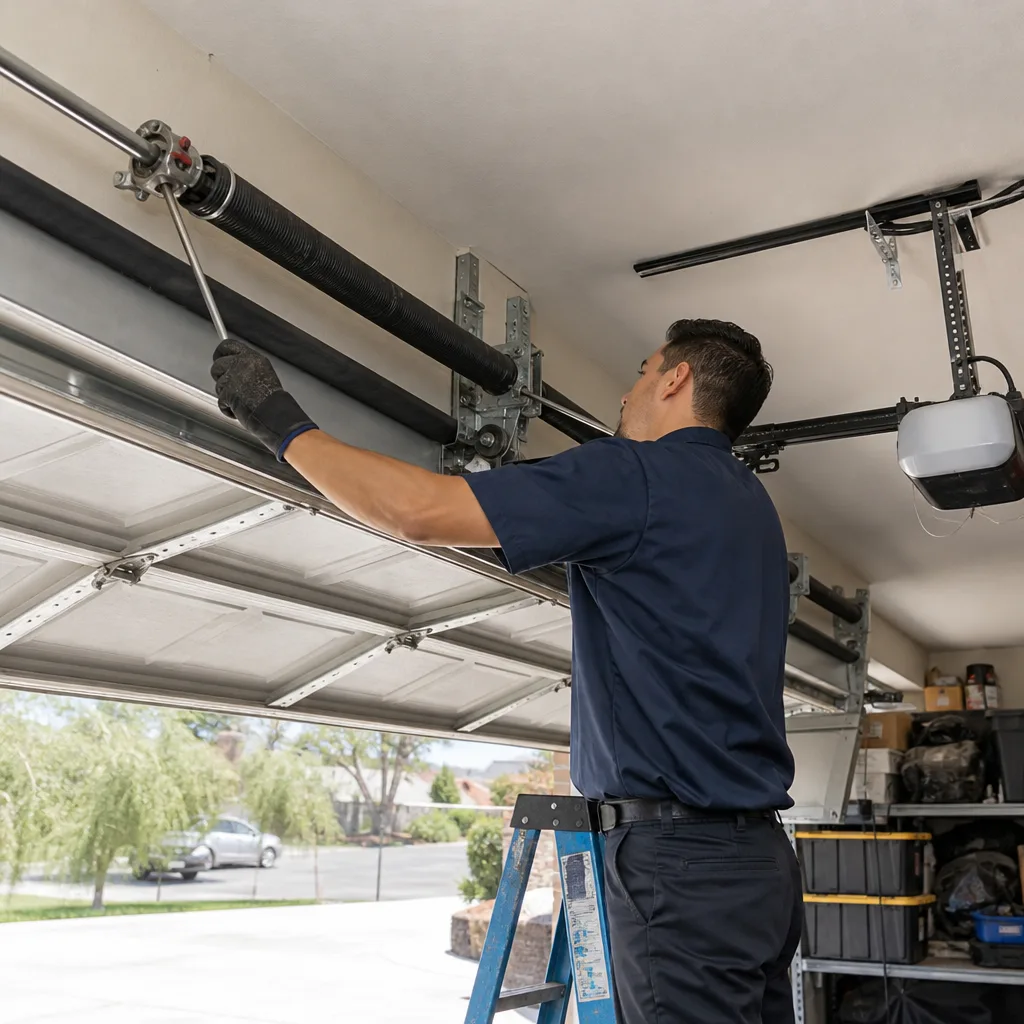 After
AfterThe Complete Guide to Garage Door in Los Angeles
Most garage door guides read like they were written by someone who has never spent an August afternoon in the San Fernando Valley or a foggy June morning in El Segundo. They cover generic lubrication schedules and spring-replacement basics, all of it tailored to places where the biggest enemy is road salt and sub-zero winters. Los Angeles is different. Our doors fail from UV-baked panels, salt-air corrosion eating through hinges within sight of the Pacific, and track shifts after every 3.0+ tremor along the Puente Hills thrust. This guide explains how your door actually wears out here in Los Angeles, what to watch for before it strands your car inside at 6:45 on a Monday, and how to tell whether you need a repair or a full system audit from a technician who works these conditions every week. For more guides & resources, see our blog.
Quick Answer
A garage door in Los Angeles is a system of moving parts that fails most often from UV panel warping, coastal salt corrosion, and seismic track misalignment, not from heavy winter use. Homeowners in Los Angeles should schedule a garage door system audit once a year, expect to replace torsion springs every 7-10 years on average, and always get a written price and written guarantee before any work begins. Most repairs in the city run $150-$550 depending on the part, while full replacements range from $1,800-$4,500 based on materials and insulation.
Table of Contents
- How Los Angeles Climate Zones Wear Your Door Differently
- Seismic Activity and Track Misalignment: What to Check After a Tremor
- System Audit vs. Repair Call: Knowing Which One You Need
- Los Angeles Permit Triggers Most Homeowners Miss on Full Replacements
- What a Written Guarantee Should Say vs. the Verbal Version
- What Garage Door Work Actually Costs in Los Angeles
- A Maintenance Calendar Built for Los Angeles Seasons
- Common Mistakes to Avoid
- When to Call a Professional
- Frequently Asked Questions
- The Bottom Line
How Los Angeles Climate Zones Wear Your Door Differently
Los Angeles is not one climate. It is at least three distinct ones, and your garage door knows which one you live in better than your realtor does.
Coastal zones (west of the 405, roughly: Santa Monica, Venice, Playa del Rey, El Segundo, Manhattan Beach, the Palisades) get marine layer moisture and airborne salt. We regularly see galvanized hinges and roller brackets within two miles of the ocean showing white oxidation and pitting within five years of installation. The salt works on exposed metal first: bottom brackets, cable anchor points, and the roller stems themselves. Steel panels with even minor scratches begin to rust at the scratch line, not because the paint failed but because the marine air never gives it a break.
Inland valley zones (the San Fernando Valley, San Gabriel Valley, Burbank, Glendale, Pasadena) get the reverse problem: sustained heat. July and August temperatures over 95 degrees bake the exterior face of the door for six to eight hours per day. Metal expands. Vinyl weather seals dry and crack. Wood doors, which should be avoided in Los Angeles unless they are sealed professionally every 18 months, warp from the differential between the hot exterior face and cooler interior face.
Hillside zones (the Hollywood Hills, Mount Washington, Eagle Rock, the canyons off Mulholland, parts of Sherman Oaks and Studio City south of the Boulevard) get amplified wind gusts, higher fire-season dust loads, and more dramatic daily temperature swings. Wind-driven dust gets into the tracks and onto the lubricated surfaces. That dust then acts as a grinding paste on nylon rollers and hinge pins. We have opened tracks in canyon homes and found the grease loaded with fine silt, cutting the roller lifespan by half.
The takeaway: a maintenance schedule that works in Westchester will be wrong for Woodland Hills, and a door that runs fine in Long Beach will grind in La Cañada. The garage door professionals at Brock Garage Door Repair home assess door condition based on your specific microclimate, not a one-size-fits-all checklist.
Seismic Activity and Track Misalignment: What to Check After a Tremor
Los Angeles sits on a network of active faults, and even the small ones, the 3.1 magnitude jolts that barely make the news, shake your garage door’s alignment. Most homeowners feel a tremor, glance at the walls for cracks, and move on. We get called out weeks later because the door “suddenly started making noise” or “doesn’t close all the way,” and the cause is usually a vertical track that shifted a quarter inch out of plumb.
After any tremor that rattles windows or makes you pause, run this five-minute check:
- Watch the door open fully. Does it hesitate, jerk, or make a scraping sound that wasn’t there before? Side-to-side rubbing against the track is the first sign of misalignment.
- Inspect the gap between the door edge and the vertical track on both sides. It should be equal from top to bottom. A wider gap at the top or bottom means the bracket or track moved.
- Check the mounting bolts. Look at the jamb brackets that hold the vertical track to the wall. Loose bolts let the track float under vibration, and every subsequent opening makes the problem worse.
- Close the door and look at the bottom seal. Uneven contact with the garage floor after a tremor usually means the door shifted in its tracks, not that the concrete moved.
- Listen at the opener. A post-tremor door that reverses unexpectedly or trips the safety sensor may be fighting a track that is no longer parallel.
Here is the part that matters: a door with shifted tracks will not fix itself. Every cycle stresses the rollers, the hinges, and the opener’s carriage until something fails outright. The failure usually comes mid-cycle, leaving the door half-open and your home exposed. If you notice any of the signs above after a quake, call Garage Door Repair in Los Angeles before the door strands you.
System Audit vs. Repair Call: Knowing Which One You Need
There is a difference between fixing what’s broken and understanding the overall health of your door. A repair call addresses a specific failure: a snapped cable (read our DIY vs Professional Garage Door Cable Repair: What’s Safe to Do Yourself guide), a dead opener, a busted roller. A system audit is a complete inspection of all 40-plus moving and structural components, including the ones that haven’t failed yet.
You need a repair call when: the door won’t open, a visible part has broken, a cable has snapped, the opener responds intermittently (see DIY vs Professional Garage Door Opener Repair: What’s Safe to Do Yourself), or the door is binding on one side.
You need a system audit when: your door is more than 8 years old, you bought a home with an existing door of unknown service history, you notice increasing noise over several months, or you want to know what’s going to need replacing in the next year or two before it becomes an emergency.
A proper audit covers:
- Spring cycle count and fatigue evaluation (torsion and extension)
- Cable wear at the drum and bottom bracket points
- Roller condition (nylon vs. steel, bearing play, flat spots)
- Hinge and bracket fastener torque
- Track alignment and plumb in both vertical and horizontal runs
- Opener force settings and safety-reversal validation
- Panel condition, especially UV and moisture damage
- Weather seal integrity along the sides and bottom
- Balance test under detached and attached conditions
In our experience in Los Angeles, the homeowners who get an annual audit rarely have midnight failures. The ones who wait for the breakage call pay more over time and always at the worst hour. Brock Garage Door Repair offers both services, and every audit includes the written findings with the price for any recommended work, agreed before any of it starts.
Los Angeles Permit Triggers Most Homeowners Miss on Full Replacements
Replacing a garage door in Los Angeles is not always a simple swap. The City of Los Angeles Department of Building and Safety (LADBS) and individual municipalities within LA County have specific triggers that require a building permit, and many homeowners learn this the hard way when a sale is held up or a retrofit inspection fails.
The most common trigger: structural modifications to the opening. If the new door is a different width, a different height, or requires modifying the header, jambs, or foundation curb, a permit is required. This applies even if the existing opening was unpermitted, which is surprisingly common in older Los Angeles homes built before current code records were digitized.
Other local triggers to know:
- Fire-rated door requirements. Homes in designated fire hazard severity zones, common in the hillsides of Los Angeles, must install garage doors that meet specific ember-resistance and material standards. A permit is required to verify compliance.
- Wind-load specifications. Certain Los Angeles County coastal and foothill parcels fall into wind zones requiring doors with engineered wind-load certifications. Replacing without a permit can void the manufacturer’s warranty and your insurance coverage in a wind event.
- Historic district restrictions. Parts of Los Angeles, including sections of Hancock Park, Angelino Heights, and certain South Pasadena neighborhoods, have specific design review requirements for garage doors visible from the street.
- Motorized door and electrical. If a new opener requires a new electrical circuit or relocation of an existing outlet, the electrical work requires a permit separate from the door itself.
The rule of thumb: replacement with a door of the same dimensions and same classification rarely requires a permit in most of Los Angeles, but any change to the opening, the fire rating, or the structure triggers review. A legitimate Los Angeles garage door company will tell you before the job starts whether your situation triggers the permit process. If a contractor waves off the question or says “you don’t need to worry about that,” confirm it with LADBS yourself.
What a Written Guarantee Should Say vs. the Verbal Version
Most Los Angeles garage door repair companies will tell you your repair is “covered” if you ask. Very few will put it in writing. The difference matters because a verbal guarantee has the same legal weight as a handshake, which is to say, almost none when something fails and the contractor decides the phone call is a hassle.
A real written guarantee contains specific elements. Here is what to look for on paper:
- Duration stated in days or years. “One year” should be written as “365 days from the date of service,” and the service date should be on the document.
- Specific parts and labor covered. Does the guarantee cover just the part, or the labor to replace it? Many guarantees cover a $40 part but not the $180 service call to install it.
- What voids the guarantee, in plain language. Look for cause of failure. A guarantee that covers “manufacturing defects only” is narrower than one that covers any failure of the repaired component.
- Who pays for the return visit. The language should state that the company returns at no charge if the covered repair fails within the term.
- Transferability. If you sell the home, does the guarantee follow the door or the person? Most do not transfer, but you should know that before you list the house.
Brock Garage Door Repair uses the 365-Day Done Right Promise, and it is written on every repair invoice. If a covered repair fails within that year, we return and correct it at no charge. That is not a verbal assurance, it is a line item on the paperwork. This is part of The Garrison Standard, the operating code every job in the Garrison Partners network follows: arrival window honored, price in writing before work starts, work done by the book, site left clean, guarantee in writing for a full year.
What Garage Door Work Actually Costs in Los Angeles
Pricing in Los Angeles is higher than national averages, driven by labor costs, permit complexity, and the regional liability environment. These ranges reflect what we see across the basin in 2025:
- Torsion spring replacement: $220-$380 per door, depending on spring cycle rating and whether it is a pair
- Extension spring replacement: $150-$250 for older tilt-up doors
- Cable replacement: $150-$275 depending on cable type and drum condition; see Garage Door Cable Repair in Los Angeles for the full breakdown
- Roller replacement (all rollers, nylon upgrade): $120-$220 including parts and labor
- Opener replacement: $350-$750 installed, depending on drive type and horsepower; opener repair specifics at Garage Door Opener Repair in Los Angeles
- Full door replacement (single, steel, non-insulated): $1,800-$2,800 installed
- Full door replacement (double, insulated, higher R-value): $2,800-$4,500 installed
- Track realignment (post-seismic or wear): $120-$250 when no parts require replacement
Every price is quoted and agreed in writing before any work starts. That is non-negotiable at Brock, and it should be non-negotiable for you. If a Los Angeles contractor will not put the number on paper before touching the door, you are not getting a price; you are getting an opening bid. The invoice at the end should match the number you approved. Period.
A Maintenance Calendar Built for Los Angeles Seasons
Los Angeles does not have winter in the way Minnesota does, but it has three maintenance seasons that matter for a garage door: the Santa Ana season, the summer heat season, and the marine-layer season. Here is the schedule we recommend to Los Angeles homeowners:
- September, before Santa Ana season: Tighten all track brackets and hinge fasteners. Santa Ana winds set up a vibration resonance on metal doors that loosens bolts faster than any other season here. Lubricate springs, rollers, and hinges with a silicone-based lubricant, never WD-40.
- February, after the first heavy rains: Inspect the bottom weather seal for water intrusion and the side seals for gaps. Los Angeles garages in coastal zones get condensation inside during marine-layer months, and that moisture is what feeds rust on tracks and hardware.
- June, before summer peak: Check panel condition, especially if the door faces west or southwest. UV damage shows as fading, but also as micro-cracking in the panel surface that eventually leads to delamination on composite doors. Apply a UV protectant to non-wood panels if the manufacturer allows it.
- Every six months: Run the balance test. Disconnect the opener and lift the door manually to waist height. It should hold position on its own. If it drops or rises, the springs are wearing and need professional adjustment.
- Any time you hear a change: New sounds are the earliest warning a door gives you. A squeak that becomes a grind, a rattle that becomes a thunk, a smooth operation that becomes a stutter: all of these are cheaper to address in week one than in week six.
We service doors on all eight major brands we train on: LiftMaster, Chamberlain, Genie, Clopay, Amarr, Wayne Dalton, and Craftsman. The brand matters less than the maintenance, but it does matter that your technician knows the specific torque specs and part compatibility for the system you have. A generic tune-up on a high-cycle torsion setup does more harm than good.
Common Mistakes to Avoid
- Lubricating with WD-40. WD-40 is a solvent and water displacer, not a lubricant. It strips the existing lubricant from your rollers and hinges and leaves metal surfaces dry within a week. Use a silicone or lithium-based lubricant made for garage doors.
- Ignoring post-quake symptoms. A door that scrapes after a temblor is telling you the track moved. Continuing to run it grinds down the rollers, bends the brackets, and eventually strips the opener’s gears. The repair bill triples when you ignore the first warning.
- Replacing one spring instead of both. Torsion springs are rated for a set number of cycles. When one fails, the other is usually within 10% of its cycle limit but looks fine. Replacing only the broken one means a second service call within months, and you pay labor twice. Any reputable Los Angeles garage door company replaces both together.
- Accepting a verbal estimate without a written price. In Los Angeles, the difference between a verbal and a written estimate is the difference between a contract and a conversation. Always get the number on paper before the work begins, and make sure the guarantee duration is on the same page.
- Buying a door on insulation R-value alone. Los Angeles heat loads favor lighter, reflective doors over heavily insulated ones in many microclimates. A high R-value door in a coastal zone adds weight and cost without a matching benefit. The right door for Sherman Oaks is not automatically the right door for Playa del Rey.
- Skipping the annual audit because the door “works fine.” Most garage door failures are not sudden. They are the end of a long, gradual wear curve that a trained eye can spot three months out. The homeowners who get annual system audits in Los Angeles are the ones who never post in a panic at 7 a.m. about a car trapped in the garage.
When to Call a Professional
Some garage door work is safe to inspect yourself. Some is not. Torsion springs are under hundreds of pounds of tension, and a spring that lets go during a DIY attempt can cause serious injury. Cables under load behave the same way. If you have a snapped cable, a broken spring, a door off track, or an opener failure that involves electrical wiring, call a professional. The garage door repair in Los Angeles market has plenty of trained technicians, and the legitimate ones will tell you the truth about what is safe to take on yourself and what is not. Brock Garage Door Repair offers free estimates in Los Angeles – call (254) 602-5116 and a background-checked, uniformed technician will assess the situation, put the price in writing, and do the job to The Garrison Standard.
Frequently Asked Questions
Most residential torsion springs in Los Angeles last 7-10 years, depending on how many daily cycles your door sees and whether the door is properly maintained. Coastal salt air and hillside dust can shorten that to 5-7 years in some zones. Call (254) 602-5116 for a spring evaluation – we’ll tell you the remaining cycle life and the exact replacement price before any work starts.
Replacing a door with the same dimensions and same fire classification usually does not require a permit in Los Angeles, but any change to the opening size, the header, the structural jambs, or the fire rating does. Homes in hillside fire zones and historic districts have additional review requirements. A competent installer will tell you before the job starts whether your project triggers the permit process.
The tremor shifted your vertical tracks out of alignment by a fraction of an inch. The door now rubs against the track on one side during operation, and that friction damages rollers, hinges, and the opener over time. Track realignment costs $120-$250 in most Los Angeles homes when caught early, and exponentially more if the door is run for weeks in that condition.
Yes, for most common failures – snapped cables, broken springs, roller failures, and opener issues – we dispatch same-day, and a live person answers the phone 24/7 at (254) 602-5116. Emergency repair calls are handled as a priority, and the written price is provided before any work begins, even on urgent calls.
Most common repairs in Los Angeles run $150-$550 depending on the failed component. Spring replacement runs $220-$380 for a pair, cable replacement $150-$275, and roller replacement $120-$220. The exact price depends on your door’s weight, spring type, and condition, and you’ll get it in writing before the work begins. Call (254) 602-5116 for a free estimate.
No. At Brock Garage Door Repair, the price you approve is the price you pay. If we find additional issues during the repair, we stop, explain what we found, and give you a new written price for the additional scope. You approve it before any extra work happens. The invoice never surprises you.
The Bottom Line
A garage door in Los Angeles is a mechanical system exposed to conditions that most national guides ignore: salt air at the coast, heat in the valleys, and seismic movement everywhere. For help deciding when to call a pro, read DIY vs Professional Garage Door: The Los Angeles Homeowner’s Decision Guide. The door that gets annual audits, spring replacement before failure, and post-quake alignment checks will last years longer than the one that only gets attention when it breaks. The difference in lifetime cost is thousands of dollars. More than that, the difference in inconvenience is enormous: a maintained door fails during a scheduled replacement, not at 6:40 a.m. on a workday. Get the audit, get the written price, get the written guarantee, and you will never be the homeowner posting about a garage door emergency in a Los Angeles neighborhood group again.
Written by Wade Mercer, Owner at Brock Garage Door Repair, serving Los Angeles since 2001.