
Last updated October 9, 2026
Full 25-point door and opener safety check with every visit - springs, cables, rollers, tracks, and your LiftMaster or Chamberlain opener included
You get a price before we start. It does not change when the truck arrives.
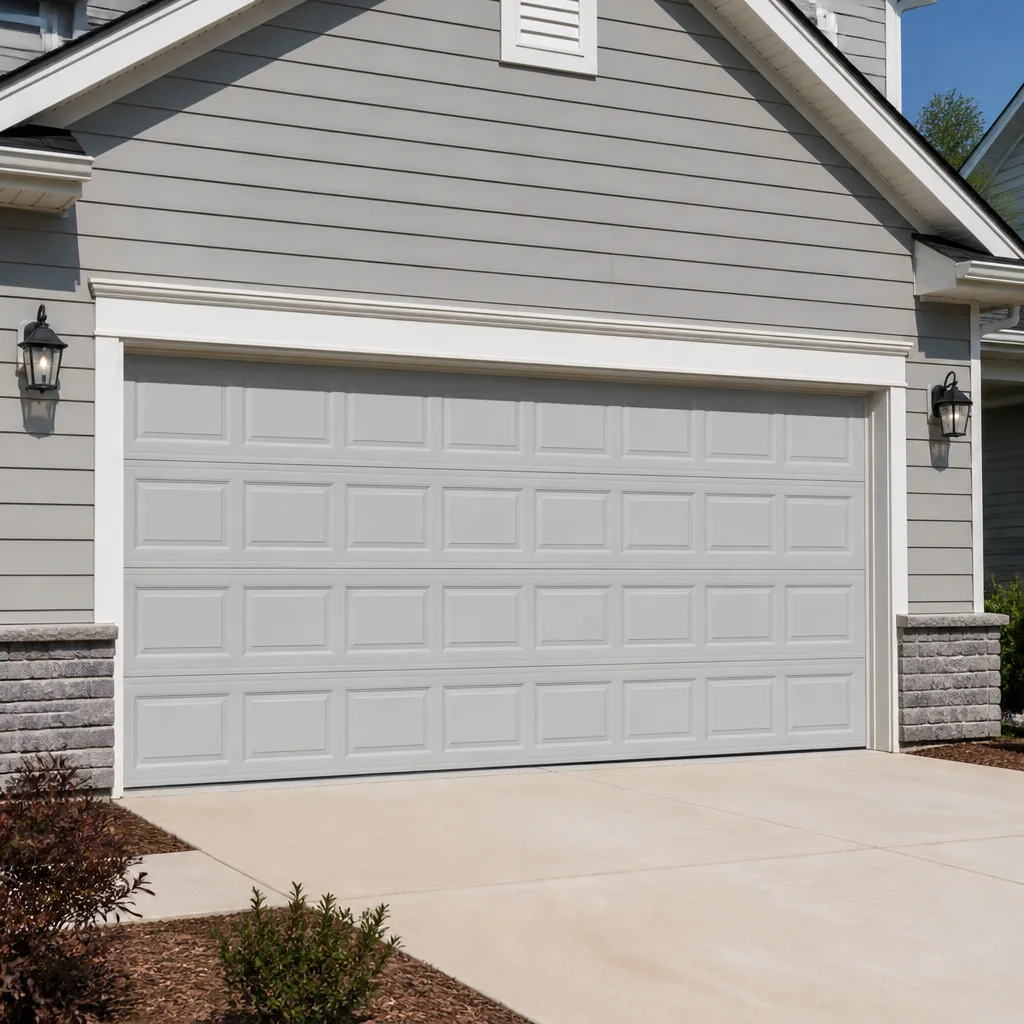
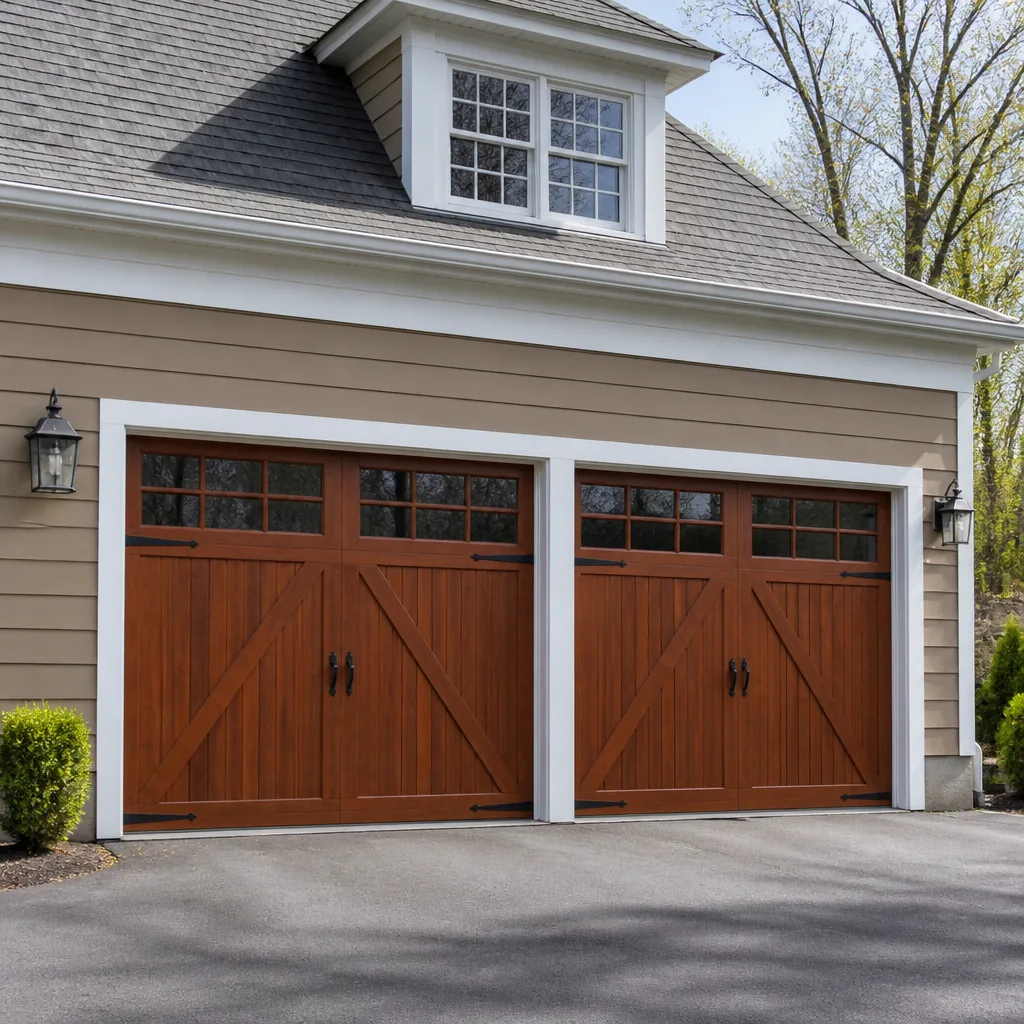
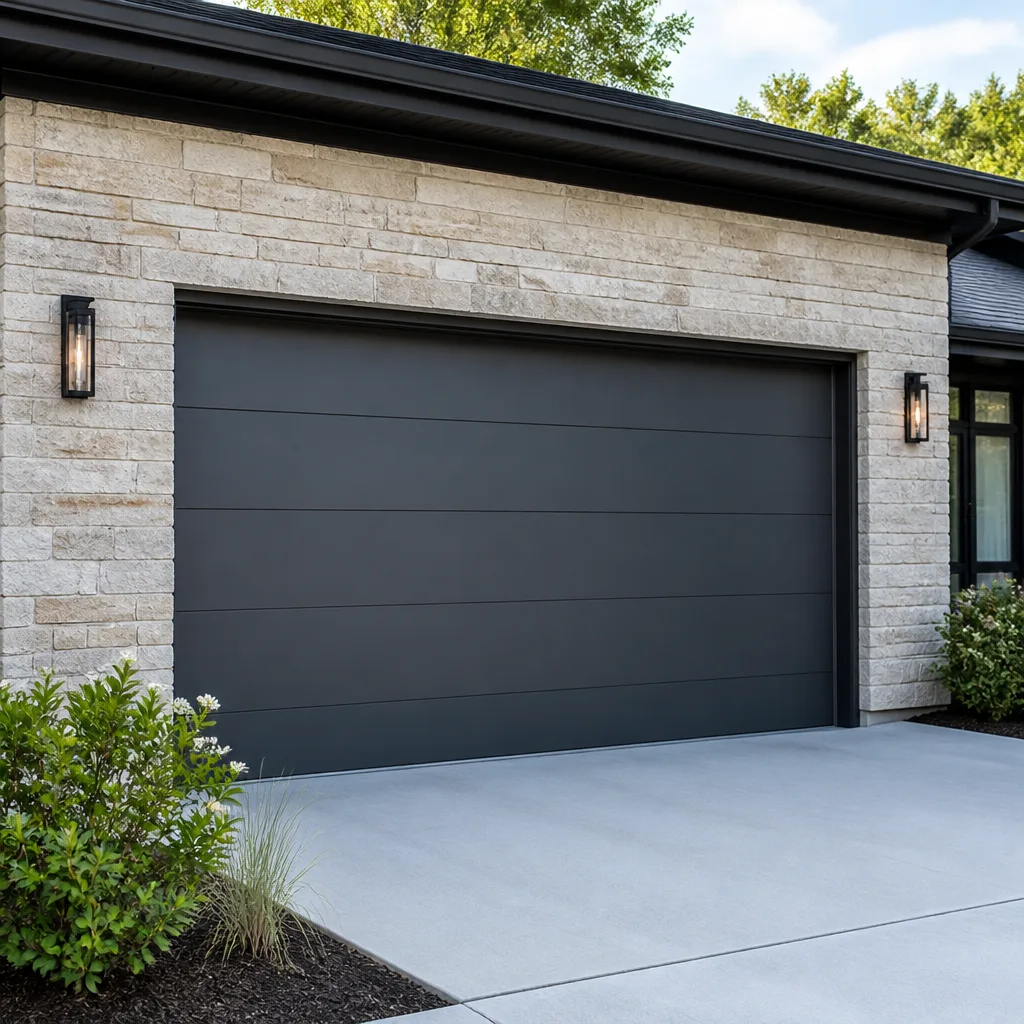
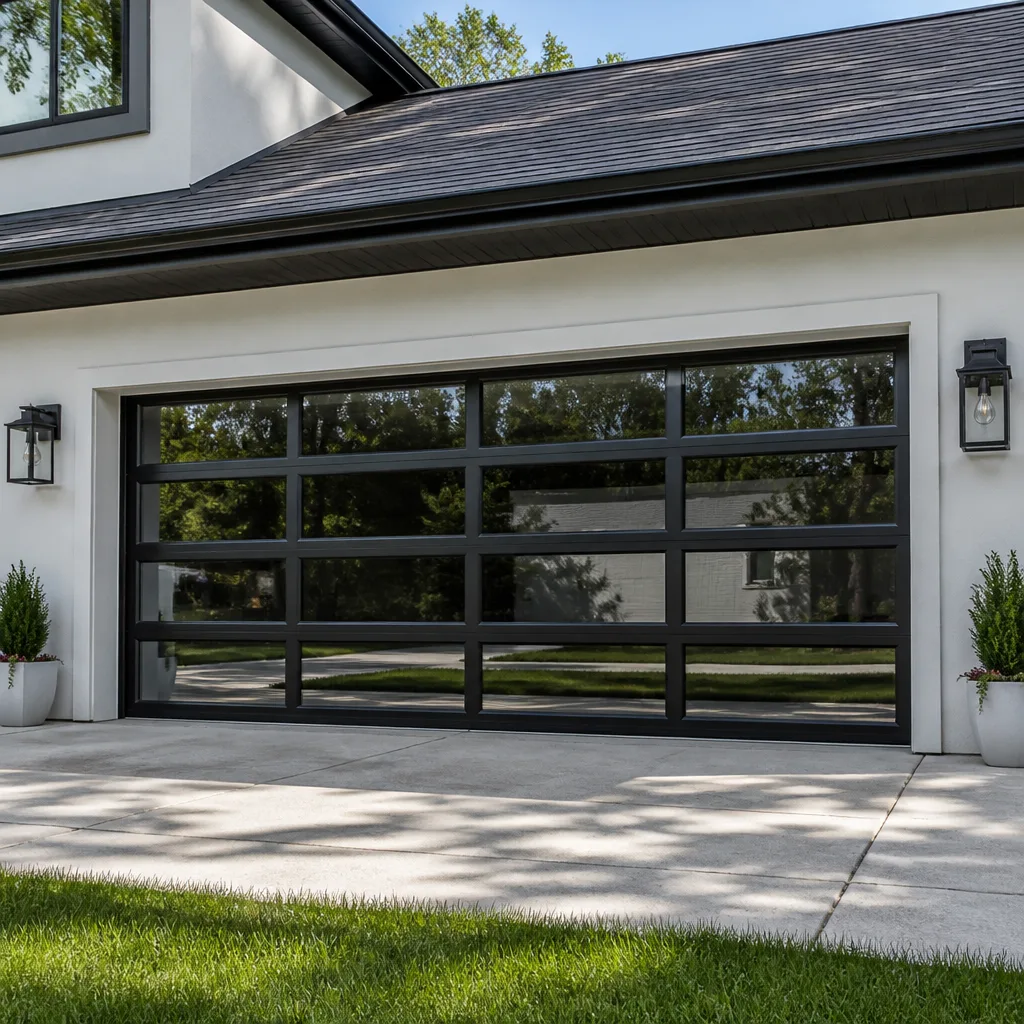
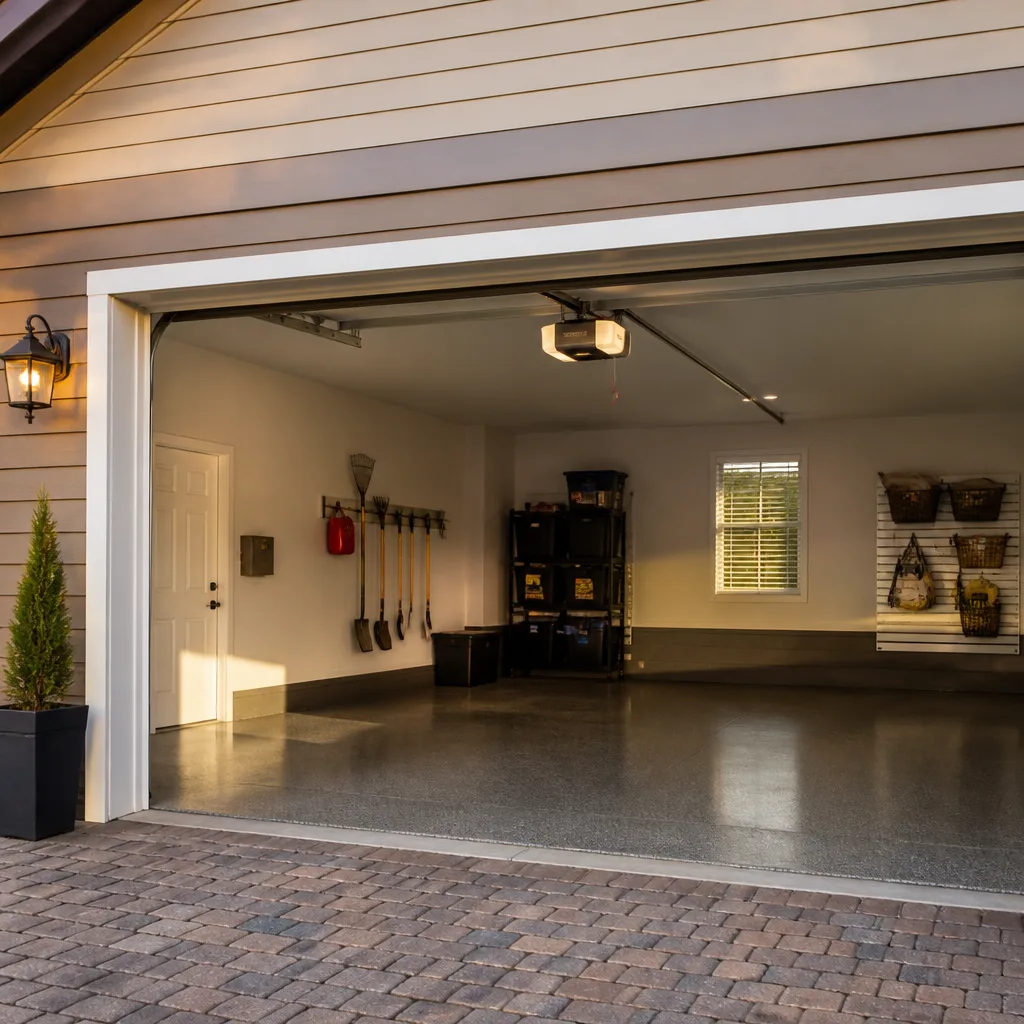
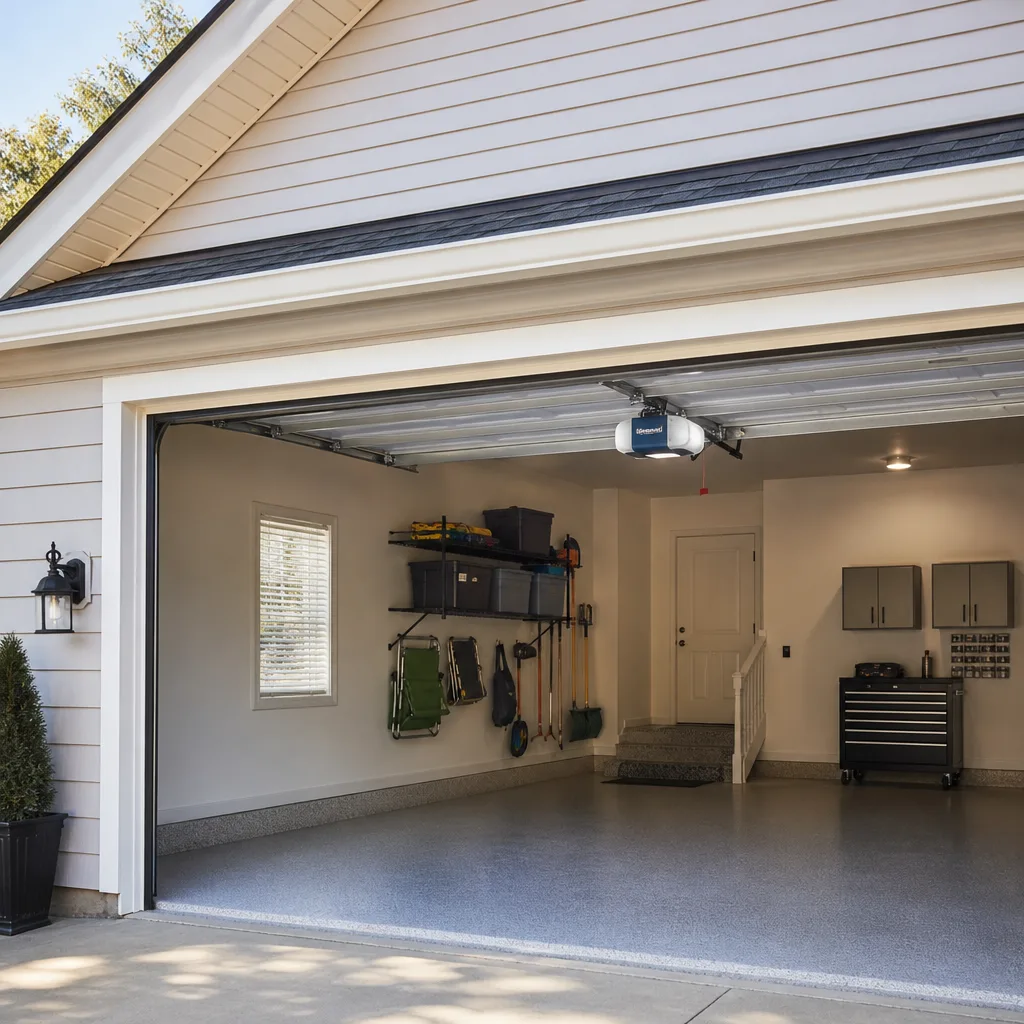
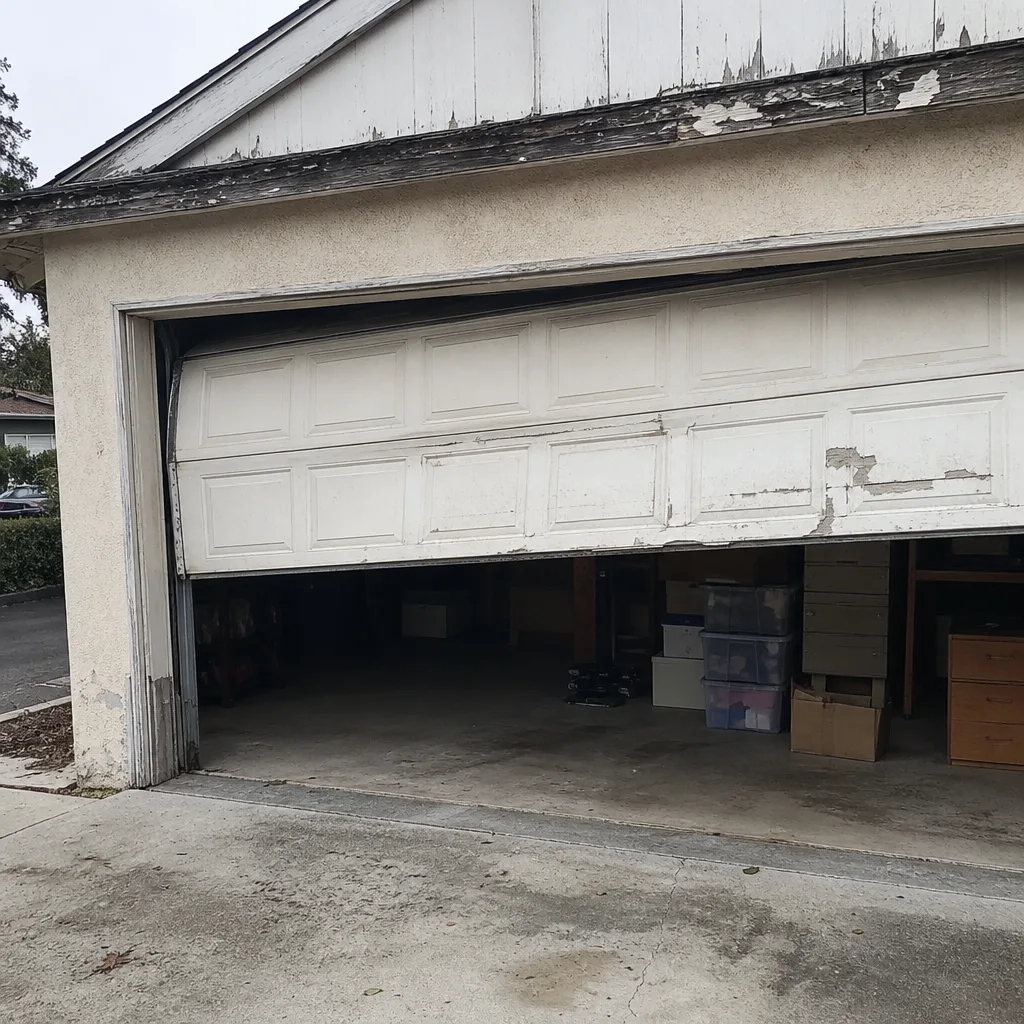 Before
 After
After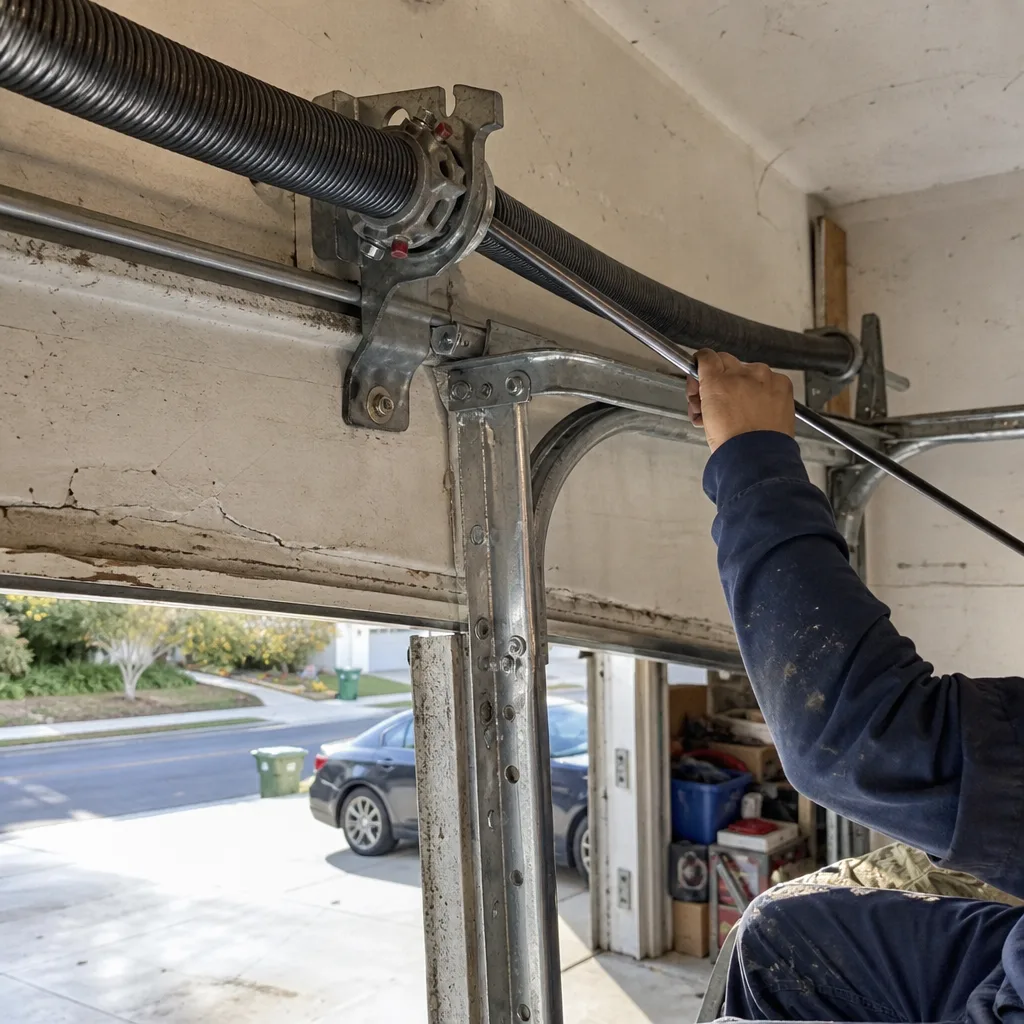 Before
 After
After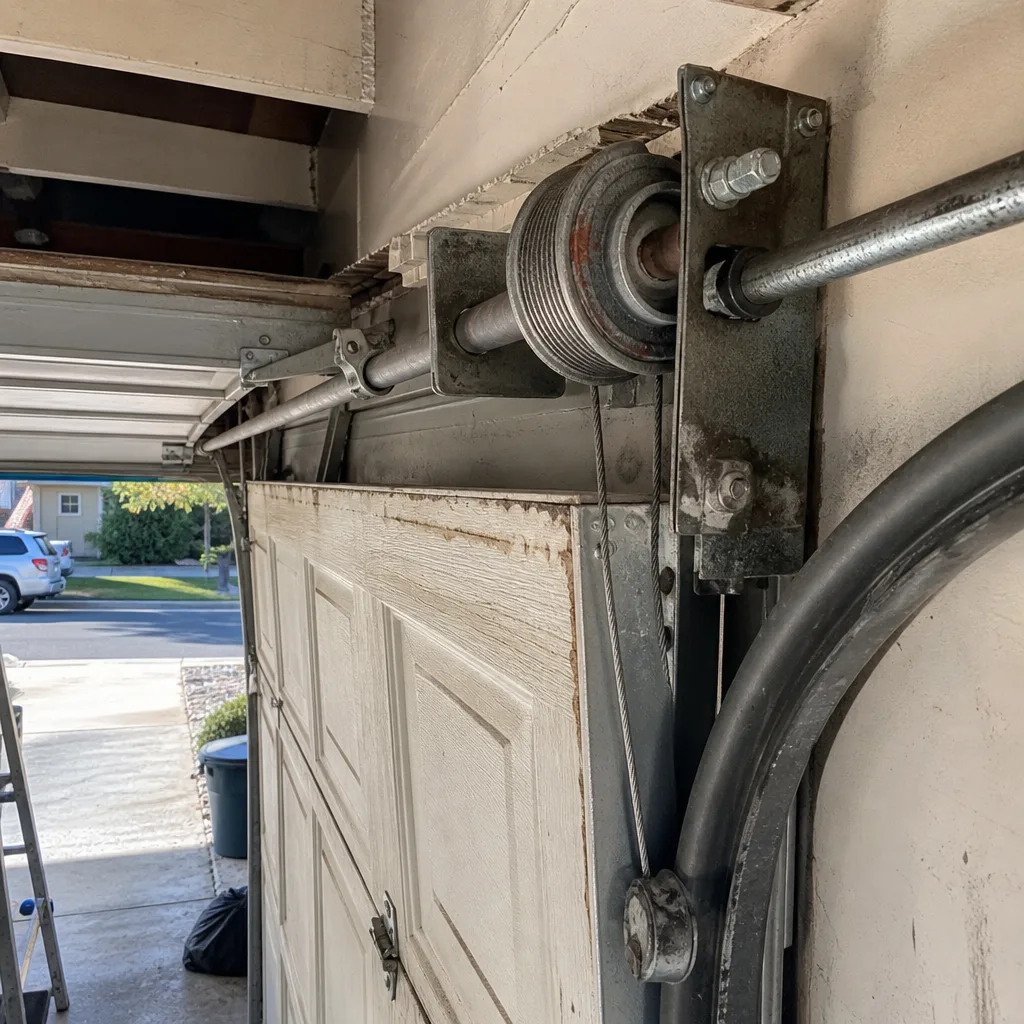 Before
 After
AfterDIY vs Professional Garage Door: The Los Angeles Homeowner’s Decision Guide
Every year, American emergency rooms treat roughly 20,000 injuries tied to garage doors, and the spring mechanism alone stores enough energy to snap bone or sever fingers when it lets go unexpectedly. Los Angeles homeowners face this decision more often than most, because our garages double as workshops, storage units, and in a city where parking is scarcer than rain, sometimes spare rooms or side hustles. This guide gives you what most Google results won’t: an honest, task-by-task breakdown of what’s safe to do yourself and what belongs in the hands of a trained professional, with real Los Angeles context on prices, codes, and the city’s specific garage door wear patterns.
Quick Answer
DIY is appropriate for three garage door tasks: lubrication, sensor realignment, and remote programming. Spring replacement, cable work, and track repair should be left to a licensed Los Angeles professional because the injury risk is documented and severe. For everything else, the honest answer depends on your tools, your patience, and whether you’d rather spend a Saturday afternoon on a ladder or pay $150 to $350 for a same-day fix.
Table of Contents
- The Real Divide: What Actually Separates DIY Work from Professional Work
- Safe DIY Tasks: What You Can Do This Weekend
- Professional-Only Tasks: The Injury Risk Explained
- California Licensing Law and Why It Matters for DIY Decisions
- What a YouTube Video Actually Prepares You For
- How to Evaluate a Fair Quote on Professional-Only Work
- Los Angeles-Specific Factors That Change the Math
The Real Divide: What Actually Separates DIY Work from Professional Work
The honest distinction isn’t skill. A Los Angeles homeowner who rebuilds a carburetor on a Saturday has more mechanical aptitude than some garage door technicians we’ve had to retrain. The real divider is consequence asymmetry. When a lubricant job goes wrong, you wipe up a drip. When a torsion spring slips off a winding bar, the spring unwinds its stored energy in a fraction of a second and whatever’s in the path absorbs it. That’s usually a hand, a face, or a chest.
We see it in Los Angeles garages every month: a homeowner who got halfway through a spring replacement, heard a sound no one ever wants to hear, and now has a door stuck six feet off the ground and a spring wound to partial tension. That’s worse than a broken door. It’s a broken door that’s now armed and unstable. We charge more to fix those, not because we’re opportunistic, but because a partially wound spring makes the safe disassembly twice as involved and three times as measured.
The second divider is repair lifespan. A DIY fix that holds for six weeks technically works. A pro-grade fix on a LiftMaster or Chamberlain system should hold for years, and the work stays covered under the Garage Door Repair in Los Angeles company’s written guarantee. If your time is worth anything, you don’t want to redo the same repair quarterly.
The third divider is specificity of parts. Los Angeles homes from the 1940s bungalow era through the 2000s tract expansions run doors from Genie, Clopay, Amarr, Wayne Dalton, and Raynor. Springs are not one-size. A homeowner guesses at the spring size, gets it wrong, and the door either flies up or won’t lift. A technician reads the manufacturer’s tag, matches the exact gauge and coil count, and installs what belongs there. The difference shows up as a door that opens evenly and quietly instead of one that shudders and slams.
Safe DIY Tasks: What You Can Do This Weekend
Three garage door jobs are genuinely DIY-friendly, and you’ll save real money doing them yourself. Each requires basic household tools and carries negligible injury risk when done with common sense. Here’s the breakdown.
- Lubrication. Every Los Angeles homeowner should lubricate their garage door twice a year. The ingredients: a spray can of white lithium grease for the track hinges and rollers, and a silicone-based lubricant for the torsion spring. Not WD-40. WD-40 is a solvent, not a lubricant; it washes away the moisture and leaves metal dry. Spray the hinges, the roller stems, and the spring coil itself. Five minutes, zero cost beyond the can.
- Photo eye sensor alignment. When the door starts closing and then reverses for no apparent reason, the sensors at the bottom of each track have drifted out of alignment. Each sensor has a small LED light; when both glow steady green (or red, depending on the unit), they’re aligned. If one flickers, loosen the wing nut on the sensor bracket, aim it at the other sensor until both lights hold steady, and retighten. No tools beyond a screwdriver.
- Remote programming. When a Chamberlain or LiftMaster opener remote stops working, the fix is rarely the remote itself. It’s a signal that got cleared, usually after a power surge or a battery swap. The process: locate the learn button on the back of the opener head, press it until the indicator light blinks, then press and hold the remote button for two to three seconds. Nearly every modern opener from these brands follows this sequence. If it doesn’t work on the second try, call someone who knows the unit’s specific programming mode.
The key takeaway: these three tasks are low-stakes, reversible, and don’t involve springs, cables, or the door’s weight-bearing components. They’re the only tasks for which the DIY route makes financial sense for most Los Angeles homeowners.
Professional-Only Tasks: The Injury Risk Explained
Now the list that saves fingers. The Consumer Product Safety Commission maintains that a disproportionate share of the thousands of garage door injuries reported annually in the United States involve spring work attempted without professional tools. The mechanics make clear why: a torsion spring on a two-car Los Angeles garage door holds between 150 and 250 pounds of torque per spring, and there are usually two of them. That energy releases explosively when the spring snaps or slips.
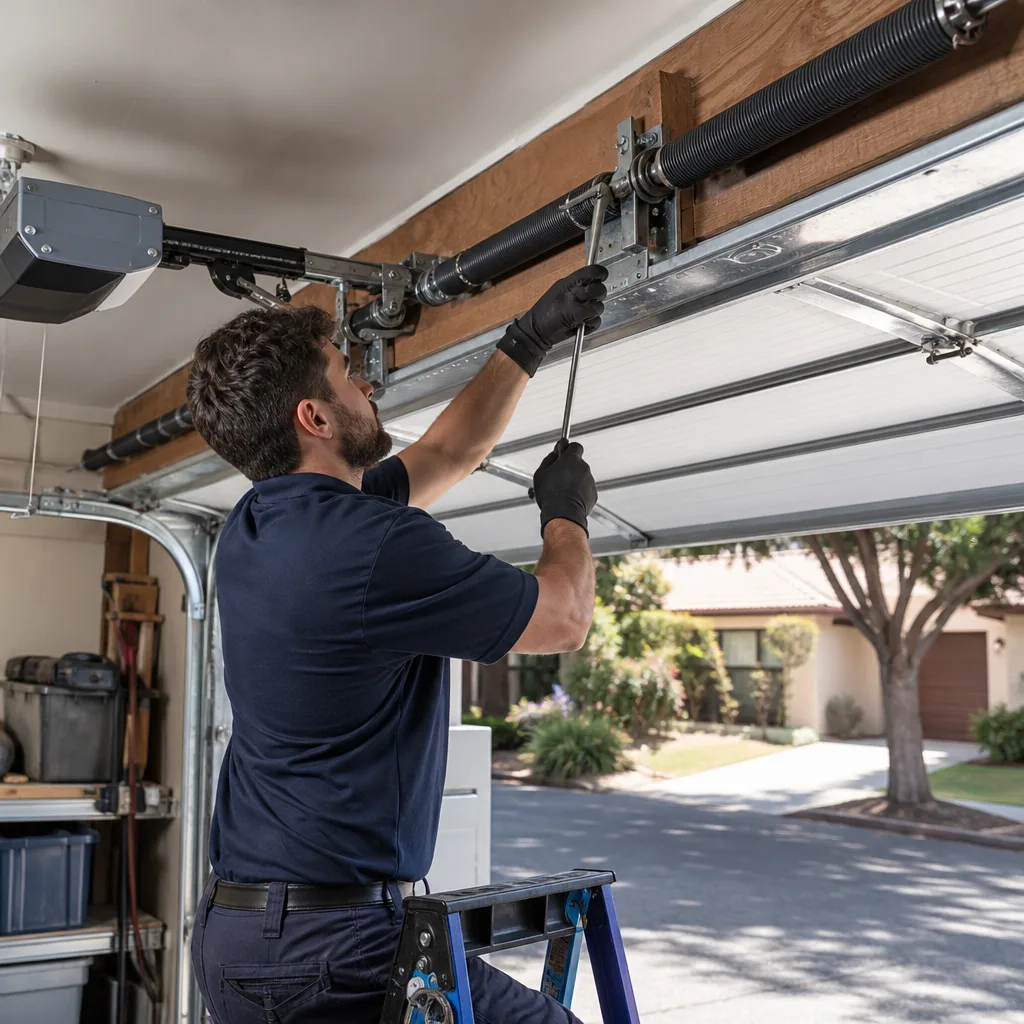
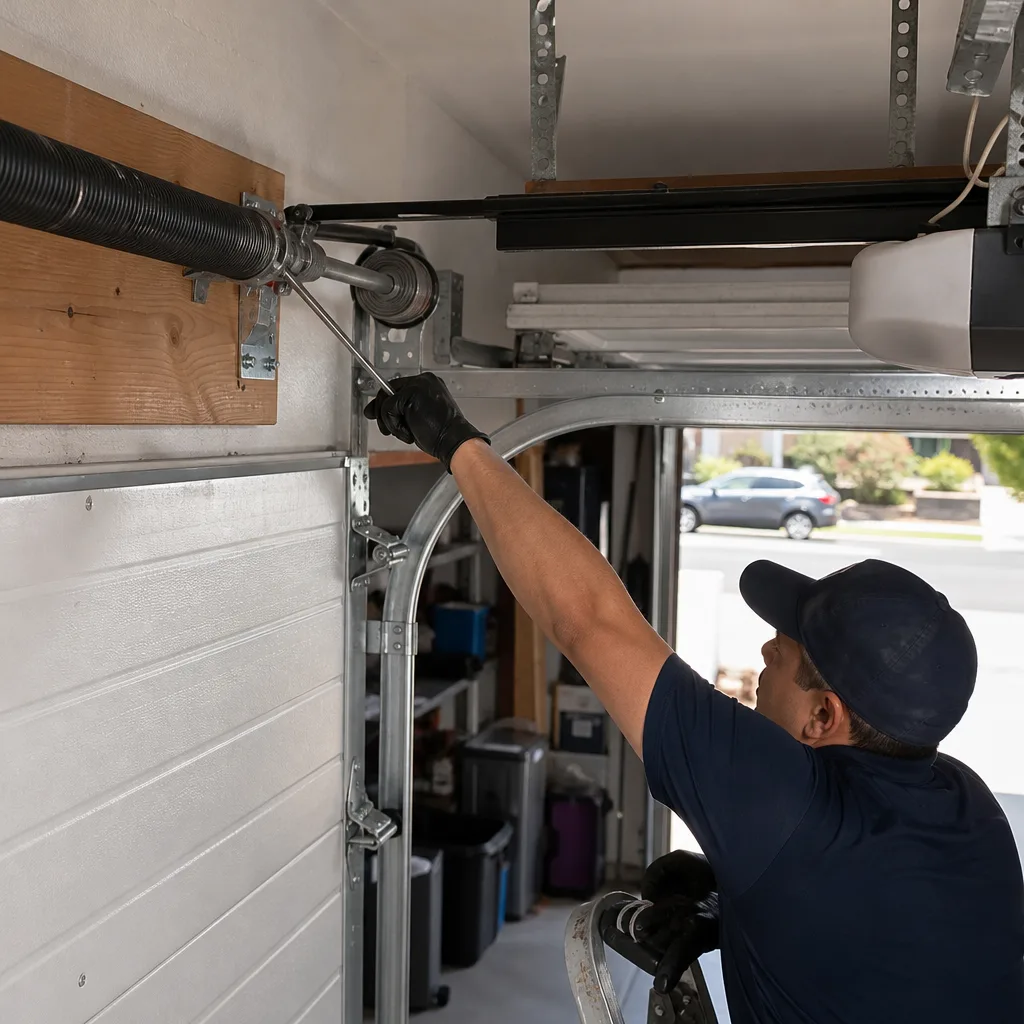
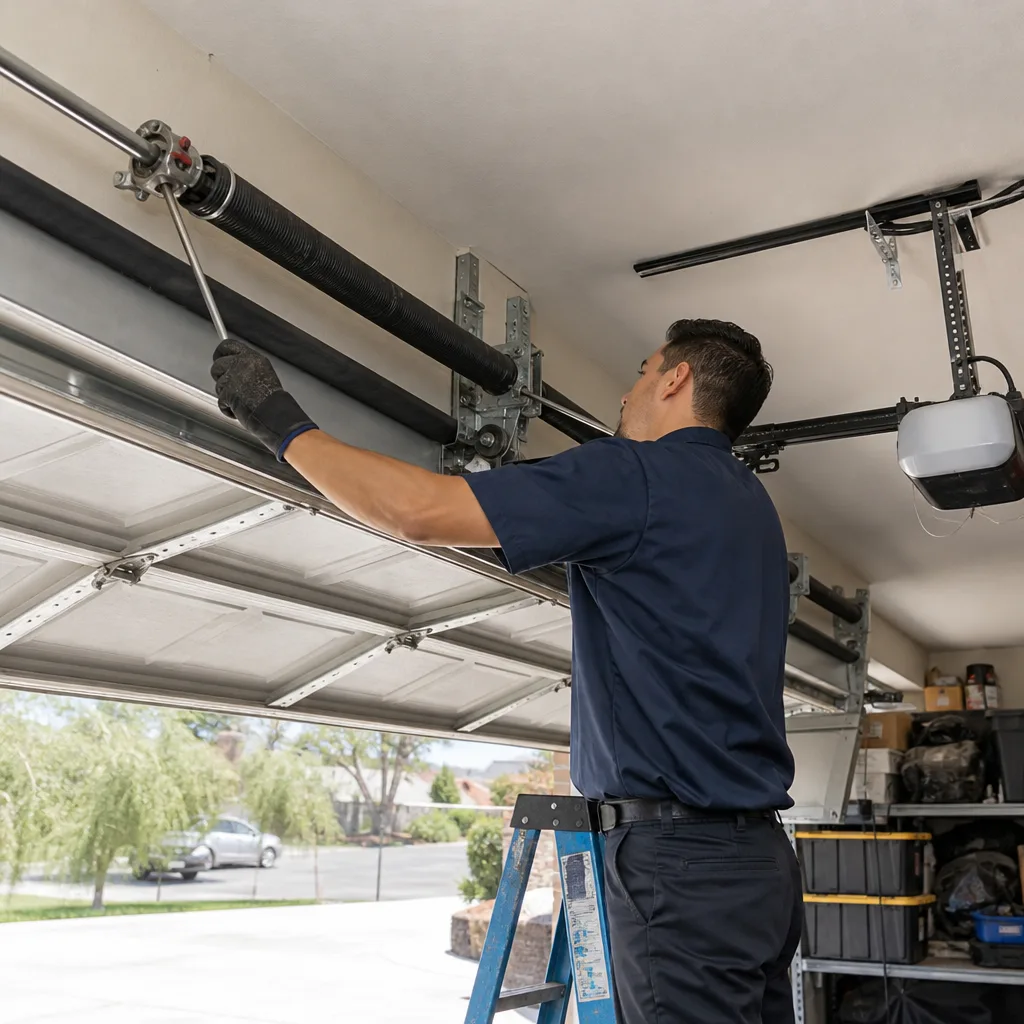
Here’s exactly what happens when a torsion spring repair goes wrong. The spring is wound onto a metal shaft above the door opening using winding bars inserted into the spring’s end cone. These bars are two feet long, half-inch diameter steel. When the spring is fully wound, each bar carries the full torsion load. If the homeowner lets go of a bar mid-wind, the spring unwinds instantly, spinning the bar like a helicopter blade in a tight arc. Anything within that circle gets struck. In Los Angeles ERs, the typical injury is a shattered forearm or compound fracture to the fingers and wrist. Not cuts. Breaks.
Cable work is the second hazard people underestimate. Extension springs run alongside the horizontal tracks, and the cables that attach them to the door bear the door’s entire weight. When a cable snaps under load, it whips with enough force to cut through a work glove. On a torsion spring system, the lifting cables wrap around drums at each end of the shaft. A cable that jumps off the drum means the door is no longer lifting evenly, and that uneven load can pull the remaining cable loose and drop an entire side of the door.
Track realignment is the third professional-only item, though it’s less about injury and more about what happens when a homeowner “fixes” it wrong. A garage door track that’s out of alignment by even a quarter inch causes the door to bind, strain the opener, and eventually pop the rollers out of the track. The door comes off, and now it’s no longer a track alignment. It’s a door removal and rehang.
The honest line: any task involving a spring under tension, a cable under load, or a door being removed from its track is professional work. Full stop. The injury data backs this up, California law backs this up, and every reputable Garage Door Cable Repair in Los Angeles contractor will tell you the same thing.
California Licensing Law and Why It Matters for DIY Decisions
California is one of the few states that explicitly licenses garage door work. The Contractors State License Board requires a C-61 / D-28 specialty license for any garage door installation, repair, or replacement performed for compensation. What this means for the DIY question is more interesting than most Los Angeles homeowners realize, because the law reaches past the question of who can charge money for the work.
If you own your home and do your own spring replacement, no law prohibits it. The dangerous part is that unlicensed work on a home you later sell or rent introduces a specific legal exposure. Under California’s residential disclosure requirements, sellers must disclose known material defects and unpermitted work. A DIY garage door repair that fails after sale, or one that a home inspector flags as non-compliant with manufacturer specifications, becomes a disclosure problem. In a rental context, a landlord who performs their own spring replacement and then has a tenant injured by a failure faces liability that a licensed contractor’s insurance would have absorbed.
We don’t raise this to scare anyone. We raise it because the question “can I replace my own garage door spring?” usually gets answered with “yes, but you shouldn’t,” while the question “should I replace my own garage door spring given that I may sell this house in three years?” gets a different answer entirely. If the work will ever be scrutinized by a home inspector, an insurance adjuster, or a plaintiff’s attorney, you want a paper trail from a licensed Los Angeles contractor, not a blurry photo of your hand next to a new spring.
What a YouTube Video Actually Prepares You For
We’re not here to say YouTube is useless. Some garage door maintenance videos are excellent. But the confidence they build is often the wrong kind of confidence, and Los Angeles homeowners who overestimate their preparation face a specific set of problems.
A well-produced video teaches you sequence: loosen the set screws, insert the winding bars, wind toward the ceiling, stretch the spring. What it can’t teach you is feedback. When you’re holding a winding bar and the spring takes on tension, you feel a specific resistance through the bar. An experienced technician reads that resistance and knows whether the spring is seating correctly or about to bind. A first-timer has no reference frame for that feeling. The video skipped the part where the technician’s hands felt something and he adjusted half a degree without mentioning it.
The second gap is variance. The video shows a clean 2018 Chamberlain install with standard drums and a straight shaft. Your 1963 Los Angeles garage has a converted single-car opening, a shaft that’s slightly bent, drums that are original, and a spring that was replaced once before by someone who didn’t match the gauge properly. Nothing about the video maps onto your situation. The technique is the same; every reference point is different.
The third gap is recovery. The video never shows what to do when the winding bar slips at three-quarter tension, or when the spring snaps mid-installation, or when you drop a set screw into the opener housing. Those moments are when injuries happen, and no tutorial prepares you for them because no tutorial can safely film them.
We respect the homeowner who wants to understand how their door works. Read the manual, watch the video, learn the vocabulary, or browse more guides & resources. Then call someone whose training included the moments the video left out.
How to Evaluate a Fair Quote on Professional-Only Work
When you’ve decided to hire a Los Angeles professional for spring, cable, or track work, the next question is whether the quote is fair. Here’s a straightforward framework we give homeowners who call us after getting a price that felt high or low.
Know the price ranges before you pick up the phone. In Los Angeles, torsion spring replacement (both springs) typically runs $300 to $500 installed, depending on spring gauge, door weight, and whether the repair includes a service call and inspection. Cable replacement typically runs $150 to $275 per side. Track realignment runs $150 to $350. If a quote comes in well under those ranges, ask what’s being excluded. If it comes in well over, ask for a written breakdown.
Ask whether the springs are matched to the door. The single biggest cost differentiator is whether the repair uses the right spring gauge and coil count for your specific door. A mismatched spring either fails early or makes the door operate poorly. A written quote should list the spring size, not just “spring replacement.”
Ask about the guarantee in writing. A verbal “we stand behind our work” has no enforcement mechanism. A 365-day written guarantee means the contractor is accountable. Our own policy, the 365-Day Done Right Promise, states in plain language that if the repair fails within a year, we return at no charge. If a Los Angeles contractor won’t confirm their guarantee in writing before you pay, that’s your signal.
Ask whether the price is final before work begins. This separates disciplined operators from the rest. The bid should be written, itemized, and binding before the first bolt turns. If the technician says “I’ll know more once I open it up,” that’s honest for some jobs, but the contingency price should be written too, with a ceiling.
We train our technicians to work to The Garrison Standard, which includes handing over a written price before any work starts and leaving the site clean after the job’s done. It’s not a sales tactic; it’s how a trade operation keeps its reputation when the next customer calls and asks “how do I know I won’t get overcharged?”
Los Angeles-Specific Factors That Change the Math
Los Angeles isn’t one climate. A garage door in San Pedro deals with salt air and coastal corrosion. A door in Encino deals with valley heat that dries out seals and accelerates spring fatigue. A door in the Hollywood Hills deals with elevation-driven temperature swings and the occasional critter nesting in the tracks. But common patterns exist across the basin worth knowing when you’re weighing DIY versus professional work.
Spring life in Los Angeles runs 7 to 10 years. Most torsion springs are rated for 10,000 cycles, which translates to roughly that lifespan for a door cycled twice daily. Springs that get regularly lubricated last on the upper end. Springs that never get lubricated, or that sit in a coastal environment with more moisture, fail earlier. If your springs are past the seven-year mark and you’re considering DIY work on the door, factor in that the springs themselves are near replacement.
Garage doors in Los Angeles do double duty as climate buffers. In a city where summer temperatures routinely pass 95 degrees in the valley, a garage door that seals properly keeps the garage below the threshold that damages stored goods and forces your home’s cooling system to work harder. A DIY repair that leaves a quarter-inch gap along the bottom seal costs you more in cooling over a year than a professional door seal replacement would have.
Multifamily and ADU conversions are common in Los Angeles in a way that changes the stakes. Since the 2020 ADU law changes, thousands of Los Angeles homeowners have converted garages to living space. If your garage is a rental, a workshop that houses expensive equipment, or an ADU, a failed door isn’t a minor inconvenience; it’s a security breach that leaves a tenant, a tenant’s belongings, or your primary vehicle exposed. In those cases, the professional repair isn’t a luxury. It’s the minimum standard.
Our Garage Door Opener Repair in Los Angeles diagnostics often start with the same observation: a door that’s been underestimated because the homeowner didn’t realize how much the opener was compensating for worn rollers, misaligned tracks, or a spring that’s lost tension. By the time the opener fails, the underlying mechanical problems have been running up repair costs for months. The Garage Door Repair in Los Angeles market has plenty of operators who will sell you a new opener without fixing the door behind it. A disciplined professional won’t.
Common Mistakes to Avoid
- Using WD-40 on the torsion spring. It’s a solvent, not a lubricant. It strips the existing coating and leaves the spring metal bare against Los Angeles’s coastal and valley moisture. Use a silicone spray instead.
- Assuming both springs break at once. When the right spring snaps, the door still opens, just crooked and slower. The strain now falls on the left spring, and it’s likely to fail within weeks. Replace both at the same time, regardless of which one snapped.
- Painting the garage door track. Paint inside the track creates friction that binds the rollers and shortens their life. Keep the track clean, but never paint it. A painted track is one of the most common avoidable issues we see on older Los Angeles homes.
- Ignoring the door’s balance test. Disconnect the opener and lift the door manually. It should stay put at about waist height. If it drifts down or springs up, the springs are out of spec. Most Los Angeles homeowners never run this test, and it’s the single best early warning of spring failure.
- Over-tightening the mounting bolts on an opener install. If you’re replacing a Genie or Chamberlain opener yourself and crank the mounting bolts too hard, the metal supports flex and cause the opener to run noisy or bind. Snug, not torqued.
- Forgetting that garage door work is now part of your home’s disclosure history. As covered above, DIY spring and cable work on a home you later sell or rent gets scrutinized. The cost of a professional repair today is often smaller than the disclosure headache later.
When to Call a Professional
Call a professional immediately when any of these conditions apply: the door makes an explosive bang and one side sags; the cable is frayed, dangling, or off the drum; the door won’t lift even with the opener disconnected; or you’re standing in your Los Angeles garage looking at a torsion spring and thinking about buying a pair of winding bars. These are the moments where the injury risk is real, the repair is not a weekend project, and the stakes are loaded the wrong way. Brock Garage Door Repair offers free estimates in Los Angeles, with a live person answering around the clock at (254) 602-5116, and every repair gets a written price before any work begins plus the 365-day written guarantee. If you’re not sure whether what you’re looking at is dangerous, describe it. We’ll tell you straight.
Frequently Asked Questions
Torsion spring replacement in Los Angeles typically runs $300 to $500 for both springs installed, including the service call, spring sizing, and labor. Higher-cycle springs cost more upfront but last longer. Call (254) 602-5116 for an exact quote; the price is written before any work starts.
No, a broken spring leaves the door unbalanced and heavy, which makes the opener work harder and risks the remaining spring snapping under the doubled load. It also creates a security gap if the door can’t close fully. This is a same-day repair call for most Los Angeles contractors.
Lubricate the hinges, rollers, and torsion spring with silicone spray twice a year; keep the tracks clean and free of paint; and run the balance test quarterly. These are safe, simple tasks that meaningfully extend the life of the door and springs.
No, cable replacement involves disconnecting the spring system and loading the door onto new cables without dropping it. The cable runs under the spring’s full tension and can whip or drop a door wing if handled wrong. This is professional-only work under any honest assessment.
Not with Brock Garage Door Repair. The written price handed over before any work starts is the number on the invoice. If the technician finds something that requires additional work, that gets priced separately in writing before anything else is done.
Most do not charge for the estimate; the service call is typically rolled into the repair if you proceed. Brock Garage Door Repair offers free estimates in Los Angeles and confirms the written price before any work begins, so you’re never on the hook for a surprise line item.
The Bottom Line
Most Los Angeles garages need two kinds of attention: the kind you can safely provide yourself, and the kind you cannot. Lubricate, align the photo eyes, and program your Chamberlain or LiftMaster remotes. Leave the springs, cables, and track surgery to someone whose training includes the moments that go wrong. The injury data is unambiguous, California’s legal context reinforces it, and the repair math in Los Angeles does too: a professional fix bought once with a written guarantee beats a DIY fix bought twice while you’re waiting for a broken finger to heal. Call Brock Garage Door Repair at (254) 602-5116, and you’ll get a real person, a straight answer, and a written price before anything turns.
Written by Wade Mercer, Owner at Brock Garage Door Repair, serving Los Angeles since 2001.